
Santa Barbara council advances temporary rent‑increase moratorium, tightens rules for permanent removal of rental units
Get AI-powered insights, summaries, and transcripts
Subscribe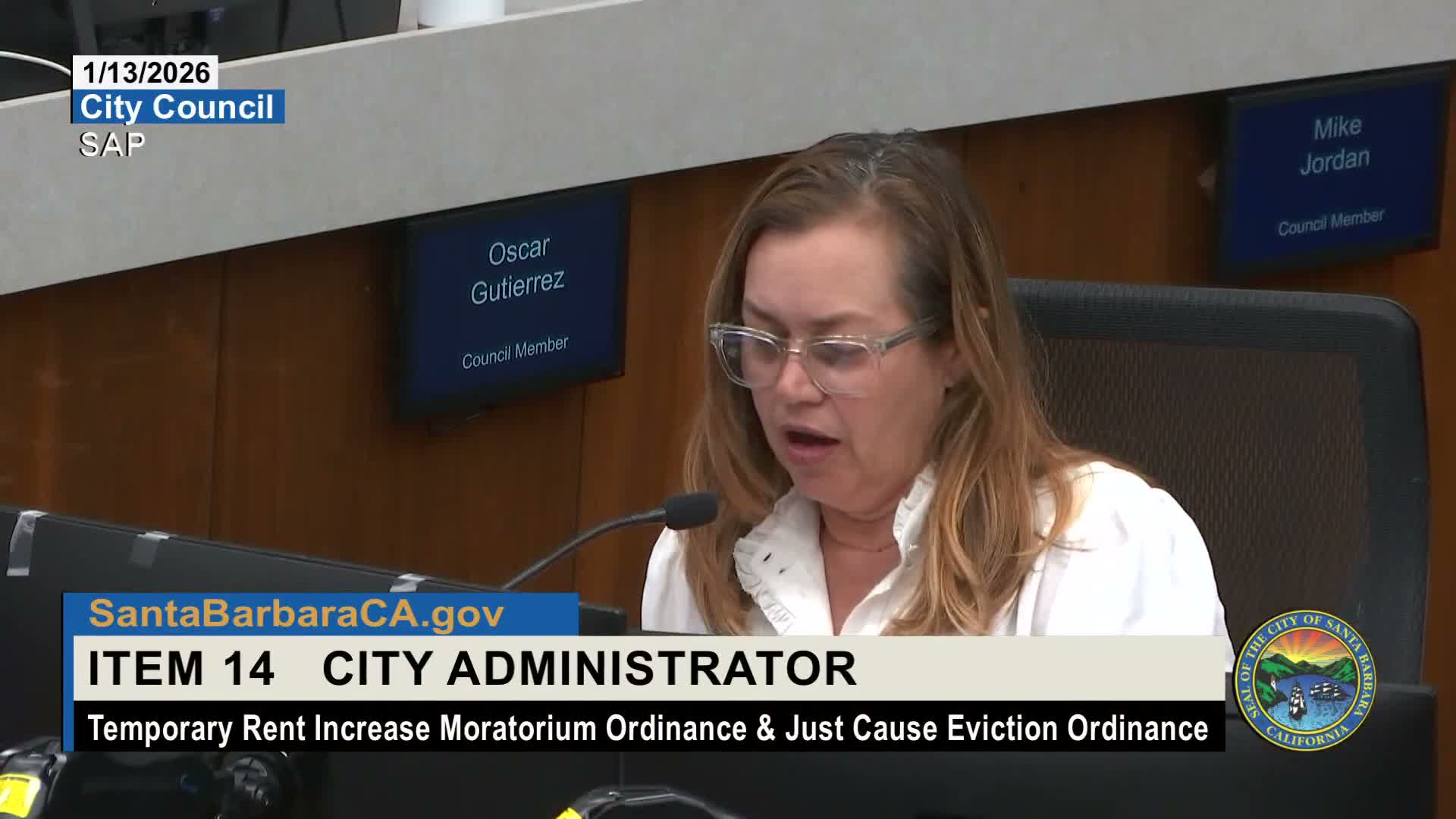
Summary
After hours of public comment, the City Council introduced a temporary rent‑increase moratorium ordinance and approved amendments tightening just‑cause/Ellis Act removal rules; both measures passed in 4–3 votes and will return for formal adoption under the normal ordinance timeline.
The Santa Barbara City Council on Jan. 13 introduced an ordinance to impose a temporary moratorium on rent increases while staff develops a permanent rent‑stabilization program and directed staff to draft additional Ellis Act‑related changes to just‑cause eviction rules.
Assistant City Attorney Dan Henske told the council the proposed moratorium is narrowly drawn to fit within state law: it would not cover units that received certificates of occupancy after Feb. 1, 1995, most single‑family homes and many condominiums (described in state law as units alienable separately), transient hotel‑type occupancies, units subject to affordable‑housing covenants, or Section 8 units. The measure uses the rent in effect on Dec. 16, 2025, as the “base rent” for existing tenancies and would expire on the earlier of the effective date of a permanent program or Dec. 31, 2026, unless the council acts otherwise.
Proponents said the pause is needed to prevent immediate displacement while staff crafts a permanent program. "This moratorium is a critical bridge," Richard Applebaum of CLU’s housing and homeless justice work group said during public comment, citing local median‑rent figures and a high share of rent‑burdened households.
Opponents — many of them small landlords and property managers — warned the ordinance could push small providers out of the market and lead to deferred maintenance, higher city costs and legal exposure. "A rent freeze on a commercial business without offsets for rising costs is untenable," said property owner Camille Borchard.
On procedure, the council first considered adopting the moratorium as an urgency ordinance (immediate effect) but members did not secure the necessary five votes for an urgency measure. The council then voted 4–3 to introduce and subsequently adopt the moratorium under the regular ordinance process (introduction on Jan. 13; adoption at a future meeting with a 30‑day effective period thereafter). The record lists Rouse, Freeman and Jordan as the three dissenting votes on the introduction. The vote to introduce and subsequently adopt a separate ordinance adding further requirements for Ellis Act / just‑cause evictions (including a prohibition on converting only a subset of units on a parcel and a proposed five‑year prohibition on returning a removed property to residential use) also passed 4–3 with the same dissents.
The council directed staff to return with detailed implementing language and to bring additional Ellis Act provisions consistent with state law. Henske said the ordinance as drafted would be implemented on a complaint basis and that staff expects to report back with operational details — including any budget or staffing needs — while preparing the permanent program.
The measures do not change protections or exclusions established under state law such as Costa Hawkins or the California Tenant Protection Act; Henske emphasized the city may regulate only the subset of units the state permits. The council’s next procedural step is formal adoption of the moratorium ordinance following introduction, with the moratorium scheduled to take effect according to the city’s standard ordinance adoption timeline.
The council will continue work over the coming months to draft a permanent rent‑stabilization program and to refine the Ellis Act‑related language. Staff were directed to return with clearer guidance for tenants and property owners, including plain‑language notices in English and Spanish about rights, exemptions and how to file complaints.