Urbana-area township presents shelter data, asks city for $37,000 to sustain winter emergency operations
Loading...
Summary
Supervisor Chenoweth asked Urbana city leaders to approve a $37,000 contribution to support Cunningham Township's winter emergency shelter, outlining operations, recent data (104 individuals served since Nov. 25), staffing needs and a menu of expansion costs ranging from limited morning-hours to full daytime coverage through May.
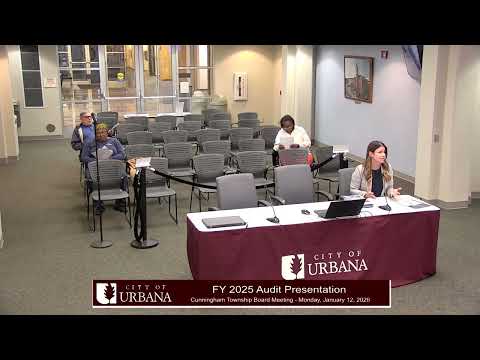
Supervisor Danielle Chenoweth told the Cunningham Township Board on Jan. 12 that the township has opened a low‑barrier winter emergency shelter and is asking municipal partners for help funding continued operations and limited daytime expansion.
Chenoweth said the shelter, which opened Nov. 25, offers 100 cots for men and male‑identified residents and is staffed at three overnight staff for typical nights of 45–55 residents, with a maximum recorded night of 65. "We have served 104 individuals who have spent at least one night in Pew East since its opening Nov. 25," she said. She described a mix of funding sources — repurposed IDHS/ESG grant dollars (about $75,000), private donations and in‑kind support from community groups — but said an anticipated shortfall remains.
Why it matters: the supervisor told trustees that municipalities must treat the shelter as a multi‑jurisdictional responsibility and that shortfalls in daytime staffing and case management limit the program’s ability to move people into housing. Chenoweth asked the City of Urbana to consider an MOU and a $37,000 contribution the city council was considering, and urged flexibility to permit funds to support nighttime or daytime hours as needed.
Key details and costs: Chenoweth presented a transparent "budget menu" showing three expansion options: (1) limited morning‑hour daytime expansion, (2) full daytime expansion, and (3) continuation of nighttime shelter through the township’s occupancy permit date. She reported an approximate total operating estimate for the modeled period of about $257,000 and calculated operating costs at roughly $22 per person per day for congregate shelter (she contrasted that with higher hotel per‑person costs). She also listed one‑time shelter renovation needs estimated at $11,000–$12,000.
Data on residents: Chenoweth provided a preliminary needs‑assessment snapshot: 28% of the 104 individuals were age 55 or older (29 people), ages ranged from 17 to 72 with an average of about 45; roughly 61% reported a disabling condition and about 41% reported some form of income on entry (14 reported earned income, 19 disability income, 3 retirement, 4 general assistance). She said 8 residents found jobs after entering shelter and that the program provides bus passes, showers, limited laundry and storage.
Operational constraints and timeline: the shelter currently operates nightly with an extended schedule (8 p.m.–8 a.m.) and opens fully during extreme cold. The township’s temporary occupancy permit runs to May 23; Chenoweth urged partners to provide funding that would allow case management and daytime supports through that date so gains are not reversed when the permit ends.
Municipal asks and next steps: Chenoweth said the City of Urbana’s proposed $37,000 would cover significant staff hours (she said it buys roughly 1,400 person‑hours in her presentation) and suggested allowing the township flexibility on how the money is used (daytime versus nighttime). She said she will continue outreach to Champaign, Champaign County and other partners, and that the point‑in‑time count scheduled for Jan. 22 will provide additional data.
Quotes from the meeting: "I would like the flexibility to use the funds to continue through May 23 to fill that gap that is nighttime," Chenoweth told trustees as she described options for municipal funding. On data, Trustee Chris said, "The data serves to remind us that it's rare and that the majority of homeless are there for reasons other than just being addicted," praising the township's collection effort.
What’s next: the board discussed the item and noted the city council would consider the MOU and possible appropriation; Chenoweth said she would pursue other municipal contributions and return with updated numbers. The township meeting adjourned and transitioned to the city council session where the council will consider the related MOU.