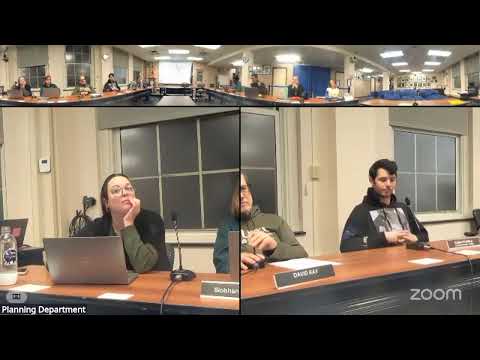
Ithaca residents press commission to put waste reduction at the center of Climate Action Plan
Loading...
Summary
Multiple public commenters urged the Ithaca City Sustainability Commission to upgrade waste-reduction from a single-line item to specific targets, publishing of the scoring matrix and stronger reuse and single-use foodware rules ahead of the plan's council introduction.
Residents and conservation advocates urged the Ithaca City Sustainability Commission on an agenda meeting to strengthen the draft Climate Action Plan's treatment of waste and packaging, arguing that recycling alone is inadequate and that the city should adopt concrete targets and transparent scoring for waste-reduction measures.
Louise Magat, a longtime Ithaca resident who described organizing weekly cleanups at the 2nd Dam swimming area, told the commission, "We used to think that recycling plastic was a solution to plastic pollution. It is now known that recycling is not the answer to the problem," and called for the plan to move from exploration language to actionable commitments. Constance Sterling Engman, a member of Zero Waste, backed a single-use foodware and packaging-reduction ordinance and said, "Waste prevention and reuse are among the lowest cost, fastest climate actions that a local government can take."
A separate commenter said the draft's scoring matrix treats waste reduction as "marginal" and asked the commission to publish the matrix and any resolution language referenced in the December packet so that the public can see assumptions and boundary definitions. Commissioners and staff acknowledged the request; staff noted that public comments submitted earlier had been forwarded to the commission and that a memo clarifying methodology and decisions is forthcoming.
Staff explained the Climate Action Plan uses generation-based greenhouse-gas accounting, relying on county-normalized data and the EPA WARM tool rather than consumption-based or full life-cycle analysis. Staff said life-cycle accounting is technically possible but resource-intensive and nonstandard for local governments; commissioners said qualitative recognition of upstream impacts should not prevent local action.
Commissioners discussed how to present the plan to council and the public. Staff said the plan will be introduced to council in February, with public outreach beginning Feb. 19 and a hoped-for adoption in March. Commissioners asked staff to publish the scoring methodology and to provide clear targets and reporting for waste and packaging reduction so the city's commitments are measurable and durable.
The commission did not adopt any ordinance or formal resolution during the meeting; public comment and staff follow-up were the principal outcomes. The commission asked staff to circulate the requested memo and a draft of any explanatory letter or executive summary for commissioner comment before the council introduction.