
Seminole County defends Scout microtransit rollout as ridership rises and staff address early glitches
Get AI-powered insights, summaries, and transcripts
Subscribe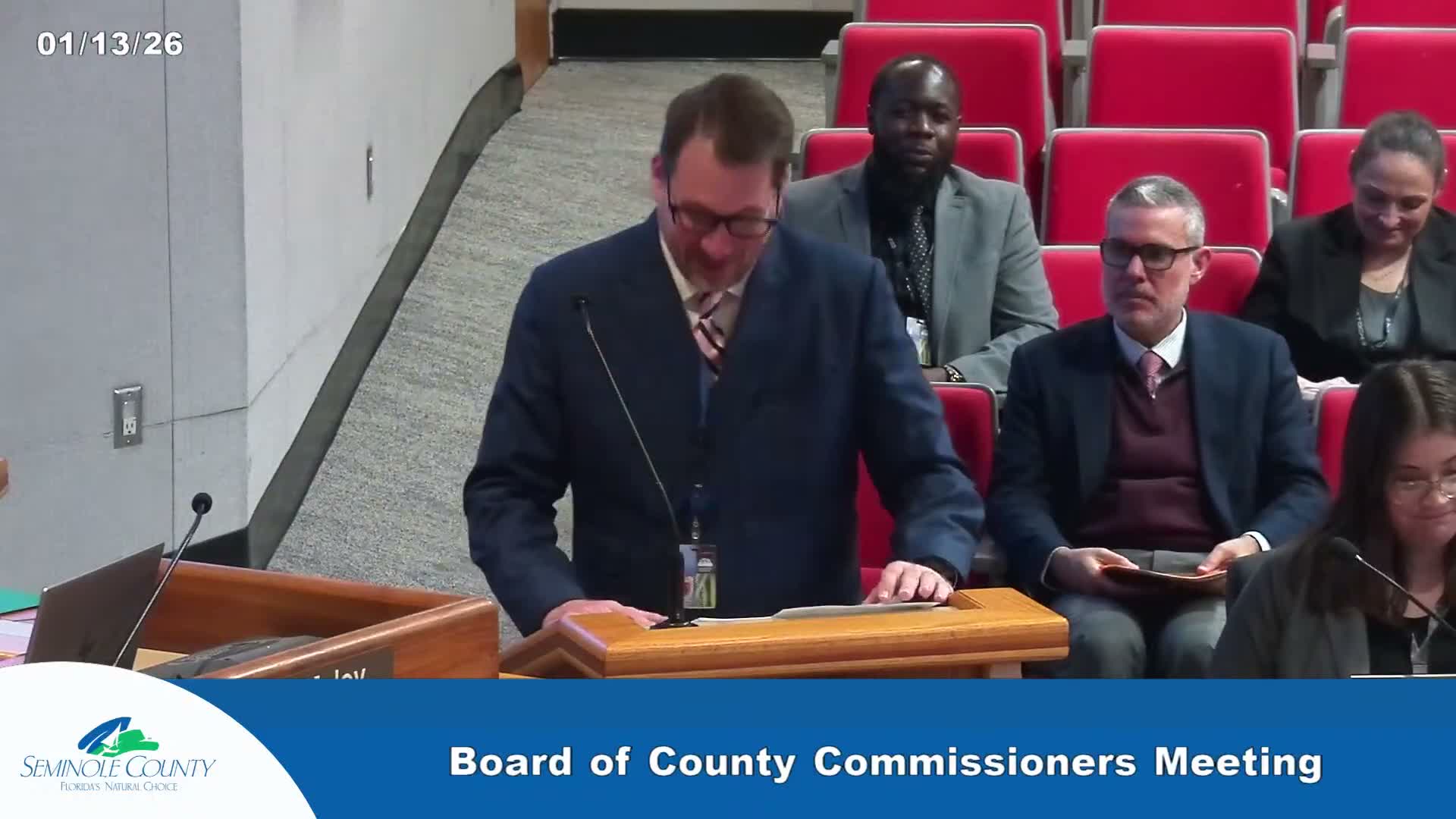
Summary
County staff told commissioners Jan. 13 that Scout, the new Freebee-operated microtransit service, is gaining riders—about 20,000 monthly—and reaching residents in transit deserts, while staff work to fix app cancellations, adjust capacity and refine SunRail connections.
Seminole County officials on Jan. 13 gave a status update on Scout, the county’s microtransit service launched in October, saying the program has quickly attracted riders and reached people who previously lacked a transit option.
Assistant County Manager Christian Swinson told the Board of County Commissioners that the county contracted with Freebee in June and began a full-service launch Oct. 15. “The last day of their service was Saturday. Sunday was the first day of the discontinuation,” he said, referring to phased deletions of several LYNX fixed routes. Swinson said staff and LYNX collaborated on which Link routes to discontinue—including Link 34, Link 45 (Lake Mary), Link 46 (State Route 46 in Sanford), Link 103 and Link 434—and that NeighborLink zones in Sanford and Oviedo were also removed.
The update emphasized outreach and monitoring. Swinson listed 35 tabling events, three targeted customer emails, 30 presentations, bilingual brochures and an informational website launched Sept. 24 that has drawn roughly 130,000 views. He said staff added seven vans, hired more drivers and reviews system performance multiple times daily with the vendor.
Commissioners and staff pointed to early ridership measures and equity impacts: board members said the service was approaching 20,000 rides in a month and that survey data showed 32% of Scout users “would not have been able to make the trip without Scout,” a statistic Swinson presented as evidence Scout is serving transit‑desert riders. He also said 37% of early users had come from Uber or Lyft and 16% had previously relied on LYNX.
At the same time, Swinson described operational problems the county is addressing. On the first business day after full cutovers staff logged 204 booking requests and 124 completed trips; a small number of users made repeated cancellations (one example: 16 requests in 45 minutes), which disrupted routing and increased wait times for others. Swinson said staff are planning app changes, stronger anti‑gaming measures and expanded call‑center support to mitigate cancellations and to allow staff to re‑route or block abusive patterns.
On accessibility, Swinson said Scout accepts ambulatory riders and those who use conventional wheelchairs; he added that riders with complex medical support needs (for example, headrests or tracheostomies) should continue to use LYNX paratransit. On multimodal connections, staff reported they have relaxed certain app location restrictions for SunRail stations so riders can pin a station for pickup and staff will confirm any county‑boundary technicalities.
Commissioners praised staff for the rapid rollout and urged continued monitoring. Commissioner Lockhart framed the project as a difficult but necessary pivot from an unsustainable fixed‑route cost model and asked staff to keep study updates coming; another commissioner noted a 4.8/5 user rating and encouraged staff to publicize rider stories showing community benefits. Commissioners also described budget impacts: board discussion contrasted a prior LYNX budget figure presented as $17,000,000 with a Freebee contract of about $6,000,000 (including additional vehicles), and commissioners reported an approximate taxpayer savings of $5,500,000 on program costs as presented during the meeting.
Next steps include continued daily monitoring with the vendor, app adjustments to reduce abusive cancellations, expanded rider education, and a planned March review of the transition’s full effects. Swinson said staff will continue outreach and consider partnerships (for example, student discount arrangements with Seminole State or other institutions) to address rider costs and eligibility.
The board did not take formal action on Scout at this meeting; commissioners directed staff to continue monitoring and report back.