Get Full Government Meeting Transcripts, Videos, & Alerts Forever!
Get email alerts on the Animal Control topic
No spam. Unsubscribe anytime.
Fairfield County Council adopts amended animal control ordinance after lengthy public hearing
Summary
After hours of public testimony and debate, Fairfield County Council adopted Ordinance 8‑51 (revising Chapter 4, Animals) with an amendment that changes breeder and shelter definitions, modifies sterilization/redemption exceptions and leaves fee amounts for the annual budget; votes on the amendment and final approval were recorded in the meeting transcript.
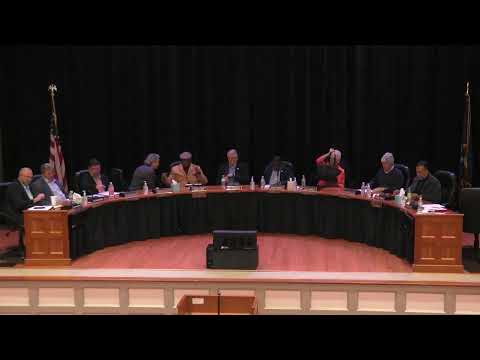
Fairfield County Council on Jan. 12, 2025 adopted Ordinance 8‑51, a rewrite of Chapter 4 (Animals) of the county code, after a public hearing and a contested amendment.
The ordinance, described in the clerk's reading as a repeal of Ordinance 7‑37 and a replacement with revised rules and regulations for animal control, drew multiple public commenters, members of the ad hoc drafting committee and lengthy council debate before Councilmember Goldbach moved amendments on third and final reading. Goldbach said the edits add a narrowly tailored definition of "dog breeder" intended to capture repeat sellers rather than owners with a single litter, tighten the definition of "shelter" (excluding crates, carriers, barrels, vehicles and exposed outdoor areas), clarify sterilization‑exception language (allowing a licensed‑veterinarian health exception and an option to pay an additional redemption fee set by council), and fold dog breeders into the commercial breeder requirements such as proof of rabies inoculation and evidence of microchipping.
Why it matters: The ordinance updates local animal‑welfare rules and sets enforceable standards for shelters, breeders and pet registration. Members of the ad hoc committee and other residents said the changes reflect months of work and about 18 hours of committee meetings; some residents warned provisions such as mandatory microchipping or breeder licensing could impose costs on low‑income households.
Public testimony highlighted competing concerns. Roger Gaddy, a member of the ad hoc committee, told the council, "We put a lot of work and effort into it. We met, I believe it was over 18 hours looking at this ordinance," and urged removal of language that would label an owner a breeder after a single litter and asked the council to "remove the restriction on the dog barrels." Jerome Armstrong, a lifelong resident, said microchipping and licensing requirements could be unaffordable for many county residents. Conversely, Anne Correio, another ad hoc committee member, commended the committee's thorough deliberations and urged council to adopt the committee's draft without amendments. A public commenter who identified only as Chris decried the draft as governmental overreach and pleaded, "And for heaven's sake, let the dogs bark."
Council action: Goldbach moved to replace the previously approved second‑reading text with a third‑reading version that incorporated the amendments. After debate about timing and whether changes presented the night of third reading gave members adequate time to review, the council approved Goldbach's proposed language by a 4‑to‑3 vote on the amendment, according to the county attorney's recap. A subsequent motion to approve Ordinance 8‑51 as amended was made and seconded; the transcript records the clerk's line "Let the record show 4 0 3." The meeting record shows the amendment was adopted and the ordinance proceeded as amended.
What changed (high‑level): The adopted amendment (as explained on the record) does all of the following: (1) adds a definition of "dog breeder" intended to target repeat commercial sellers rather than single‑litter pet owners; (2) narrows acceptable shelter descriptions and explicitly excludes items such as barrels and vehicles from being considered proper shelter; (3) revises redemption and sterilization‑exception language to allow a licensed‑veterinarian health exception and to permit payment of an additional redemption fee set by council (fee amounts will be set in the annual budget process rather than in the ordinance text); and (4) requires breeders to meet veterinary, vaccination and microchipping proof requirements similar to those for commercial breeders.
Next steps and caveats: Several council members and public commenters said enforcement will be complaint driven and stressed the need for public education and shelter improvements before full enforcement. The ordinance leaves fee amounts for the county's annual budget process, and council members said they expect to review shelter performance metrics and may revisit ordinance adjustments in the future.
Authorities and formal identifiers mentioned during the meeting include the repeal reference to Ordinance 7‑37 and the replacement Ordinance 8‑51 ("revised Chapter 4, Animals, Fairfield County Code of Ordinances, Fairfield County, South Carolina"). The transcript does not supply finalized fee numbers within the ordinance text; it records that fee changes would be handled in the budget and that a separate ordinance (8‑45) houses the county's fee schedule for the year.
The council closed the public hearing and moved to the ordinance votes during the Jan. 12 meeting; the transcript records the amendment and final approval steps described above.