Residents, advocates urge fast, small homelessness committee and pilot for fathers
Loading...
Summary
Multiple residents urged Bangor officials to form a small, fast-standing committee empowered to implement recommendations and to pilot programs that focus on men and fathers at risk of homelessness, including requests for $50,000–$150,000 in seed funding.
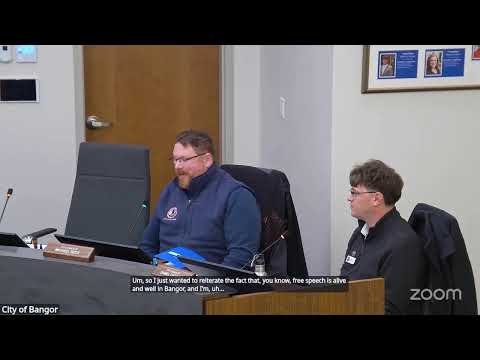
Bangor residents used the council’s public-comment period on Jan. 12 to press for faster, more decisive action on homelessness, with speakers urging a small, time-limited committee and pilot programs focused on men and fathers.
Scott Pardy, a Bangor resident, said the standing committee must be ‘‘small’’ (he recommended three to five people), led by ‘‘a singularly driven individual,’’ and set to deliver results in weeks rather than months. ‘‘Stop managing the problem, and let's start solving it,’’ Pardy said, arguing the city should be prepared to repurpose municipal space for 24-hour indoor shelter if the committee recommends that step.
Nathaniel Fields, founder of the No More Homeless Fathers Project and a resident of nearby Bucksport, asked the council for a formal working session so his organization could present a pilot that would prioritize housing stabilization, employment pathways and family reunification for fathers. Fields requested consideration of a pilot funding allocation in the range of $50,000 to $150,000 from ARPA, CDBG or local stabilization funds to launch a men-and-fathers stabilization track.
Speakers with lived experience also urged flexible approaches. David Lyons, speaking for Reach Ministries, described a 30-day transitional camping model he said helps staff build relationships and choose the right long-term programs for participants. ‘‘A relationship … that's what helped me to actually change my life,’’ Lyons said, describing the value of an interim, relationship-centered approach to move people from addiction and crisis toward stability.
Other speakers honored late community connector driver Jim Fogg and urged the council to listen to citizens even when their views are uncomfortable. Several commenters criticized barriers to virtual public comment and the city’s enforcement of its public-comment policy (see related article on public-comment objections).
The council did not take action on homelessness during the Jan. 12 meeting; several commenters requested follow-up: a formal working session and consideration of pilot funding at a future meeting. The council’s next regular meeting is scheduled for Jan. 26.