
Bangor public-health director briefs council on homelessness services, data gaps and stabilization pilot
Get AI-powered insights, summaries, and transcripts
Subscribe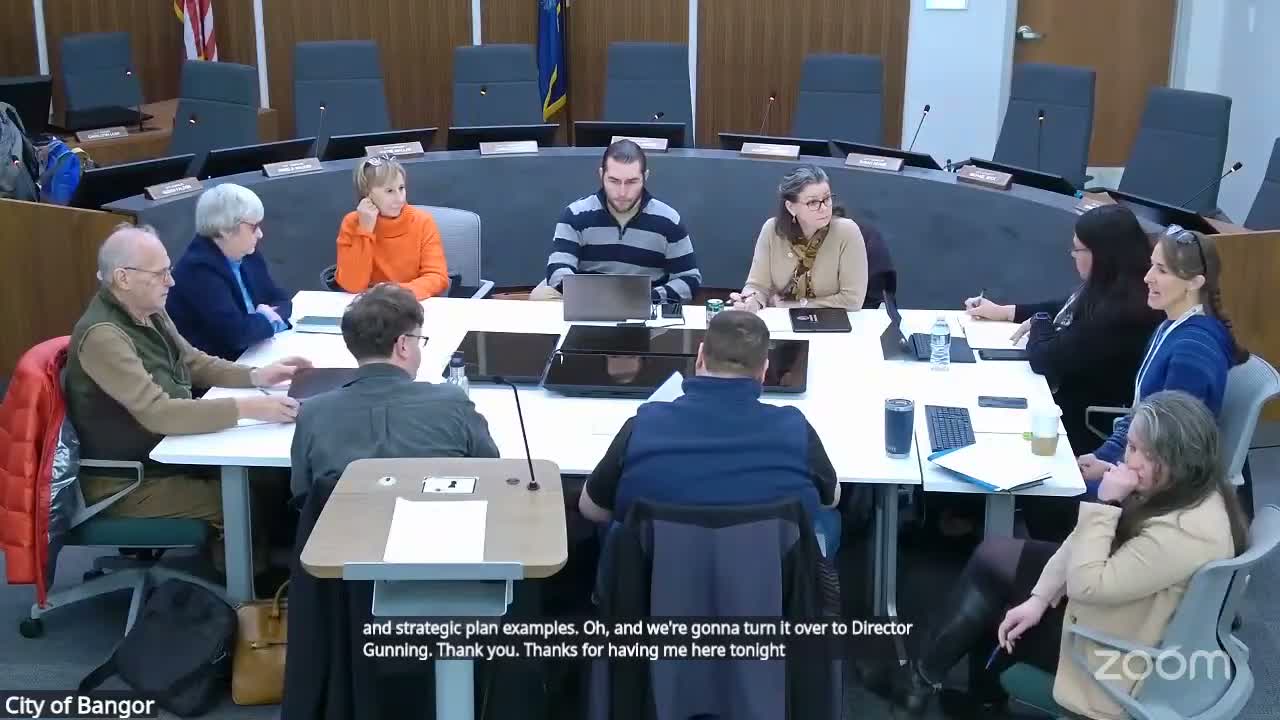
Summary
Director Gunderman told the council the local system uses HMIS and coordinated entry to match people to housing but data gaps and fragmented funding limit planning; she highlighted a city stabilization pilot that kept about 90 people housed and urged a data-driven strategic plan and improved coordination.
Director Gunderman delivered a broad overview of Bangor’s homelessness service network at a special city council workshop on Jan. 13, outlining how outreach teams, coordinated entry and case managers connect people experiencing homelessness to shelter, housing assistance and support services.
Gunderman said the system’s primary intake and tracking tool is the Homeless Management Information System (HMIS), and she pointed the council to a public dashboard for inflow, outflow and an active-homelessness snapshot. She noted the most recent Hub 7 figure — covering Penobscot and Piscataquis counties — showed 614 people classified under the HUD definition of homelessness and reminded the council the regional point-in-time count was scheduled for Jan. 26. “This is not an exhaustive list,” Gunderman said, adding that the presentation was intended as a landscape overview.
Why it matters: Gunderman warned the data are imperfect and unevenly used across providers, and she urged the council to prioritize improvements to HMIS reporting and shared analytics as part of any strategic plan. “I am an epidemiologist by training,” she said. “Data for action — we’re going to have to use the best that we’ve got to just get us started.”
Gunderman described the client pathway: initial outreach and engagement (city outreach, library staff, syringe-service providers and multiple nonprofits) lead to HMIS entry, an assessment and a vulnerability score that informs case conferencing and voucher allocation. Providers named in the briefing included PATH (Community Health and Counseling Services), the HOME team at Penobscot Community Health Center (PCHC), Bangor Area Homeless Shelter, Hope House, Shaw House and Partners for Peace. She also referenced landlord-liaison incentives and the city’s rental-registry program as tools to speed placements.
On stabilization, Gunderman highlighted a city-funded housing-stabilization pilot led by Bruce Hughes that she said kept about 90 people housed in one year by working directly with landlords on payment plans, alternative placements and move-in supports such as furniture and basic household goods. “In just one year, we have kept about 90 people housed in that program,” she said. Gunderman added that the pilot is funded through December 2026.
Councilors pressed for more financial and program metrics. One council participant asked for an annual accounting of what the city and partners spend on low-resource, high-impact work and suggested a council-designated account or a dedicated city staffer to track grants and align funding with priorities. Gunderman said her office does not have a single grants manager and that federal and state funding make up a large share of program support; she recommended building data-quality improvements into strategic planning.
State-level issues and HUD funding: An attendee criticized state coordination and accountability for homelessness funds and programs, saying several statewide plans missed deadlines and that reporting and follow-through have been weak. Gunderman said a temporary injunction affecting a HUD notice of funding opportunity (NOFO) allowed renewal projects — including local voucher programs — to continue under previous rules; she briefed the council that, as of her remarks, local renewal funding continuity extended through roughly August 2027.
What the council may do next: Gunderman recommended forming a multi-department committee and using examples from other cities’ strategic plans (she cited Denver’s approach to measurable "WIGs" or goals) to set SMART objectives, assign responsibilities and measure progress. She suggested the council consider accountability language in future grant agreements and asked members to consider whether to create a staff position or dedicated budget line to manage grants and improve reporting.
The workshop produced no formal votes. Gunderman and council leadership said a draft committee charter is being prepared and will be circulated to departments for input before returning to council for consideration.