
North Middle School highlights new student supports, reports statewide grade bump
Get AI-powered insights, summaries, and transcripts
Sign Up Free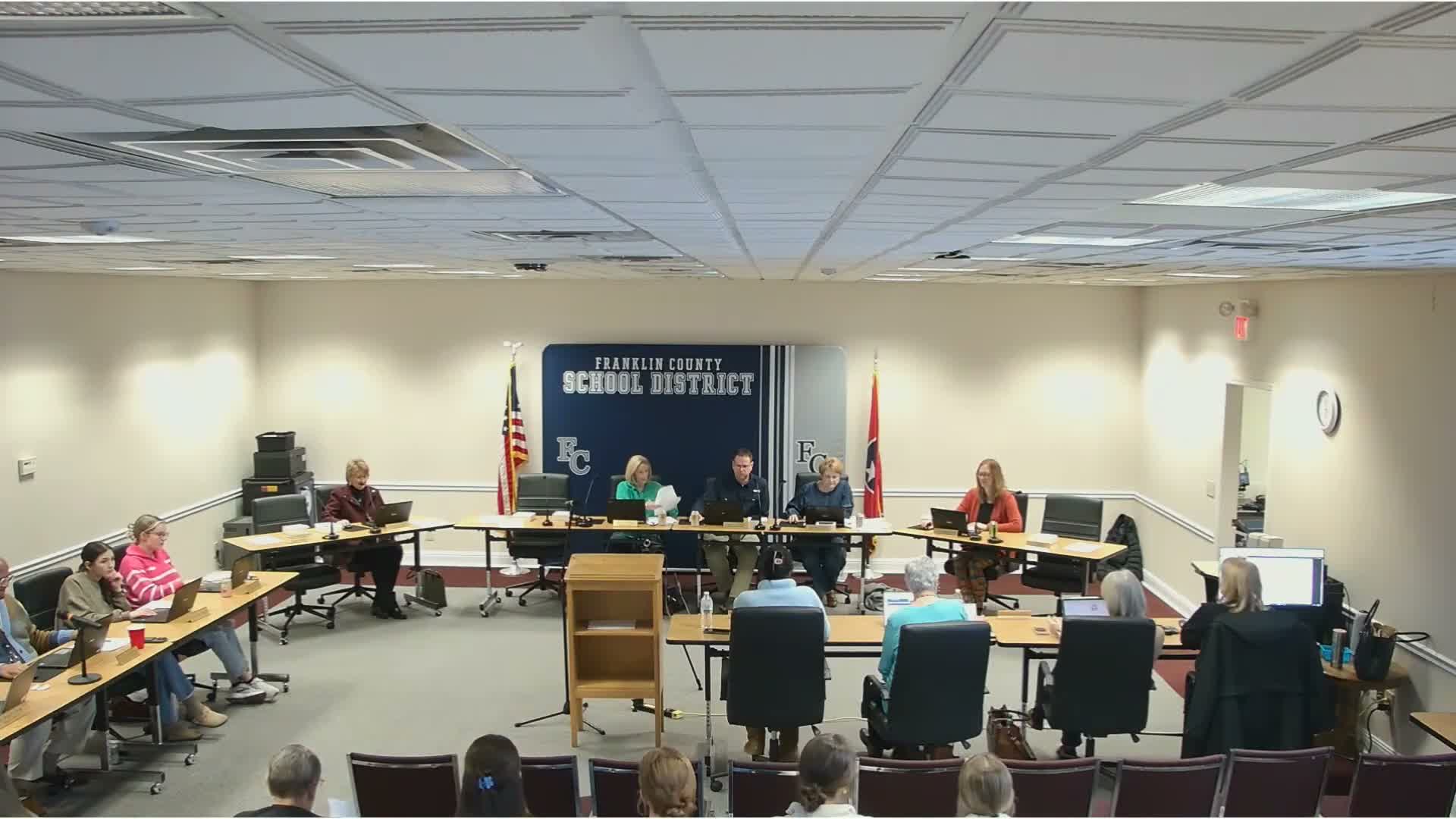
Summary
At a Franklin County School Board meeting, North Middle School staff outlined new homeroom routines, targeted academic blocks and behavior-economy incentives; presenter said the school's state report card grade rose from a D to a C and growth metrics improved.
Miss Eastlake, a North Middle School staff member, told the Franklin County School Board that the school has added a morning homeroom, expanded academic-support blocks and introduced incentive programs aimed at improving student engagement and behavior. "This year has just been the best mix of adults working in our building," she said, highlighting staff effort as central to recent gains.
The homeroom runs from 7:45 to 8:10 and provides breakfast and a short social or academic routine the presenter described as a "safe space" for students. Staff also described a daily check-in called "Today's First 5," routine Chromebook checks to preserve devices, weekly interactive "graffiti board" prompts and use of screencast videos for parent communications.
The school has instituted a behavior-economy system (referred to in the presentation as "Kick Forward" or a Power School-tracked system) that lets students earn and spend points quarterly. The presenter said the initiative includes an on-campus "Gator store," periodic contests such as "Gator Grab" and other low-cost incentives intended to boost morale and participation.
School data presented to the board included a reported jump in the state report card grade from a D to a C and a growth metric that increased from 1 to 3. The presenter also said the school has received more than $250,000 in grants tied to improvement efforts and noted the school remains under a federal ATSI designation, an ongoing focus for district-level supports.
Board members asked questions and thanked school staff for the presentation; one board member noted it is National School Board Appreciation Month. The presentation closed with a reminder that a small number of students (six, described as Tier 4 disciplinary outliers) will continue to need targeted supports and that staff are using data to shape interventions.
The board did not take formal action on the school spotlight; the item served as an informational update and celebration of school-level improvements.