
Concord council adopts clarified reserve-account language after lengthy debate on transparency
Get AI-powered insights, summaries, and transcripts
Subscribe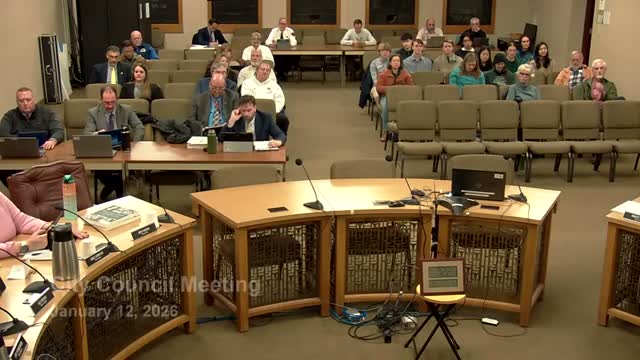
Summary
After hours of public comments and council questioning about trust funds and past transfers, the Concord City Council approved revised language clarifying the purposes of multiple capital reserve accounts and transfers, while rejecting an amendment to retain older language for several reserves.
The Concord City Council on Jan. 12 approved a resolution that revises and clarifies the stated purposes of a number of the city’s capital reserve accounts and closes accounts no longer in use, following public testimony that raised questions about trust-fund reporting and multiple hours of council debate.
The measure, introduced by the city manager and supported by city staff, was presented as an effort to correct inconsistent language in decades-old resolutions and to align reserve-account descriptions with state statute (RSA 34:11). City Solicitor Michael Conforti told the council, “Based on what I have reviewed, we are in compliance,” and Finance Director LeBron said the transfers that have been questioned were approved by council during the budget process, stating plainly, “Every dollar was approved.”
Why it matters: Several residents had urged additional oversight and an independent review after noting small balances and perceived gaps in reporting. Roy Schweiker, a member of the public, said some trust funds showed minimal interest and encouraged the city to ask the Department of Revenue Administration (DRA) to review procedures. Another resident, Jason Gerhard, urged pausing changes and suggested outside investigation by the county grand jury as a potential oversight tool. Those public remarks framed the council’s extended line of questioning of staff and counsel.
What was debated: Councilors focused on whether prior transfers—from the recreation reserve and other named funds—had been sufficiently transparent to the public and whether trustees had received training to verify withdrawals. Councilor Brown pressed staff for the minutes and documentation behind transfers, pointing to a prior transfer of $200,000 from the Recreation Reserve that later appeared in budget documents as $100,000 in the recreation department general revenue line. Staff explained that transfers were recorded in the budget documents and votes and that some budget line items aggregate transfers into department revenue lines, which had caused confusion for some councilors.
Amendment and votes: Councilor Horne proposed an amendment to preserve the existing language for 11 named reserve accounts and to tighten specific-purpose language. The amendment was put to a roll-call vote and failed on the floor (two councilors voted yes, a majority voted no). After additional discussion the original resolution, as revised by staff and counsel, was adopted by the council by the required supermajority.
What the staff said: The city manager and finance staff said the proposed changes are intended to give clearer, consistent language across reserve accounts and to avoid future ambiguity about permitted uses. The city solicitor added that the proposed process and the public-hearing steps taken satisfy statutory notice and vote requirements.
What’s next: The resolution closes several legacy accounts, updates the stated purposes of others, and allows council oversight of transfers going forward; councilors and staff said the clarification should reduce confusion in future budget cycles. Several councilors urged making the underlying budget-detail documents more accessible to the public and ensuring trustees receive stated training on their statutory duties.
The council also recorded other related appropriations during the meeting, including a $2.05 million transfer to reserves and smaller appropriations for furniture, training and other items, which were voted separately.