Committee debates Recovery Act grants amid concerns they could duplicate VA services
Summary
Members and witnesses debated the Recovery Act, a proposal to fund grants to nonprofit outpatient providers to expand mental-health and nutrition services for veterans. Ranking Member Brownlee warned the bill could "siphon" VA funds and allow grantees to bill VA community care and other insurers unless stronger guardrails are added; VA and stakeholders urged revisions to ensure oversight and outcomes reporting.
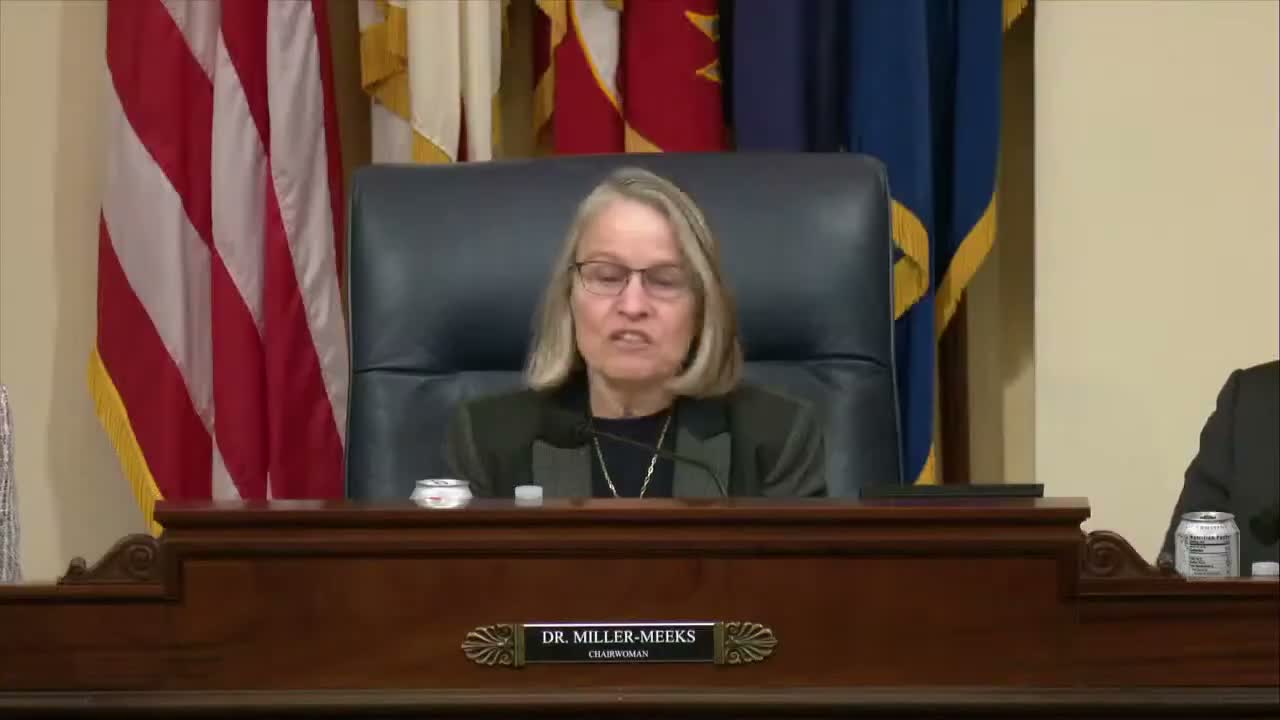
Chairwoman Miller Meeks opened the House Committee on Veterans Affairs subcommittee hearing saying the agenda included a set of bills to "improve the lives of our nation's veterans" including the Recovery Act, a discussion draft to fund community grants for mental-health and nutrition services.
Ranking Member Brownlee said the Recovery Act and related bills risked redirecting limited VA resources to outside providers with "fewer guardrails," arguing the measure could allow a grantee to receive grant funds while also billing VA community care and private insurers. Brownlee said the result could be "triple dip" reimbursement and fragmentation of continuity of care.
VA acting officials acknowledged concerns. Dr. Conagher and Dr. Llorente told the committee that VA "strongly supports efforts to expand access to veteran-centric evidence-based mental health," but that the department has "concerns with certain provisions in the bill" and would prefer to work with Congress to revise language so grant programs do not duplicate or undermine existing VA community care safeguards. In VA's view, the Recovery Act "doesn't really specify requirements" for provider eligibility, which could allow providers that do not meet community-care credentialing to participate.
Outside witnesses offered differing perspectives. Mission Roll Call argued the Recovery Act reflects veterans' priorities for community-based interventions and outcome reporting, saying survey respondents favor combining clinical treatment and community supports. The American Psychological Association warned that the bill as written does not require provider accreditation, widespread training in veteran-specific care, mandatory suicide-prevention training, or medical-record exchange, and flagged the risk that grant recipients could bill VA and other payers while receiving grants.
Committee members pressed for concrete guardrails: mandatory training in veteran cultural competency, accreditation or demonstrated quality standards, explicit requirements for medical-record exchange with VA, and specific outcome measures and reporting. VA witnesses repeatedly offered to negotiate technical language and structural alternatives to grants that could meet policy goals without creating perverse incentives.
Next steps: Members said they would submit technical edits and that committee staff would work with VA and stakeholders to clarify oversight, reporting, and eligibility before moving the bill further. The hearing record will include the witnesses' written statements.