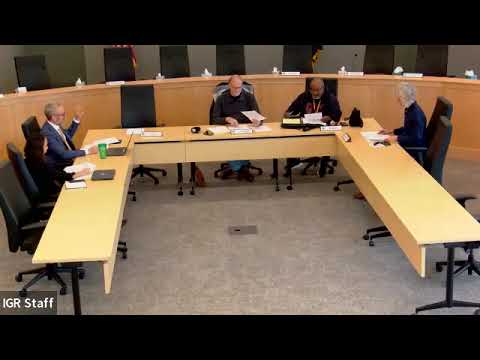
Eugene IGR committee outlines 2026 legislative priorities, highlights Clear Lake Road and airport funding
Loading...
Summary
City staff and councilors reviewed draft 2026 Intergovernmental Relations (IGR) priorities, stressing protection of shelter funding, pursuing industrial-site readiness for Clear Lake Road, and seeking state/federal support for Eugene Airport projects ahead of the short legislative session.
City of Eugene intergovernmental relations staff presented a draft set of 2026 legislative priorities to the IGR committee on Jan. 7, urging council to protect shelter funding, pursue industrial-site readiness investments for Clear Lake Road and press for state and federal capital support for Eugene Airport. Ethan Nelson, the city’s intergovernmental relations manager, said the priorities document and a companion policy document will be brought to council in a January work session for final action and to serve as the city’s formal policy positions during the short legislative session that begins Feb. 2.
Nelson told councillors the memorandum (dated Jan. 7) keeps the OHCS shelter program funding as a top priority; although the shelter line item was not included in recent proposed reductions, staff said continued advocacy is required because next biennium allocations could be roughly half the amount the city previously sought. He said the city and Lane County cooperated to mitigate immediate impacts and that the short session’s budget constraints mean sustained advocacy will be necessary to restore funding levels.
The committee discussed safeguarding a $6 million Clear Lake Road infrastructure allocation approved in 2025 and pursuing additional state industrial site readiness funds. Nelson said the city has local funds and a design RFP for the Clear Lake wastewater conveyance already in motion and that advocacy— including planned testimony by the mayor to an interhouse interim committee—will highlight Clear Lake investments alongside airport projects and the South Willamette Valley Innovation Corridor. Nelson described the governor’s economic prosperity concept (LC 109) and related local opportunities such as R&D tax credits, capital equipment incentives and enterprise-zone modernization as possible tools to make Eugene more competitive for state grants.
On capital construction funding, Nelson noted the short-session process limits legislators to sponsoring only two projects each and that the city is coordinating with legislators whose districts include the airport and Clear Lake Road. He said federal earmarks may favor the airport as lower risk for federal contracting complications and that staff are pursuing both state and federal pathways.
Nelson also listed additional priorities the city is tracking: protections for public officials (a negotiated amendment to SB 473), support for increased state investment in behavioral-health systems in partnership with Lane County, and involvement in Representative Nathanson’s task force on property tax reform from House Bill 2321. He said bill drafts for some items (for example, voluntary annexation concepts and certain policy changes) are pending and that staff will return to IGR when language is available.
The committee did not take formal positions on pending bills at the meeting; Nelson asked councilors to use the Jan. 26 council work session to discuss and, if appropriate, adopt the priorities and policy guidance that staff will carry into the short session.
The meeting concluded with staff noting continued fiscal pressures at the state level, potential impacts from transportation referendum outcomes on ODOT funding, and the need to monitor lottery/bond-sale forecasts that could affect timing and delivery of capital projects.