
NDOT proposes speed cushions on Estes Road; neighbors press for park safety, bike protections and ballot clarity
Get AI-powered insights, summaries, and transcripts
Subscribe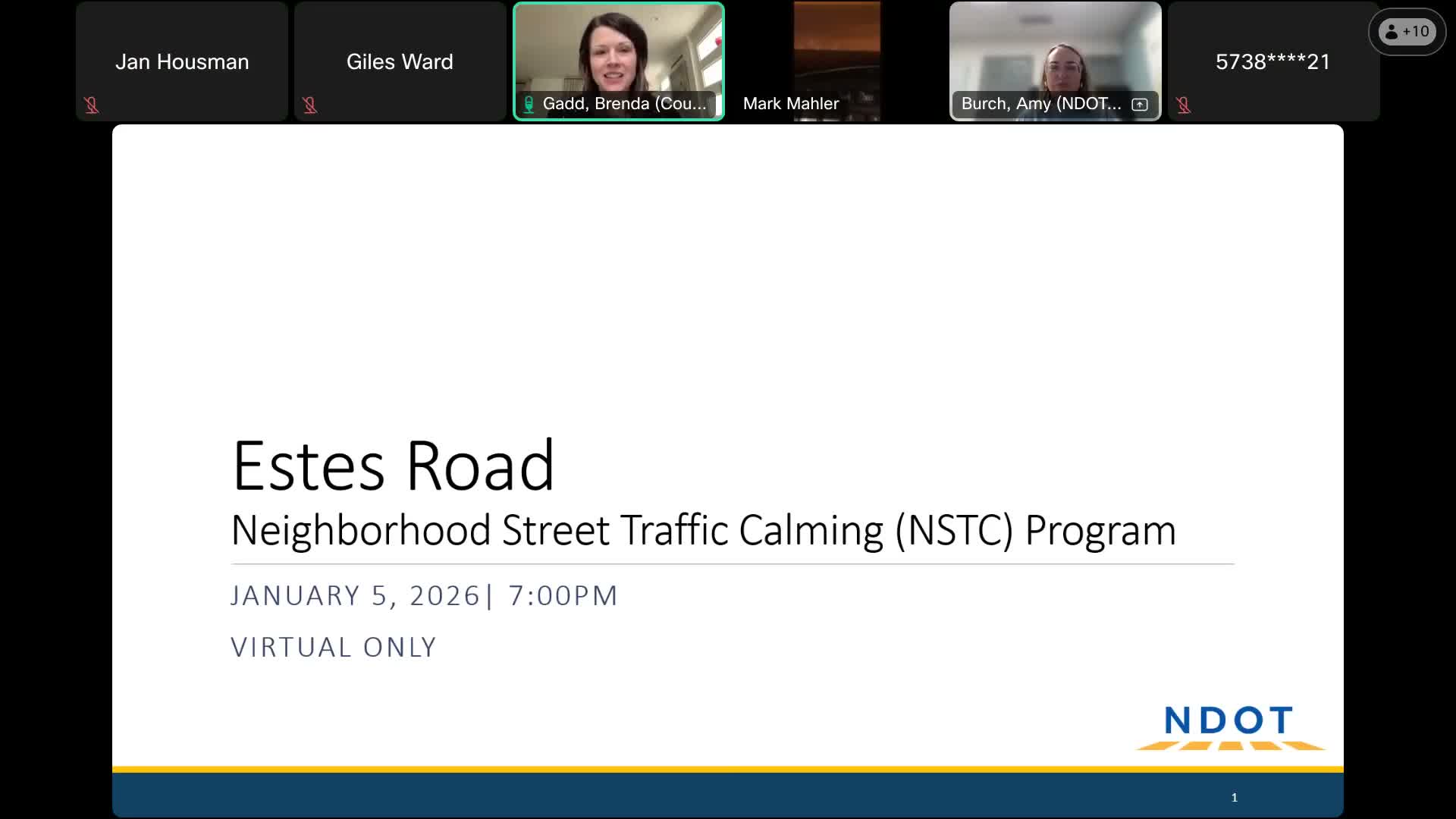
Summary
NDOT presented a preliminary traffic-calming plan for Estes Road that would add speed cushions and other measures after residents applied; neighbors welcomed safety goals but raised concerns about Woodmont Park access, cyclist safety and potential diversion to side streets. NDOT will refine the design, coordinate with parks and police, hold a second meeting and put the plan to an online ballot requiring 66% approval.
Amy Birch, a traffic engineer working with the Nashville Department of Transportation, presented a preliminary traffic-calming plan for Estes Road on a neighborhood call that she said is meant to reduce speeds and improve pedestrian safety.
"We measured the 85th-percentile speed to be 37 miles per hour," Birch said, describing the data that helped place Estes among NDOT's top-ranked streets for the program. NDOT staff also reported a two-way daily volume of about 3,500 vehicles and partial sidewalks on the corridor.
The plan shown to neighbors was a high-level concept that called for roughly seven sets of modular speed cushions placed along Estes between Woodlawn Drive and Woodmont Boulevard, with signage and special treatments near the park crosswalk. Birch called the design preliminary and said it will be refined after field review and community feedback.
Residents generally supported steps to slow traffic but urged NDOT to consider alternatives and to coordinate with other departments. "I just wanna make sure...what alternatives are considered before we commit to a particular solution," said Mark, a resident who asked the meeting hosts to weigh options such as sidewalks, targeted enforcement or pedestrian-activated flashing signals alongside or instead of vertical measures.
Several neighbors raised child-safety concerns at Woodmont Park and asked NDOT and parks staff to fix ingress, egress and parking layouts so children are protected regardless of cushion placement. One resident said parking and lack of sidewalks near the park were the "real issue" that needed a broader fix.
Bicycle safety and potential traffic diversion were recurring themes. Mark and other attendees warned that multiple cushions on a street without bike lanes could create hazards for cyclists and could encourage some drivers to shift trips to nearby side streets. Birch acknowledged those concerns, said NDOT evaluates cushion placement relative to driveway locations and available pavement width, and promised to study gap widths and alternative tools.
Residents also suggested a raised crosswalk with flashing signals at the park crossing; Birch said NDOT can evaluate such pedestrian-activated devices but that they may be higher-cost measures and not always part of the traffic-calming program's typical tool set.
On process, Birch explained how the neighborhood vote works: NDOT mails a postcard with a unique ID and QR link to an online ballot; voting is open for six weeks; only properties abutting the affected right-of-way (residential properties, schools and churches) are eligible; and a 66% "yes" share of returned ballots is required for the project to move to construction. Birch said construction typically follows 8–10 months after a successful vote depending on materials and scheduling.
NDOT and the council member leading the meeting said staff will do field work and refine the plan, coordinate with parks and the West Precinct on enforcement and park access, and schedule a second neighborhood meeting to review a more detailed design. Birch provided contact information (amybirch@birchtransportation.com; trafficcalming@nashville.gov) and pointed neighbors to the Engaged Nashville project page for Estes Road to review materials and leave comments.
The neighborhood engagement will inform placement and number of cushions and whether NDOT recommends alternate or supplemental measures before the ballot is sent.