NDOT presents Beach Bend traffic‑calming concept; vertical measures require 66% neighborhood vote
Loading...
Summary
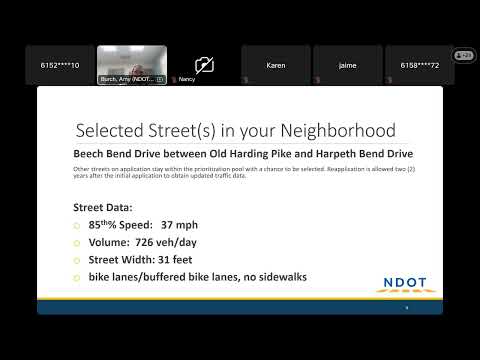
NDOT consultant Amy Birch presented a preliminary plan for Beach Bend Drive with roughly nine speed tables and described data showing an 80th‑percentile speed of 37 mph; she explained vertical measures require a neighborhood ballot with 66% approval and that NDOT would deploy radar signs if that vote fails.
Amy Birch, a transportation engineer and consultant working with the Nashville Department of Transportation (NDOT), presented a preliminary traffic‑calming plan for Beach Bend Drive at an online neighborhood meeting. Birch said the 80th‑percentile speed measured on the street was 37 miles per hour and that two‑way daily volume was about 730 vehicles, and she outlined vertical measures such as speed tables and cushions as well as nonintrusive alternatives like radar feedback signs.
The plan Birch displayed calls for a series of roughly nine speed tables spaced about 500 feet apart along Beach Bend Drive, between Old Harding Pike and Harpeth Bend Drive, with spacing and count adjustable based on community feedback and field measurements. "We measured the speed on Beach Bend at 37 miles per hour," Birch said, explaining that the 80th‑percentile measurement means 85% of traffic was traveling 37 mph or below during the data collection period.
Birch placed the concept in NDOT's broader traffic‑calming program, which is application‑based: more than 700 streets applied and the program typically selects about 50 streets per year. She explained NDOT scores candidate streets with a data‑driven prioritization that weights 80th‑percentile speed most heavily (45%), followed by volume (25%), non‑driver accommodations such as sidewalks and bike lanes (15%), and vulnerable‑user crash history over 10 years (10%). The program is administered through NDOT's online tracker and the Engaged Nashville project page.
On design details, Birch described speed cushions and speed tables as rubberized vertical devices generally up to 3 inches high (standard cushion length ~10.5 feet; typical table ~14 feet) installed in series and paired with advisory signage. She cited NDOT before‑and‑after examples where average speeds fell from about 31 mph to 22 mph and 80th‑percentile speeds dropped from 37 to 25 mph on studied streets. She also reviewed other engineering options — radar feedback signs, lane‑narrowing pavement markings, 'slow safer shoulders' for pedestrians and cyclists, chicanes, pinch points and traffic circles — and noted tradeoffs such as reduced on‑street parking or driveway impacts.
Residents raised operational concerns and alternatives. One attendee said white delineator posts previously installed were placed in front of mailboxes and driveways and were removed during a paving cycle; Birch confirmed crews took them out and said NDOT will consider alternate protections for the bike lane. Neighbors also requested fewer vertical devices and options such as painted center‑line markings or radar signs instead of cushions or tables.
Birch explained the community approval and implementation process. After engineers refine the design and post construction plans online, NDOT will send unique‑ID postcards to eligible property owners and open an online ballot for six weeks. "In order for the speed tables or cushions or anything like that to be installed, the project would need to receive at least 66% of the voters voting in favor of the project," Birch said. Eligible voters are residential properties (and schools/churches) whose right‑of‑way abuts the street; vacant lots and businesses are not eligible, and property owners receive a single vote each. There is no minimum turnout for the ballot to be valid; nonvotes are not counted as no votes.
If the neighborhood ballot fails to meet the 66% threshold for vertical measures, Birch said NDOT will pursue a "plan B" that does not include vertical devices but could include radar feedback signs and pavement markings that NDOT can implement without restarting the application and selection process.
Next steps Birch described included detailed field measurements and plan refinement, posting the design for public review, and a likely second neighborhood meeting in about two months. Birch provided contact information (amybirch@birchtransportation.com; n.trafficcalming@nashville.gov) and directed residents to NDOT's traffic calming website (trafficcalming.nashville.gov) and the Engaged Nashville project page for project materials and future notices.