
HHS outlines veterans relief program, fund balance and advisory board recommendation to consider paid application support
Get AI-powered insights, summaries, and transcripts
Subscribe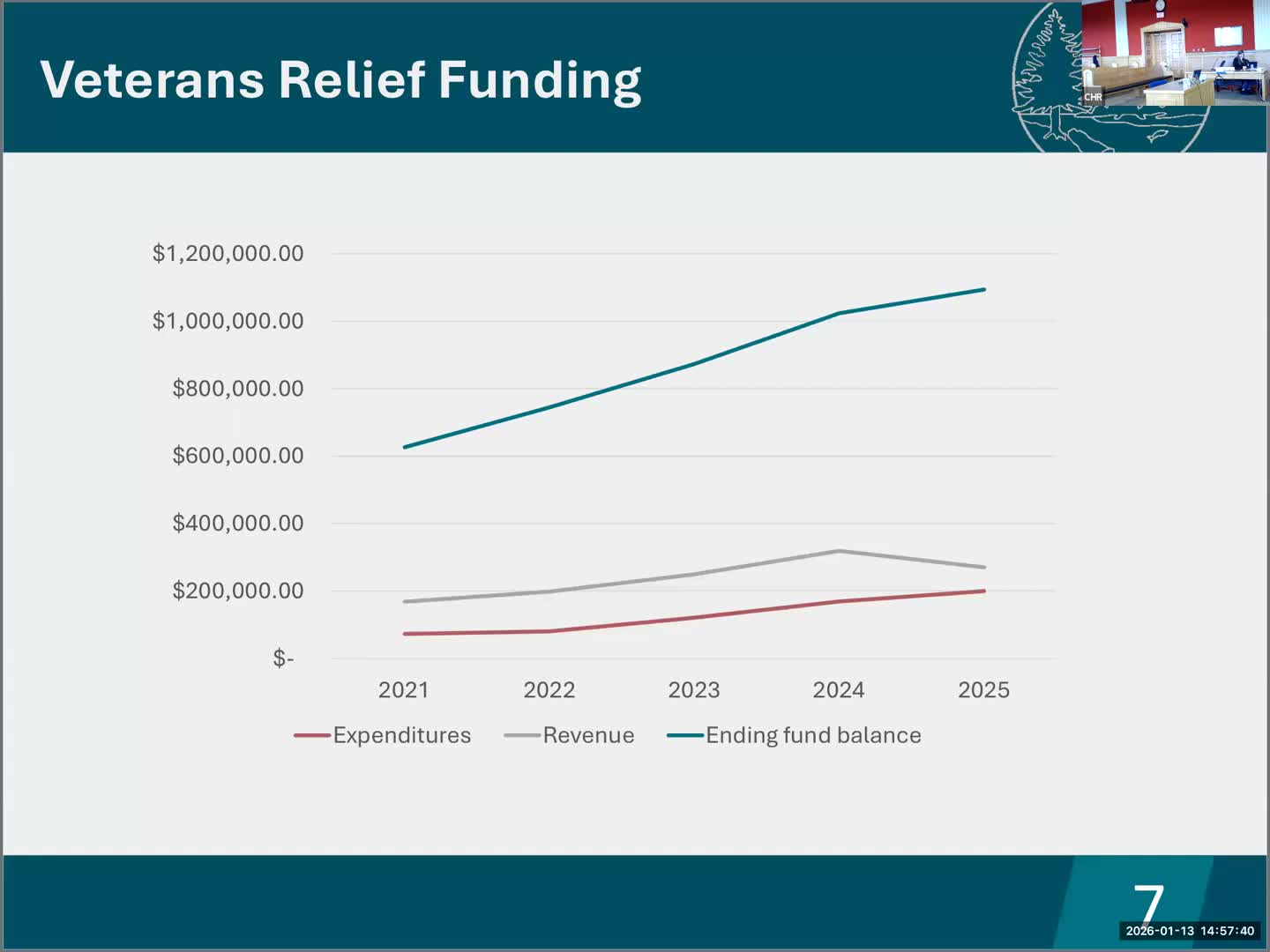
Summary
HHS reported the veterans relief assistance fund receives roughly $200,000 a year, holds about $1,000,000 in reserves, and the advisory board may recommend using some balance to fund a paid position to help veterans complete assistance applications; commissioners raised concerns about sustainability and priorities.
Gina James of Health and Human Services briefed commissioners on the veterans relief assistance program: statutory levy funding, program uses, current fund balance and a possible advisory board recommendation to create a paid position to assist veterans with applications.
James said the veterans assistance fund is supported by a levy (the transcript described the rate as a fraction of assessed value) and that the county currently collects the minimum allowable amount. She said annual revenue to the fund is roughly $200,000 and that the fund balance is about $1,000,000. James said the advisory board provides recommendations on program parameters (for example, frequency and dollar limits for rent assistance) and that the board may propose using some of the fund balance for a dedicated staff person to help veterans complete applications and increase access.
Commissioners debated potential benefits and tradeoffs. One commissioner said veterans are eligible for mainstream programs and the veterans relief program was designed to fill gaps; another commissioner said paying a staff person from the veterans fund could deplete resources and that the county should look for grant funding or other sources. James said volunteer screeners processed roughly 80–100 applications last year with 12–15 volunteers and that increased public outreach (stand downs) and higher assistance limits had likely raised demand.
Staff said they will provide additional usage numbers and options for how to use fund balance — including one‑time capital projects, targeted housing units, or administrative capacity — and will return with more detailed proposals.