Augusta staff outline cart-audit and billing fixes after cases of multiple cans and disputed charges
Loading...
Summary
After a contractual change shifted cart responsibility to a private carrier, staff described increased billing disputes and a multi-phase cart audit; staff committed to policy changes, an AMCS platform rollout, and follow-up with affected residents including one case where a rental was recorded with seven carts.
Augusta public works staff told commissioners the city's switch of cart responsibility to its new vendor, Coastal, created operational friction in the fall that increased turnaround time for billing-related service requests. Staff presented three years of performance data showing a pre-contract-change turnaround of roughly 90% resolved within five business days and a post-change three-year aggregate of about 84.4% within five business days; staff said weekly then monthly coordination with Coastal largely resolved operational gaps by the end of the year.
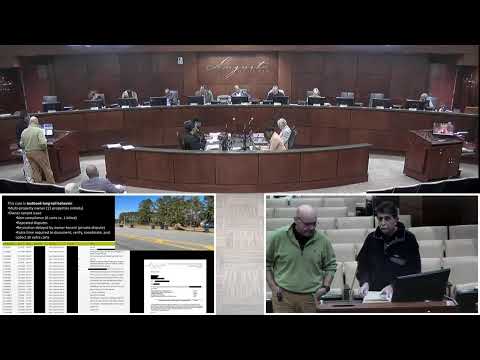
Staff walked commissioners through categories that drive prolonged cases: field verification needs, owner/tenant disputes, and cart-inventory complexities. As an example, staff showed a March photograph of a mobile-home lot with seven carts visible; the owner said he paid for a single cart and later received a bill far larger than expected. Staff described an ongoing process: route supervisors document anomalies, procurement/vendor coordination arranges cart audits (including an inventory and serial-number reconciliation where possible), and an AMCS platform rollout will provide tablet-based truck data and streamline dispute handling.
Why it matters: Incorrect billing can impose significant financial burdens on residents — particularly seniors and low-income households — and raises operational questions about transfer of responsibilities to private vendors. Commissioners asked staff to propose a clear policy and enforcement pathway to resolve similar disputes promptly.
What comes next: Staff committed to immediate follow-up with the identified resident, to deliver a written policy for handling multi-cart cases and owner/tenant disputes, and to expedite vendor training on the AMCS platform to reduce future errors.
Sources: Presentation by Oscar Flyte and Doctor Malik, route-supervisor photographs and service-data slides, and commissioner comments recorded in the committee transcript.