Get Full Government Meeting Transcripts, Videos, & Alerts Forever!
Get email alerts on the Land Use Rezoning topic
No spam. Unsubscribe anytime.
Planning commission recommends rezoning of 2338 Ashley River Road; County Council to hold public hearing
Summary
The Charleston County Planning Commission voted to recommend approval of a comp‑plan map amendment and accompanying ZLDR text amendment to change 2338 Ashley River Road from neighborhood commercial to community commercial, sending the request to County Council for public hearings on Feb. 10 and Feb. 19, 2026.
The Charleston County Planning Commission on Jan. 12 recommended approval of a comprehensive‑plan map amendment and a Zoning and Land Development Regulations (ZLDR) text amendment for 2338 Ashley River Road, moving the parcel from neighborhood commercial (NC) to community commercial (CC) and clearing the way for higher‑intensity uses and increased residential density.
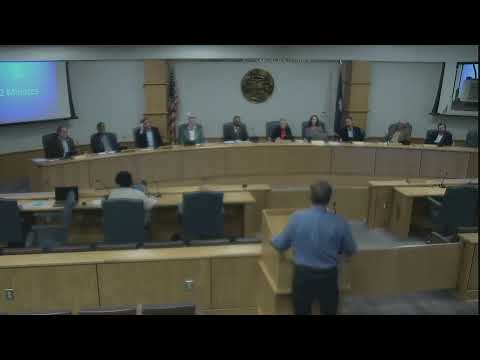
Chair Cindy Floyd opened the discussion after staff presented the request and recommended disapproval, citing the overlay’s intent for the village commercial area to be less intense than the commercial core. The request, submitted for tax map 353‑05‑00‑001, would increase allowable residential density from 4 units per acre under NC to 16 units per acre under CC and would add uses allowed in CC but not in NC.
Applicant Walter Sprouse, managing director of Cooper Sprouse LLC, described the site (an out‑of‑use car wash adjacent to the Charleston Woodworking School) and argued rezoning would allow renovation into professional office or small commercial spaces and would remove blight: “We continue to have problems with people sleeping there, with trash being dumped there. We’ve had all the wiring stolen out of that abandoned car wash. It looks horrible,” Sprouse said, arguing a renovation would improve the corridor.
His son, Sam Sprouse, owner and founder of the Charleston Woodworking School, said CC would permit specialized‑trade uses that could let former students rent nearby space: “If some of my students wanted to rent out space down there, they won’t be allowed” under the current NC zoning, he said, calling the change useful for workforce and small business opportunities.
Staff told the commission the property’s history included prior rezoning attempts and that under the overlay district the parcel sits within the village commercial area, which the staff said is intended for less‑intense commercial development. Staff noted that the applicant chose criterion C for the comp‑plan amendment but concluded the criteria may not have been met and recommended denial unless the comp plan change were first approved.
Commission discussion focused on whether the proposal amounted to spot zoning and whether the comprehensive plan was out of date at this parcel’s edge. Commissioners and staff clarified application‑specific limits under NC (a 5,000‑square‑foot cap for many office uses and, staff said, a 2,000‑square‑foot cap for artisan/craftsman uses) and explained that applicants can seek a Board of Zoning Appeals special exception to exceed some use limits.
A motion to approve the map amendment and the accompanying ZLDR text amendment carried on roll call, with the record showing seven aye votes and one no (Commissioner Luke Morris recorded the lone no). The commission’s recommendation will be considered by County Council at a public hearing on Feb. 10, 2026, at 6:30 p.m. in Council Chambers and again before the Planning & Public Works Committee on Feb. 19, 2026. Council will decide whether to forward the item through readings to adoption.
Background: The request affects an Ashley River Road parcel that currently has a woodworking school and an inactive car wash. The applicant said roughly 91.8% of parcels in the village commercial area are already zoned CC. Staff flagged flood‑zone designations (shaded X and AE 11) on the property’s FEMA map and noted adjacent parcels and city zoning context that factor into the county’s evaluation.
The commission’s recommendation is advisory; any zoning change or comp‑plan amendment requires County Council action and could be modified at subsequent readings.