Get Full Government Meeting Transcripts, Videos, & Alerts Forever!
Commission to enter closed session on contested case after competing attorney statements on damages
Summary
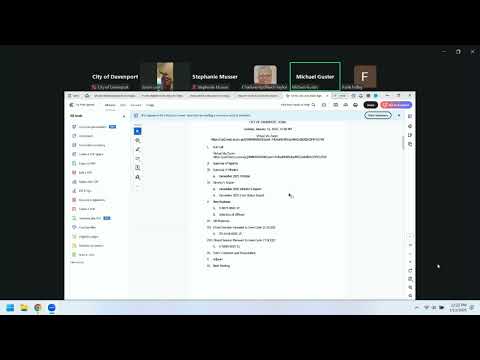
Before entering closed session on case EDash0118Dash0002Dash15, the commission heard opposing statements: Julia Adams, attorney for the school district, urged adoption of the ALJ's finding of no damages or, if any, a realistic award; Fred Sankovich, counsel for complainants, said the conduct was ongoing and damages requested were reasonable. The commission voted to move into closed session under code 21.5 and chapter 17a.
The Davenport Civil Rights Commission voted Jan. 13, 2026, to enter closed session to deliberate on contested case EDash0118Dash0002Dash15 after hearing competing statements on damages from counsel for both sides.
Before the closed session, Julia Adams identified herself as "the attorney for the school district" and asked the commission to adopt an outcome consistent with the administrative law judge’s decision that there are no available damages. Adams told the commission…
Already have an account? Log in
Subscribe to keep reading
Unlock the rest of this article — and every article on Citizen Portal.
- Unlimited articles
- AI-powered breakdowns of topics, speakers, decisions, and budgets
- Instant alerts when your location has a new meeting
- Follow topics and more locations
- 1,000 AI Insights / month, plus AI Chat