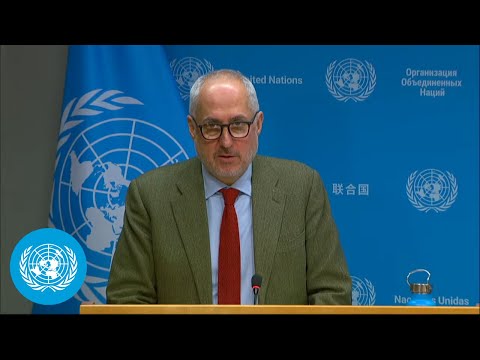
UN says Gaza ceasefire phase permitted more aid but urges parties to seize phase 2 to expand relief
Loading...
Summary
At a UN press briefing, spokesperson Steph said phase 1 of the Gaza ceasefire allowed the UN and partners to deliver significantly more humanitarian assistance but warned that insecurity and logistical hurdles still limit relief; the UN said it is ready to support phase 2 implementation and emphasized its role is humanitarian, not demilitarization.
UN spokesperson Steph told reporters that the ceasefire's first phase enabled the UN to deliver ‘‘much more humanitarian aid’’ than during active hostilities, but that the humanitarian needs in Gaza remain ‘‘humongous.’’ She said the UN and partners have provided tents, mattresses and other shelter items to more than 9,700 families since the ceasefire took effect but that only about 40% of health facilities are functioning, many only partially.
Asked about a just‑announced move to phase 2 of the agreement, Steph said the UN ‘‘stands ready to support the full implementation of the agreement’’ and hopes phase 2 will allow ‘‘even more humanitarian aid.’’ She emphasized that ‘‘the UN is not involved in the demilitarization of armed groups in Gaza,’’ saying the UN’s current focus is humanitarian delivery and assistance.
Steph recommended that analysts consult the coordination dashboard for consolidated data on cargo movements into Gaza and cautioned that some bilateral deliveries fall outside the coordinated figures. On reporting about incident counts, she said she would seek clarification and provide updated casualty or incident figures when confirmed.
The briefing also named Ramiz Alabkarov as the senior UN representative on the ground in Gaza who is leading day‑to‑day contacts and visiting health and nutrition facilities. Steph said the UN will support initiatives that help restore a political horizon toward a two‑state solution when appropriate, but for now the priority remains moving life‑saving supplies and services to civilians.