
Flagler County commissioners review self‑funding case as clinic data shows savings
Get AI-powered insights, summaries, and transcripts
Subscribe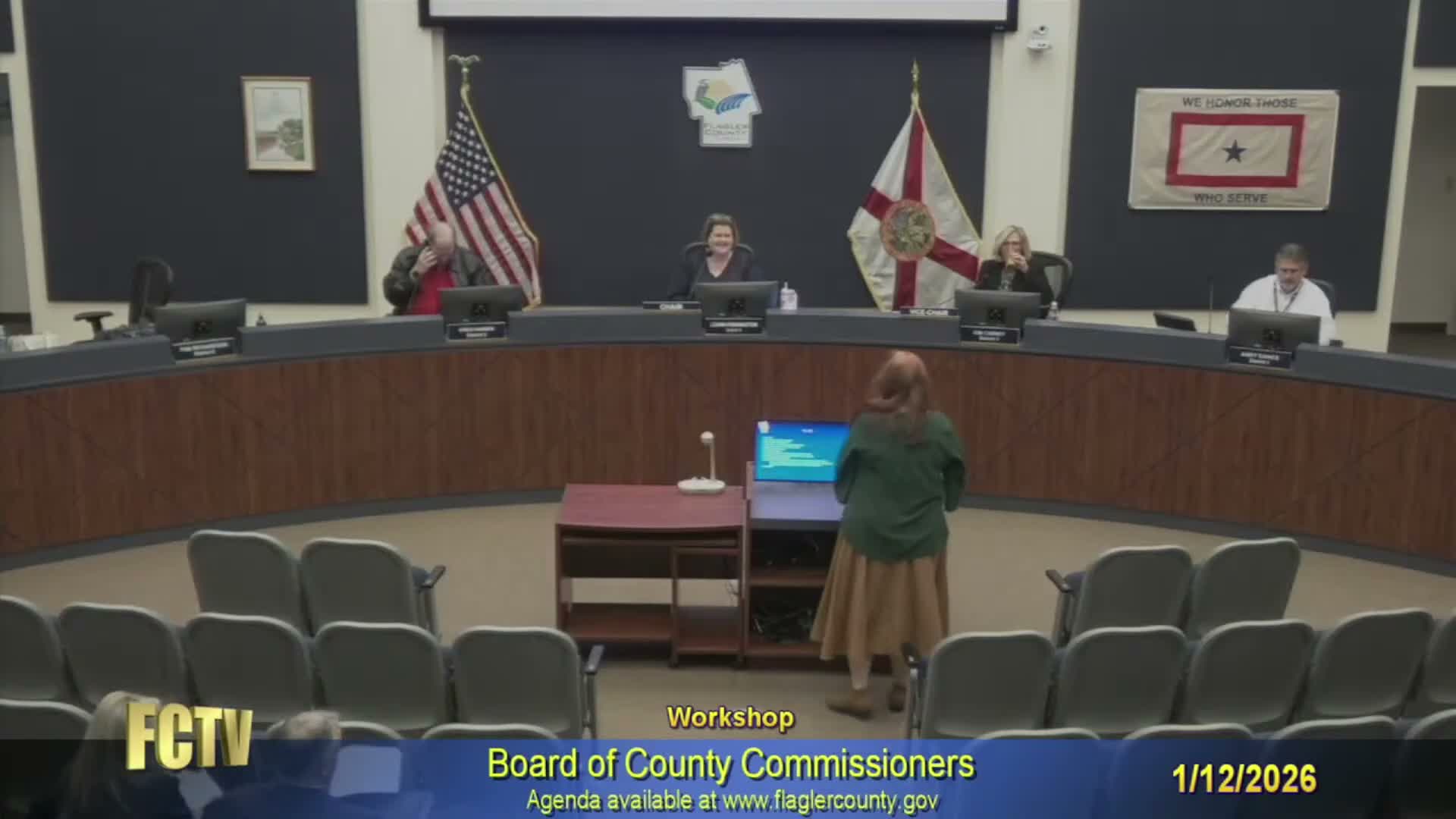
Summary
Benefit consultant Sherry Beignet told commissioners self‑funding has historically saved Flagler County money compared with fully insured alternatives; the county health clinic, operated by My Health On‑site, reported high utilization and measurable claim avoidance, but commissioners asked for further actuarial detail and next‑step options.
Flagler County commissioners spent the morning reviewing whether to continue self‑funding employee health coverage or move to a fully insured plan.
Sherry Beignet, the county’s benefit consultant, outlined the mechanics of a self‑funded plan — administrative services (ASO/TPA), stop‑loss reinsurance and aggregate protection — and said the county’s current specific stop‑loss deductible is $250,000. She told the board that, based on Blue Cross’s fully‑insured quotes, an equivalent fully insured premium would have been about $12.64 million for the group while the county’s net plan cost for the 2024‑25 plan year was roughly $9.12 million.
"If you were fully insured, that's how much you would have paid out," Beignet said, adding that the $9.1 million figure includes clinic expenses and an international pharmacy program and excludes prescription rebates and stop‑loss reimbursements.
Brian Branham of My Health On‑site, which runs the county clinic, said the clinic completed just over 4,000 appointments in 2024 and produced clinical and financial impacts the vendor estimates translate into roughly a 2:1 savings. "We file zero claims" for clinic visits, Branham said, explaining that on‑site pass‑through services reduce plan claim volume and therefore cost exposure for the county when self‑funded.
Commissioners pressed on details: how utilization is counted (Branham said provider hours are budgeted and utilization runs about 85 percent), whether the clinic provides mental‑health screening (Beignet and Branham said behavioral health counseling has been available since January 2025), and what the county would face if it moved back to fully insured coverage (Beignet noted run‑out liability and an extra administration charge from an insurer to handle run‑out claims).
Tom Bexley, clerk and comptroller, urged the board to consider economies of scale and consolidation as a lever to negotiate lower rates, and other constitutional officers and public commenters emphasized the clinic’s convenience and preventive value.
No formal decision was made; commissioners asked staff and the consultant to return with more detailed actuarial and enrollment scenarios, and to include fully insured quotes and estimated run‑out obligations in that follow‑up.
What’s next: staff will bring more detailed cost comparisons and breakout scenarios for self‑funded vs. fully insured options at a future meeting so commissioners can weigh financial exposure, program design changes and the clinic’s role in any funding model.