
House Foreign Affairs Committee grills witnesses as administration moves to license H200 chip sales to China
Get AI-powered insights, summaries, and transcripts
Subscribe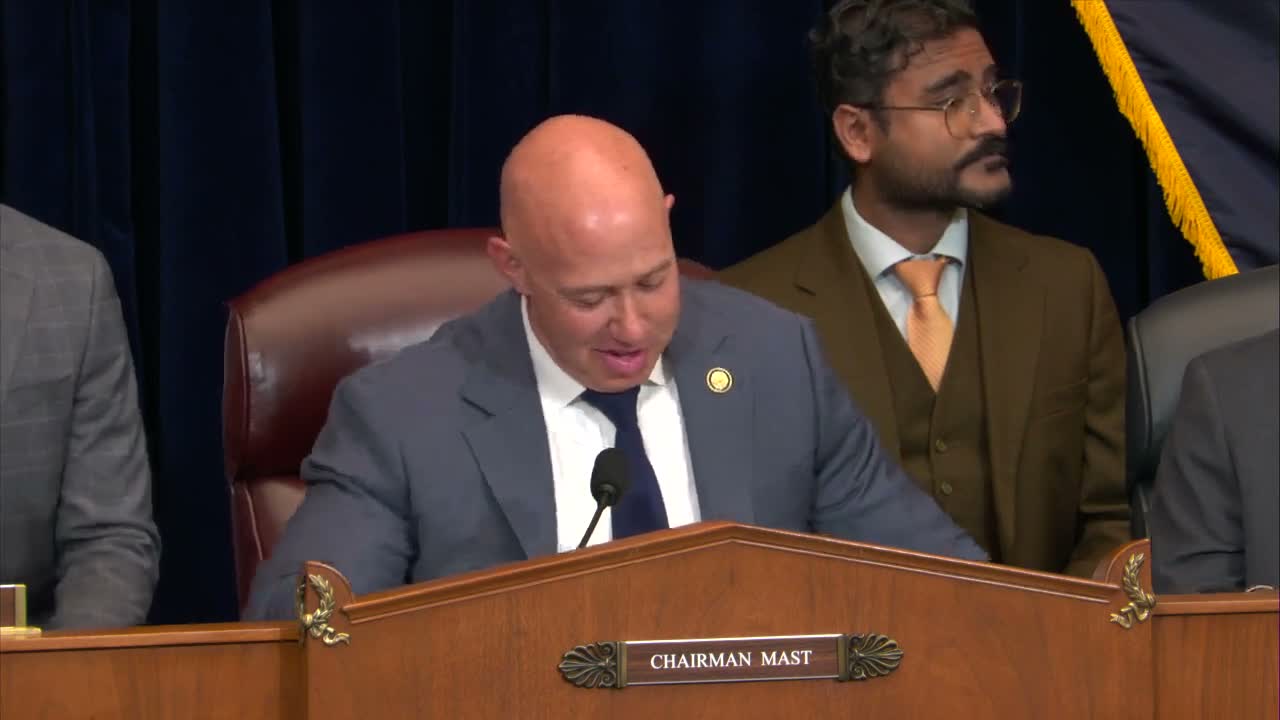
Summary
Lawmakers and three national-security witnesses debated plans to license NVIDIA H200 chip sales to China, focusing on national-security risks, enforcement limits at BIS, allied coordination on export controls and proposals such as the AI Overwatch Act to restore congressional oversight.
WASHINGTON — The House Foreign Affairs Committee held a public hearing on Jan. 14, 2026, to examine U.S. export-control policy after the administration moved to license sales of NVIDIA’s H200 chips to China. Lawmakers from both parties pressed three national-security witnesses on whether licensing advanced AI chips risks eroding a U.S. advantage in military and commercial artificial intelligence.
Chairman Mast opened the hearing by saying the goal was "winning the AI arms race against the Chinese Communist Party," and previewed his bill, the AI Overwatch Act, to create additional congressional guardrails on sales of cutting‑edge chips. The chair also submitted for the record a Bureau of Industry and Security (BIS) final rule issued Jan. 13, 2026, that he said includes restrictions barring sales to military end users.
The committee heard from three witnesses: Matt Pottinger, former deputy U.S. national security adviser; Orin Cass, founder and chief economist at American Compass; and John Feiner, former principal deputy U.S. national security adviser. All three told the panel that limiting access to advanced compute has been a decisive tool in denying adversaries the capability to train frontier models.
"Selling NVIDIA's H200 chips to China will supercharge Beijing's military modernization," Pottinger said in his opening remarks, arguing that advanced chips enable capabilities ranging from surveillance and cyber operations to autonomous weapons. Pottinger and other witnesses repeatedly described export controls first imposed in 2019 as central to maintaining a U.S. lead.
Ranking Member Greg Meeks told the committee he was alarmed by recent administration actions and cited Justice Department charges alleging smuggling of H200 chips to China. "Our export controls are critical to our national security and our strategic competition with China," Meeks said, and asked the Commerce Department for licensing documentation and details about vetting procedures.
Committee members pressed witnesses on enforcement and verification. Witnesses warned BIS faces a backlog and that the labor‑intensive vetting called for in the new rule will require significant resources. "Verification that's gonna depend in some cases on the attestations of Chinese companies about who their customers ultimately are," Feiner said, adding that enforcement is difficult when end users and supply chains are opaque.
Members also debated diplomatic and economic dimensions. Representative Huizenga and others asked whether the United States can compel key allies such as the Netherlands and Japan to harmonize controls on chip‑making equipment; witnesses urged stronger allied coordination and, if necessary, legal tools to limit backfilling of restricted capabilities. Representative Barr raised concerns about the electricity and base‑load power needed to sustain U.S. data centers as compute demand climbs.
Several members repeatedly referenced reports that Chinese companies had placed large orders for H200 chips and cited BIS data or news reporting; witnesses cautioned that order volumes and import approvals differ and that Chinese domestic policy — including requirements that firms continue to buy inferior domestic chips to nurture national champions — complicates simple demand assessments.
While witnesses largely agreed that export controls are an effective national‑security tool, they differed with the administration’s approach of licensing the H200 under a complex review. Cass and Pottinger urged reversing licensing decisions for the most advanced chips and enacting statutory oversight. Cass said legislative measures such as the AI Overwatch Act would ensure licensing "reasoning is well articulated, and the decision makers are accountable to the American people." Feiner stressed that enforcement capacity must match policy design.
Lawmakers also flagged human‑rights and broader strategic risks if Chinese actors gain more computing power. Members cited examples ranging from surveillance and censorship to potential dual‑use applications in biotechnology and cyber operations. Witnesses pointed to Ukraine and other conflicts as evidence that battlefield AI and dual‑use experimentation are accelerating.
The hearing concluded without votes. Chairman Mast asked witnesses to answer follow‑up questions in writing. The committee signaled it will continue oversight and legislative work to reconcile executive‑branch rules with broader bipartisan concerns about technology, allied coordination, enforcement capacity and the risk that permitting large exports will erode the U.S. lead in compute.