Get Full Government Meeting Transcripts, Videos, & Alerts Forever!
Get email alerts on the Jail Intake topic
No spam. Unsubscribe anytime.
Greene County officials outline jail intake, booking and screening procedures; 2024 bookings top 14,500
Summary
Lieutenant Tom Kanner of the Greene County Sheriff's Office described intake and booking procedures, body‑scanner use, medical screening, staffing shortfalls and 2024 booking statistics; he said an agreement to house immigration detainees increased workload and revenue.
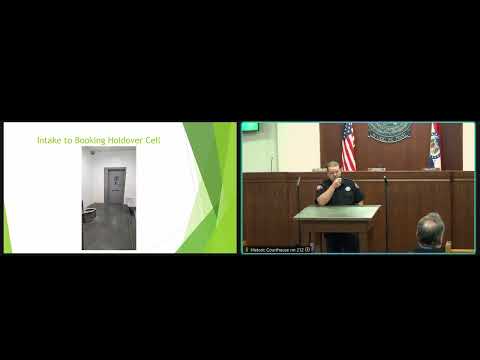
SPRINGFIELD, Mo. — Lieutenant Tom Kanner of the Greene County Sheriff's Office gave a public briefing on jail intake, booking and warrants operations, explaining how the jail documents, screens and processes people who arrive in custody and describing equipment, training and staffing needs.
Kanner said intake exists to “formally document a person's entry into the justice system for security, health, and legal processing,” and walked through steps that include identity verification, mug shots, warrant checks, searches, property inventory and medical and mental‑health screenings. "We booked in 14,588 people" in 2024, he said, and provided a gender breakdown of 10,914 males and 3,674 females.
Why it matters: intake and booking determine immediate medical care, housing assignment, legal paperwork and whether an arresting officer has provided sufficient documentation to legally hold a person. Kanner said the jail releases nearly as many people each year as it books, and that January–November 2024 showed roughly 2,000 more bookings than the same period the prior year.
Kanner described technology and evidence‑handling practices used during intake. The facility uses a body scanner to check for weapons or contraband and a vendor‑operated kiosk to handle arrestee funds; property is inventoried into a blue bag that cannot weigh more than 15 pounds. For identification, booking staff take two mug shots (front and profile) against a required gray background and photograph visible tattoos; fingerprint submissions generate an OCN (offense cycle number) that links the arrest to court records.
On DNA and fingerprints, Kanner said some crimes require a buccal swab that is mailed to the highway patrol crime lab and that automated fingerprint returns through the FBI/AFIS generally arrive within about "3 to 4 hours." He also explained that if DNA is collected and a person is later found not guilty, the sample is scrubbed from records; if convicted, the sample remains part of the record.
Kanner said Greene County is a "no refusal" county for driving‑while‑intoxicated cases: if an arrestee refuses a breath test the office will seek a warrant and pursue a blood draw. He noted that medical clearance is required by state statute in certain situations — for example, when airbags deploy after a crash.
On staffing and operations, Kanner described the shift structure and shortfalls: the jail runs four 12‑hour shifts with about 60 people per shift and is "understaffed," while an ideal shift would have roughly 70 staff. He emphasized the workload in recent months, saying the sheriff's decision in March to house about 300 immigration detainees has increased the facility's population and operational demands and also provided financial benefit to the county.
Training and oversight: Kanner said the body‑scanner vendor provided a "train‑the‑trainer" program and that scanner operators must complete vendor training and certification every two years; he added the jail can consult medical doctors if an image raises questions. Restraint checks and medical observations for people on watch are conducted at 15‑minute intervals.
Release and reentry: the jail does not provide general transportation to people released from custody, Kanner said, but the facility offers a free taxi ride to Burrell Rapid Access (a local behavioral health intake provider) for people who need that service and provides a free phone in the lobby so released individuals can call for rides.
Public access and next steps: Kanner invited the public to schedule tours and contact the jail for more information. The briefing closed with a Q&A in which attendees asked about pre‑booking, how staff handle non‑English speakers, and common identification challenges.
The Sheriff's Office did not propose any ordinance or formal vote during the briefing; presenters encouraged follow‑up questions and public tours.