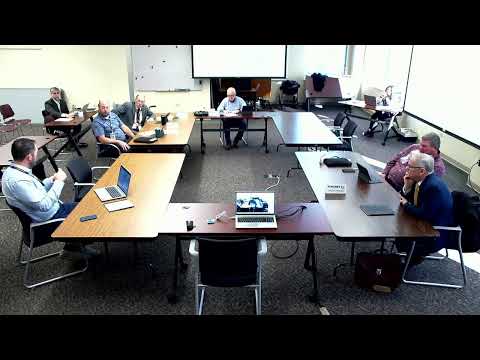
Committee hears about SB25, legal risks and battery-storage safety as solar projects grow
Loading...
Summary
Staff briefed the committee on SB25 (the state 'solar bill of rights'), legal exposure for counties, and technical and emergency-response considerations for battery storage as solar projects and conditional-use filings climb in McHenry County.
County planning staff warned the committee on Jan. 12 that state law changes and rapid growth in solar and battery proposals are reshaping the local review and litigation landscape.
SB25 and legal exposure: Adam, a county planning official, said the governor signed SB25, which staff described as accelerating review deadlines (hearings must conclude within 60 days), extending certain rights to municipalities, and creating a statutory path where a county could be liable for attorney’s fees if a petitioner sues and prevails. "There are some restrictions that will impact the county, but most of it is more of the same," Adam said, while also noting that attorney-fee exposure now becomes part of litigation risk.
What the county has seen: Staff reported roughly 66 approved conditional-use permits for solar, with mid-to-high seventies in application counts and about 18 projects that have obtained full building permits. Adam said the county is compiling GIS maps of applications and will update the committee on site counts and acreage; he estimated total acreage across projects is in the thousands.
Battery storage and Prairie Grove: The committee discussed a proposed Prairie Grove battery energy storage presentation (a concept presented to the village and the county previously). Adam said no formal county application is on file; the presentation covered a roughly 50-acre footprint that straddles incorporated and unincorporated parcels. Staff said future applications will be reviewed under state law and National Fire Protection Association codes, and that the county is working on a building-code amendment focused on 'best systems' for battery installations.
Safety and emergency response: Committee members raised questions about siting batteries near floodplains and water resources and about firefighting tactics. Adam and emergency planners described mitigation measures (buffers, double containment, stormwater and floodplain protections) and technical features (compartmentalized battery units, heat sensors, cooling jackets, venting panels). Fire/hazmat guidance discussed in a presentation included cooling surrounding areas and allowing some thermal-runaway fires to burn in a controlled manner while protecting surrounding assets; staff said these tactics reflect current industry and emergency-response practices.
Unresolved legal questions: Members asked whether earlier denials in other counties would fall under SB25 and whether retroactivity could apply in pending litigation. Adam said the answer depends on litigation strategy and court interpretation; he pointed to active cases in Will County and split results elsewhere as relevant precedents.
Next steps: Staff said they will continue to work with fire districts, the state's attorney and technical partners on code guidance and will bring any proposed building-code amendments to the committee.