Bradley County reviews proposed tax increment financing policy for Industrial Development Board
Loading...
Summary
County staff and bond counsel presented draft policies to govern use of tax increment financing (TIF) by the Industrial Development Board, outlining process safeguards, an 80/20 split ceiling for increment allocation, a recommended minimum project size and term limits; commissioners asked about risks and next steps.
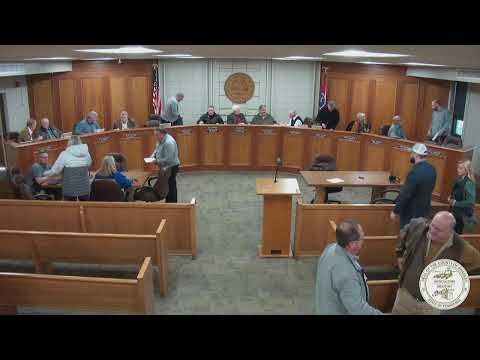
Bradley County commissioners heard an extended presentation on proposed policies and procedures to govern tax increment financing (TIF) transactions that the Industrial Development Board (IDB) might pursue on behalf of the city and/or county.
An IDB-requested resolution and a packet of draft policies were presented to the commission by staff. The presenter said the draft is a process document that would establish how the IDB and local governments evaluate TIF applications rather than authorize any specific incentive.
Mark Mamantoff, a bond lawyer who described himself as experienced in local development financing, told the commission: “You are not approving any sort of incentive by approving these policies.” He said the policy would set a clear process for how developers apply, how the IDB and application review committee evaluate projects, and how recommendations come back to county and city governing bodies for final approval.
Key policy elements discussed included a suggested ceiling where a maximum of 80 percent of incremental tax revenue could be pledged to support a project with 20 percent retained for the county (or city); a maximum TIF term of 20 years without state comptroller approval; a minimum project size set in the draft at $25 million except in certain downtown redevelopment cases; and a cap limiting TIF assistance to no more than 20 percent of total development costs to ensure “skin in the game.” Mamantoff also recommended independent “but-for” economic analysis to determine whether an incentive is necessary.
Commissioners raised process and risk questions. They asked whether the IDB policy would replace or complement PILOTs (payment-in-lieu) or housing authority financing; Mamantoff said PILOTs typically are used for commercial deals and the housing authority approach requires a statutory finding of blight and different term limits. Commissioners also cited past county experiences nationally (including defaults tied to the 2008 recession) and asked for clearer risk identification and mitigation steps before a vote.
Staff suggested the commission could send the draft to the finance committee for a recommendation and schedule the resolution for a future voting meeting after additional review and edits. No formal vote was recorded during the meeting; staff indicated they would accept written questions and come to the finance committee or a future meeting to answer them.
Next steps: staff recommended additional review and an optional finance-committee review before placing the IDB TIF policy resolution on a voting agenda.