Baltimore health chief outlines new Division of Public Behavioral Health, strategic plan and staffing push
Loading...
Summary
Health Commissioner Michelle Taylor told the City Council committee the department has created a Division of Public Behavioral Health funded in part by opioid restitution funds, is adding staff and will expand prevention, harm reduction and treatment programs as part of a citywide overdose response strategy.
Michelle Taylor, Baltimore City’s commissioner of health, told a City Council public safety committee that the Health Department has created a Division of Public Behavioral Health to coordinate prevention, harm reduction and treatment as part of a citywide overdose response strategy.
Taylor said the division was proposed in 2024 to use opioid restitution funds (ORF) and will house core functions including data and epidemiology, policy and strategy, communications and essential services. “We are working to address substance use disorder holistically, working across prevention, harm reduction, and treatment,” she said, describing a public health approach that ranges from policy change to individual-level services.
The department is expanding programming across bureaus, Taylor said, including a prenatal-to-3 behavioral health unit in the Bureau of Maternal and Child Health and added behavioral health work in the Division of Aging and Community Support. Taylor noted partnership with Johns Hopkins for the Health Care on the Spot mobile buprenorphine clinic.
Taylor said the city’s needs assessment informed a mayor’s Office of Overdose Response strategic plan, which sets an aspirational goal of reducing overdose deaths 40 percent by 2040 and organizes work under five priorities, 13 strategies and 47 targeted activities. She said the department will run the next needs assessment this spring as required by an executive order.
On staffing, Taylor said the department has hired eight positions, has 11 offers pending and three roles in interview, and that the deputy commissioner vacancy is a priority. She described funding for positions as a mix of state, federal and ORF money and said the department is building a team to sustain work beyond ORF.
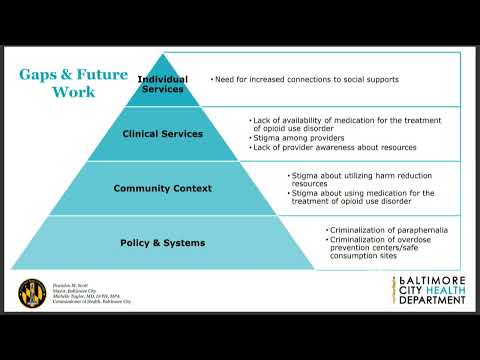
Taylor highlighted barriers that limit program access, including the illegality in Maryland of overdose prevention centers and the criminalization of drug paraphernalia, and said the mayor will prioritize decriminalizing paraphernalia in the upcoming state legislative session. “This is a serious problem because it deters people from engaging with syringe service programs,” she said.
Taylor closed by listing next steps in staffing, planning and programming, and said the department will monitor program effectiveness and support continuous quality improvement.
The committee asked for additional follow-up items, including detailed vacancy reports, salary comparisons and clarifications on which actions require state approval. Taylor agreed to provide the requested information.