
Burlington alternative school outlines rapid growth of project-based pathways
Get AI-powered insights, summaries, and transcripts
Subscribe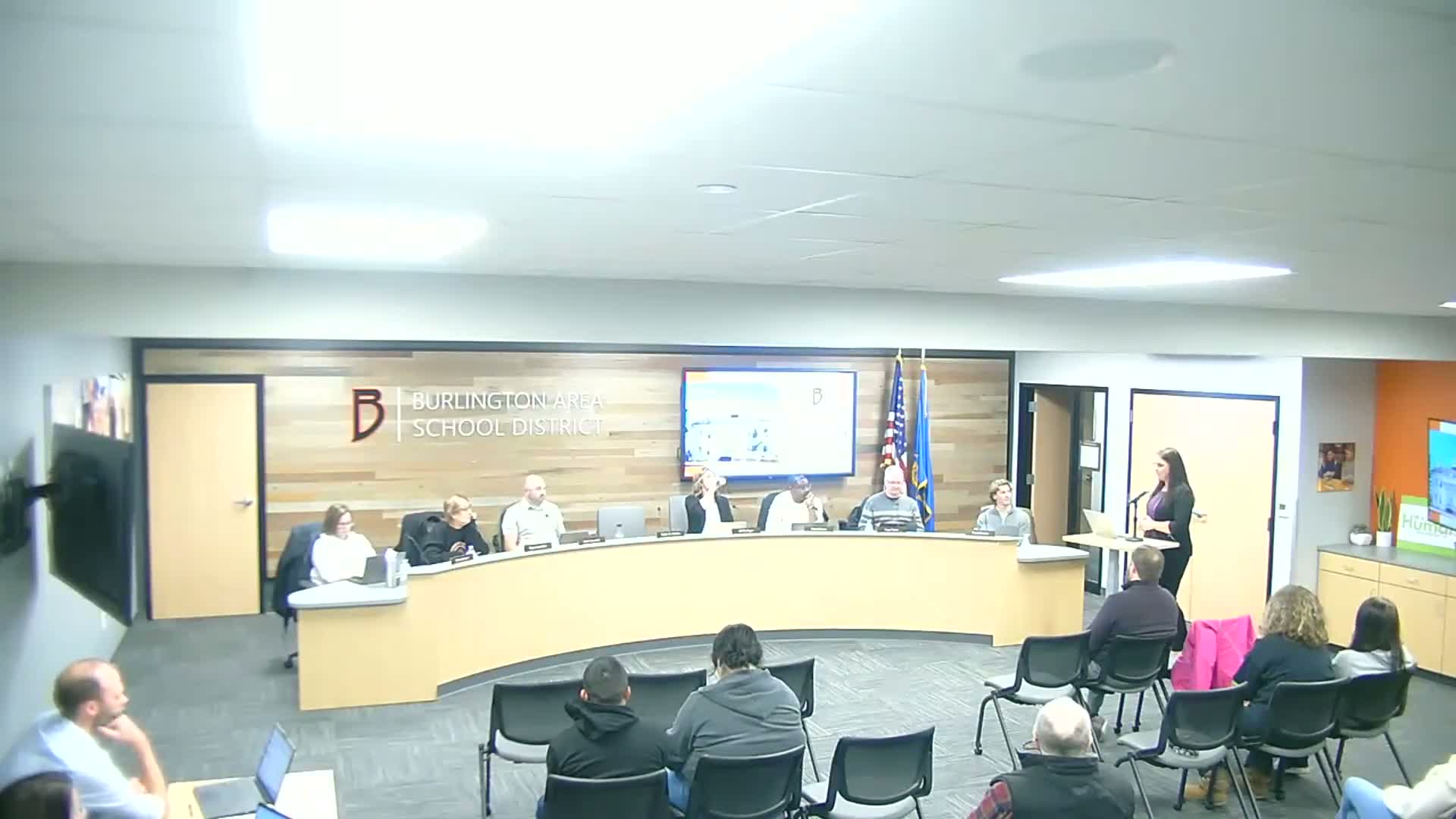
Summary
FRC principal Katie told the school board the alternative program expanded from roughly 8 to 56 project-based learning pathways, launched a 23-credit pathway to avoid premature graduation and reported dozens of student completions and near-term graduations since the program's restart.
Katie, principal of the Burlington alternative school (FRC), presented an update to the Burlington Area School District school board on Jan. 12, saying the program has substantially expanded its project-based learning (PBL) offerings and student supports.
"We started the year with about 8 PBLs. We are up to 56," Katie said, describing new pathways in film analysis, fashion design, culinary careers and a green-thumb gardening project. She credited community connections and employer partnerships that place students in real jobs.
The presentation outlined a new 23-credit graduation pathway that replaces a previous 17-credit track for all incoming FRC students. Katie said the change was approved to reduce early graduation among younger students: students already on a 17-credit track are grandfathered in, while new students will follow the 23-credit plan.
Mr. Wedig, FRC staff, described hands-on PBLs in gardening and cooking. He noted a $500 Burlington Area Garden Club grant to start the garden and a recent chocolate sale that raised nearly $400 to support the program's kitchen supplies. "We raised almost $400 for the kitchen," he said.
Katie gave outcome metrics: 11 students have graduated so far this year with five more scheduled to graduate in the next two to three weeks; the program has produced 41 graduates since restarting and is projected to reach 59 by year end.
Board members asked about employer partners and scope; Katie listed local businesses where students work, including Redmoor Recycling, Allied Plastics, Walgreens, McDonald's, Taco Bell, Walmart and others. She said many students are employed and that the schedule is designed to mix in-school seat time with work experience so students meet the 15-hour minimum weekly requirement.
The report emphasized the FRC's role in credit recovery and career readiness. The board did not take formal action on the presentation; members thanked staff and students and offered supportive questions.