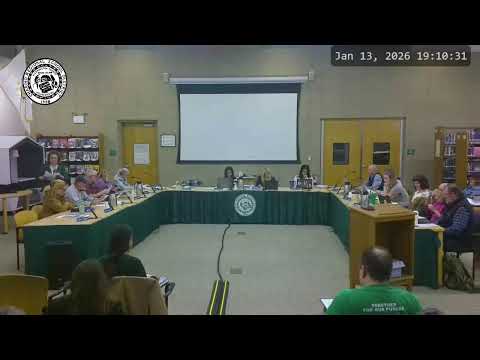
Chariho committee reviews draft bond legislation, debates ‘one‑or‑more’ school language and seeks town council input
Loading...
Summary
Bond counsel reviewed draft special legislation authorizing a bond for new elementary construction; the committee debated language allowing either a single unified school or "one or more" elementary schools, asked for clearer voter explanation and moved unanimously to ask the superintendent to seek town‑council feedback on cost‑sharing.
Bond counsel and district leaders outlined draft special legislation the Chariho Regional School District would ask the General Assembly to introduce to authorize a school construction bond for a proposed unified elementary‑school project.
Karen Grandy, bond counsel, told the committee the draft must specify the principal amount sought, a clear project description and any conditions to issuing bonds. She said counsel typically recommends building a modest contingency into the authorized maximum so the district is not forced to go back to voters later if costs rise, and that the draft include conditions tied to state reimbursement levels the district anticipates. "It's always better to put in for a little bit more than you actually need because that doesn't mean you have to borrow it all," Grandy said.
The committee focused on whether the legislation should phrase the project as a single unified elementary school or as "one or more" elementary schools so the district retains flexibility if a single‑site option cannot be acquired. Several members cautioned that the "one or more" formulation could be perceived by voters as a bait‑and‑switch. "I don't want this to fail before it even gets out the door," one member said, urging language that keeps the district's intent for a unified school clear. Grandy said the language can be refined to ensure the unified‑school goal is prominent while preserving contingency options tied to land or site constraints.
Members also discussed a commonly used contingency in special‑legislation bond language that would make issuance contingent on receiving a threshold of state school construction reimbursement (board members discussed the district's typical eligibility percentage when applying as a regional district). Counsel warned that the secretary of state's office is reluctant to place long explanatory text on general‑election ballots and said explanatory language is more commonly included in voter information booklets or campaign materials than on the ballot itself.
The committee unanimously approved a motion directing the superintendent to draft a letter to the three member towns' councils asking them to convene and provide feedback on potential bond language and options for sharing costs (committee members suggested as an example an equal one‑third split). The motion was amended to focus the request specifically on the proposed bond language and the superintendent’s draft was to be circulated for committee review before sending.
The committee later voted unanimously to resubmit a stage‑1 application to the state school‑building authority to preserve the district's place in the process and allow additional time for land, environmental and soils studies that must be completed before a full stage‑2 submission.
What comes next: the superintendent and bond counsel will revise the draft language to reflect committee direction, the district will prepare voter materials and the superintendent will circulate the draft letter to town councils for feedback. The committee emphasized the need for clear, public communication so voters understand the district’s primary goal of a unified school and any contingency language included in the legislation.