Charlottesville staff recommend Mathspace for secondary, Bridges and STEMScopes for elementary; board asked about equity, screen time and AI tutor
Loading...
Summary
District staff recommended adopting Mathspace Virginia for secondary math and a dual elementary model (Bridges K–3; STEMScopes 4–5) with a five-year estimated cost of about $489,340; board members pressed staff on equity evidence, screen-time limits and the optional AI tutor.
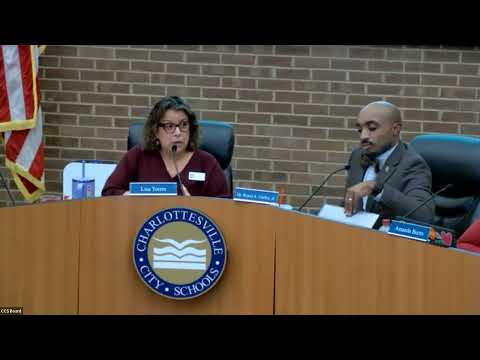
Melissa Mitcham, the district math coordinator, presented the high-quality instructional materials (HQIM) adoption process and recommended Mathspace Virginia for secondary classes and a dual elementary approach: Bridges for kindergarten through third grade and STEMScopes for fourth and fifth grades.
Mitcham described a multi-month process that included teacher pilots, vendor presentations and a teacher-led review committee. She said the adoption steering committee disaggregated teacher preference data by grade level and found Bridges favored by early elementary teachers and STEMScopes preferred in the upper elementary grades. For secondary grades Mitcham recommended Mathspace based on pilot feedback at the middle school, alignment to the Virginia 2023 Standards of Learning and the product’s Virginia‑specific programming.
Staff provided a five‑year estimated cost of $489,339.96 for elementary and secondary combined, to be paid from the division textbook fund. Mitcham said physical samples of the curricula are available in the annex lobby through Jan. 30 for community review and that the division will return to the board on Feb. 5 for formal approval and implementation planning.
Board members asked pointed questions about equity evidence (Mitcham cited comparative results from other districts, including Campbell County, and proposed further review of demographic comparability), screen-time and classroom balance (staff emphasized that the curricula are intended to support in-person instruction with manipulatives and teacher-led lessons and that online practice would be limited and monitored), and the optional AI-powered digital tutor (staff said the AI component was not piloted in Mathspace locally and can be omitted from a purchase; further vendor demonstrations were planned). Mitcham also noted that digital licenses can include print options and that the district will work with teachers and families to determine the right mix of print and online resources.
Several board members asked for follow-up on how to monitor student screen minutes and for additional evidence showing the curricula’s impact on historically underserved subgroups before full adoption.
Next steps: community review through Jan. 30; staff requested board approval at the Feb. 5 meeting and said they would return with more information on the AI component and any equity-related comparative analyses.