Long Beach breaks ground on waterfront amphitheater backed by city, Port and private partners
Loading...
Summary
City leaders and private partners marked the groundbreaking for a new waterfront amphitheater in Long Beach, describing a roughly $21 million project they say will be self-supporting and will create jobs, boost tourism and be managed by Legends Global with programming support from Live Nation.
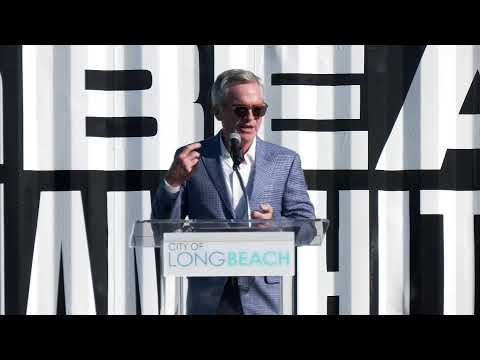
City and private partners held a ceremonial groundbreaking for a new waterfront amphitheater in Long Beach, with Mayor Rex Richardson, Councilmember Mary Zendejas, City Manager Tom Modica, Port of Long Beach CEO Noel Hasagaba and Legends Global executive Dan Hoffman among speakers.
"This amphitheater represents direction to invest in our city's future," Mayor Rex Richardson said, framing the venue as part of Long Beach’s cultural legacy and economic strategy. Richardson noted the project will bring concerts "right here in our own backyard" and generate opportunities for local artists and businesses.
City Manager Tom Modica provided the event’s most detailed fiscal outline, saying the amphitheater is "a $21,000,000 project" and that it is "designed to pay for itself with no operating subsidy from the city." Modica stated the city intends for initial net operating returns to be "about 2 and a half to $3,000,000 a year" and said the project will be financed with a loan the remarks described verbally (transcript wording: "Thailand's fund").
Speakers emphasized that the venue is being developed through public-private partnership. Richardson and Modica named Legends Global and Live Nation among private partners and thanked the Port of Long Beach for early support. "When the port shows up, we show up big," Port CEO Noel Hasagaba said, calling the port an "official founding partner" and saying the partnership aligns with the port’s goals to broaden community access and economic benefits.
Dan Hoffman of Legends Global described the company’s role as venue manager and operator and said promoters are already evaluating bookings. "We got those guys," Hoffman said when referencing prospective acts and promoters attending the event, and he emphasized the project aims to host both major touring acts and local performers.
Speakers repeatedly framed the project as an economic-development initiative intended to support nearby restaurants, hotels and other businesses by increasing visitors and encouraging overnight stays. Councilmember Mary Zendejas said the venue will be a neighborhood gathering place and create jobs, calling the amphitheater "a shining example" of strategic planning and collaboration.
Remarks included competing characterizations of the venue’s size: event remarks initially called it "the largest outdoor amphitheater on the West Coast," which Mayor Richardson qualified onstage to "the largest waterfront amphitheater on the West Coast." Some speakers made broader claims about size and scope during remarks that were not reconciled with each other.
The ceremony closed with an invitation to participants to turn shovels in a ceremonial groundbreaking. Organizers named Long Beach Transit as a partner for moving patrons to and from events and said the venue will be staffed with union labor. No formal votes, ordinances or regulatory approvals were recorded during the event; the program was a ceremonial announcement and did not itself change city policy.
The city did not provide in-remarks documentation of final financing agreements or a timeline for when the venue will open; Modica’s remarks provided the project cost and projected early operating returns but the source name for the loan used in his remarks was not clarified beyond the spoken phrase in the transcript.