
Treasure Valley leaders say Idaho property‑tax limits are straining local public safety and infrastructure
Get AI-powered insights, summaries, and transcripts
Subscribe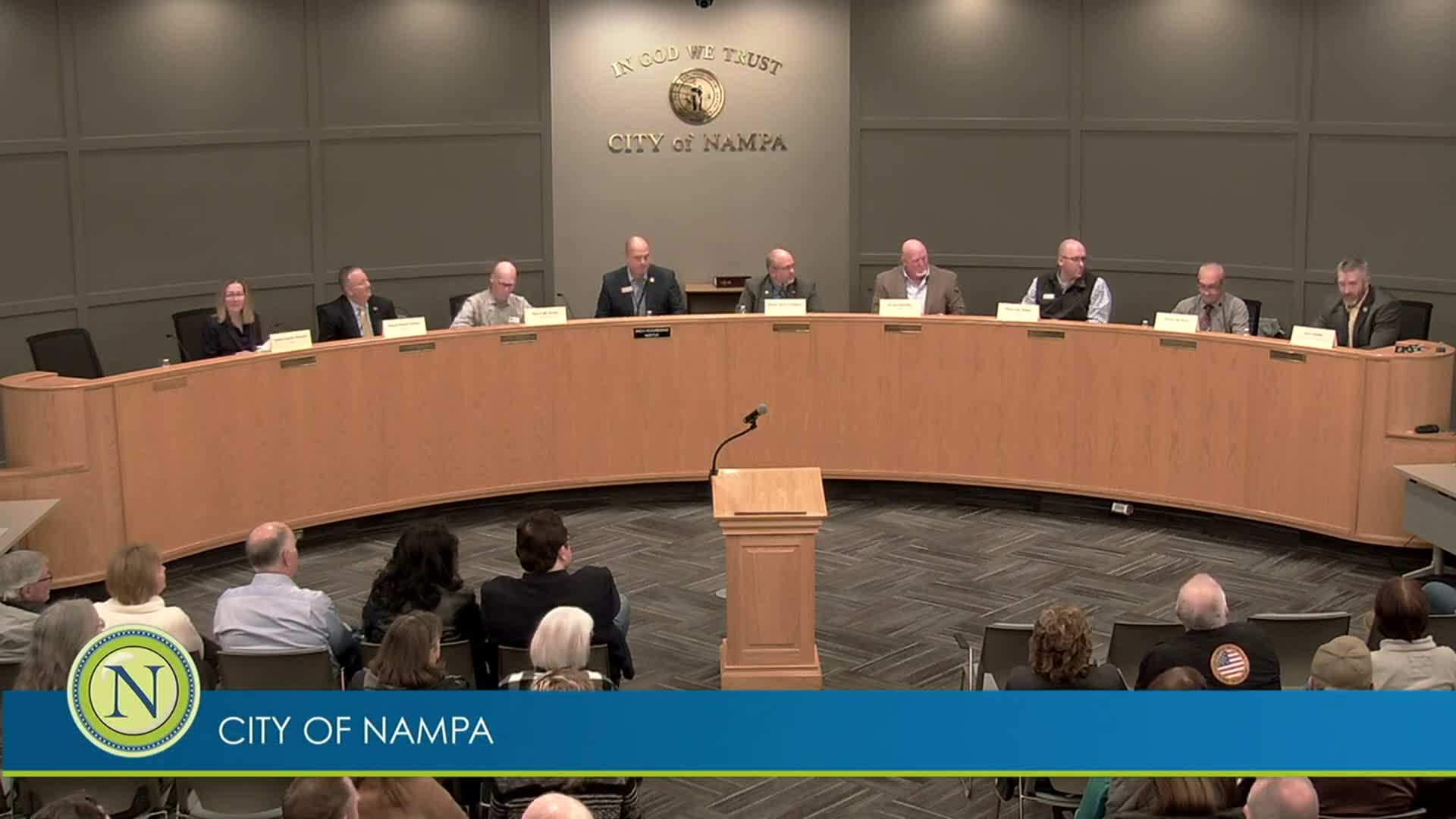
Summary
Mayors and county commissioners at a Treasure Valley Partnership town hall in Nampa warned that House Bill 389 and recent tax changes limit cities’ ability to fund police, fire and infrastructure as the region grows, and asked residents to join a legislative call to action.
Mayors and county commissioners representing communities across the Treasure Valley told a Nampa town hall that recent changes in Idaho property‑tax law are squeezing local budgets and undermining the ability to pay for police, fire and infrastructure.
Trevor Chadwick, mayor of Star and chair of the Treasure Valley Partnership, said rapid population growth in his city outpaced the revenue tools available under current state law. "I levy $2,000,000 is all I levy in property taxes on a 4 and a half billion dollar value... I could only grow that by 8% max regardless of the amount of growth," Chadwick said, noting that the cap translates into only about $160,000 in additional levy capacity despite big increases in population and demand for services.
Commissioner Zach Brooks of Canyon County framed the issue as a state–local policy problem and pointed to House Bill 389 as a pivotal change. Brooks said the legislature "set the framework and they set the rules for how we operate" and that HB 389 capped property‑tax increases and altered how new construction is counted for levies, a combination he and other officials described as leaving growing cities short of revenue to provide essential services.
Rick Hogaboon, the hosting mayor introduced at the start of the meeting, gave a technical explanation of how the law interacts with local budgeting. He described the existing 3% baseline budget cap, said new construction is currently captured at 90% of its increment under recent changes, and noted a separate hard cap that limits new construction additions (discussed as a 5% hard cap on increment). "Growth is not paying for itself," he said, summarizing the combined effect.
Officials and fire‑district leaders described practical consequences: vacant fire stations that cannot be staffed because levies failed under high ballot thresholds, longer emergency response times and difficulty recruiting officers and firefighters when ongoing staffing costs cannot be matched with stable revenue. Buzz Boecamp, a Caldwell fire district commissioner, said the law has "taken aim at taxing districts, especially fire districts," and called for broader fiscal reforms, including impact fees for school districts to better align growth costs with beneficiaries.
Speakers repeatedly distinguished one‑time federal relief from ongoing revenue: several mayors said ARPA dollars were used for capital items (for example, a ladder truck and facility construction) rather than as a long‑term staffing solution. "We used our ARPA funds that we received to buy a ladder truck for our fire department," Chadwick said, adding that one‑time expenditures do not replace steady operating revenue needed for personnel.
Officials urged residents to engage when the Partnership circulates a formal legislative request. Chadwick said the group will post a call to action on the Treasure Valley Partnership website and collect contact information so citizens can respond when lawmakers take up changes to HB 389 and related statutes. The Partnership framed the needed changes as technical adjustments to the way new construction and foregone capacity are treated, and policy fixes to ensure growth pays for associated services rather than shifting costs to existing taxpayers.
The town hall closed with an invitation for residents to sign up to receive updates and participate in organized advocacy to the Idaho Legislature; no formal votes or policy changes were taken at the meeting.