
CCA directors outline budgets, programs and priorities for the year
Get AI-powered insights, summaries, and transcripts
Subscribe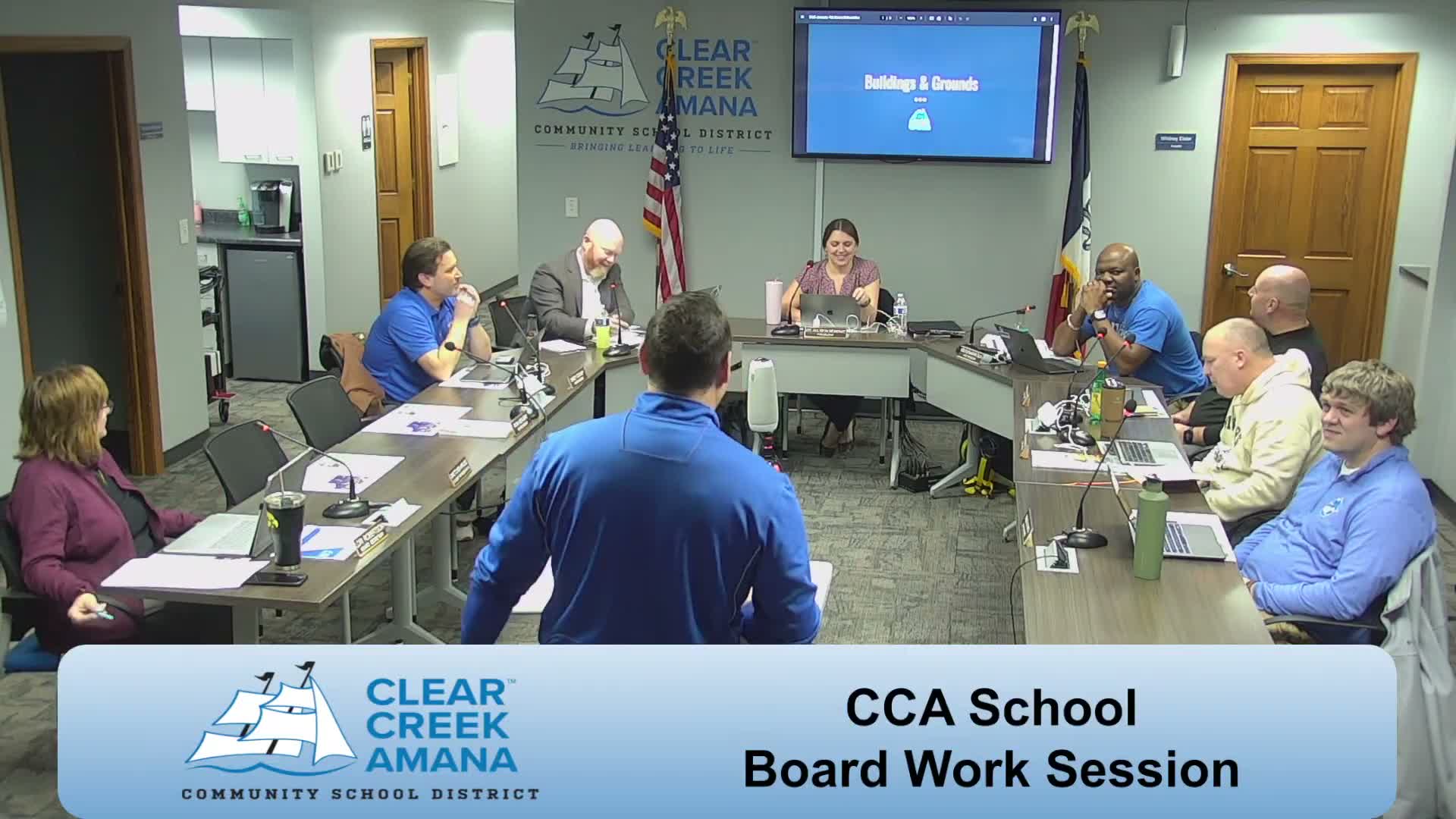
Summary
Directors for facilities, nutrition, finance, communications, transportation, HR, technology, health services, curriculum and special services presented brief overviews of responsibilities, current budgets and priorities; several noted completed safety projects and ongoing work to improve enrollment, staffing and program delivery.
Directors of Clear Creek Amana Comm School District on Wednesday gave the board a rapid overview of department duties, funding sources and priorities ahead of the budget season.
Lori Gallagher, buildings and grounds director, said her team oversees maintenance for nine attendance centers totaling about 820,000 square feet across roughly 200 acres and manages construction, custodial staffing and outside facility use. She listed the district’s funding streams for facilities work as the general fund, the Physical Plant and Equipment Levy (PEPL), the SAVE sales tax for large capital projects and a management fund used largely for insurance reimbursements. Gallagher said the district completed a multi‑year security camera upgrade funded by state and local fiscal recovery funds (SLFRF) and that radon testing had returned “safe levels.”
The director of nutrition reported the program is self‑funded with an operating budget of roughly $1,800,000, processing free‑and‑reduced applications, managing procurement and experimenting with a career ladder to improve staff retention. The director said the department is shifting breakfast offerings toward more protein and is piloting a catering program and community lunch events.
Laurie, executive director of finance and board secretary, summarized responsibilities for certified and line‑item budgets, internal controls, audits and bond reporting. She told the board the district’s solvency ratio is moving positively and that improving unassigned fund balance (UAB) remains a priority as budgets are finalized.
The communications director described the district’s mass notification and website systems, legal posting obligations and ongoing work to map the enrollment and registration process to reduce errors and increase parent engagement. Technology director Cale Hankins said his seven‑person team supports the district’s 1:1 programs, roughly 580 student Chromebooks and iPads, about 580 staff devices and about 440 security cameras and doors; he also reported the Vivi classroom display rollout is about halfway complete.
Transportation staff said the district now routes nearly 2,000 daily riders on roughly 60 routes, including 24 special‑education routes, and operates a fleet funded primarily through PEPL; the director noted a recent van delivery and a goal to reduce overtime. Health services and nursing staff described student medical supports, AED and medication checks, partnerships for routine vision and hearing screenings and an annual nursing supply budget of about $25,000.
Special education director Megan Clark said the district serves about 465 students with IEPs and is advancing a corrective action plan focused on secondary transition, with last year’s special‑education revenue cited at approximately $8,000,000. The foundation director said the Clear Creek Amana Schools Foundation nearly doubled fundraising year‑over‑year and is moving scholarship applications online to boost student participation.
The presentations were followed by brief board Q&A and staff agreed to circulate fuller slide decks and follow‑up materials for members preparing for budget discussions this spring.