Get Full Government Meeting Transcripts, Videos, & Alerts Forever!
Get email alerts on the Property Tax Reassessment topic
No spam. Unsubscribe anytime.
Preliminary 2026 reassessment shows roughly 31.5% increase in adjusted taxable values; board briefed on tax-rate options
Summary
County staff reported preliminary 2026 reassessment results on Jan. 13 showing an overall increase in assessed values and presented tax-equivalent impacts and timelines for rate-setting. Staff estimated an equalizing tax rate near 0.495 per $100 to hold revenue flat relative to 2025.
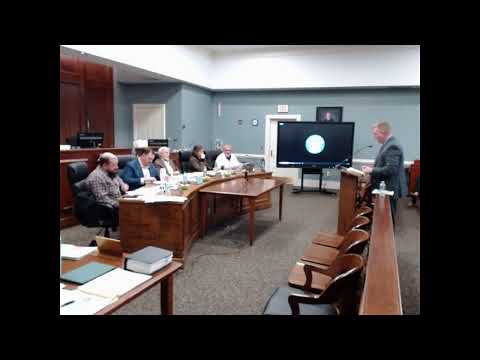
County staff presented a preliminary analysis of the 2026 real property reassessment at the Nelson County Board of Supervisors' Jan. 13 meeting, reporting substantial increases in assessed values after assessor hearings and outlining implications for the FY27 budget and tax-rate setting.
Staff said, "We had 610 property owners appeal their 26 assessments, and 810 properties were reviewed," and that after hearings the county saw an aggregate change in values of roughly 26.6% compared with 2025, producing a 31.5% increase in adjusted taxable values. Using the current tax rate of $0.65 per $100, staff calculated an increase in the equivalent tax levy of approximately $6,645,614 compared with 2025. Staff explained the concept of an "equalizing" tax rate — the rate that would generate roughly the same revenue as the prior year — and cited a figure of about $0.495 per $100 (approximately 49.5 cents) as an estimate to preserve revenue neutrality.
Officials noted that individual property impacts will vary widely and that reassessment-related public-hearing requirements under Virginia law govern the timeline: staff proposed authorizing a tax-rate public hearing by March 24, advertising by the statutory window, and holding the public hearing at the April 14 regular meeting with the goal of delivering chosen rates to the commissioner by April 17.
Board members and staff discussed reassessment cadence and cost: one supervisor suggested four-year reassessments are typical for rural localities and asked whether a shorter interval or regional partnership might smooth large swings; staff estimated the cost of the current reassessment work at approximately $410,000 plus contract expenses. Staff emphasized that final tax impacts depend on the board's choices about retaining some growth vs. fully equalizing the rate and noted that property appeals and subsequent board-of-equalization actions remain pending.
What happens next: staff will publish reassessment tables, finalize public-hearing advertisements if the board approves, and provide rate-scenario analyses ahead of the March/April hearing dates.