
Columbia council approves $520 million CPWS plan and multi-year rate increases after hours of public comment
Get AI-powered insights, summaries, and transcripts
Subscribe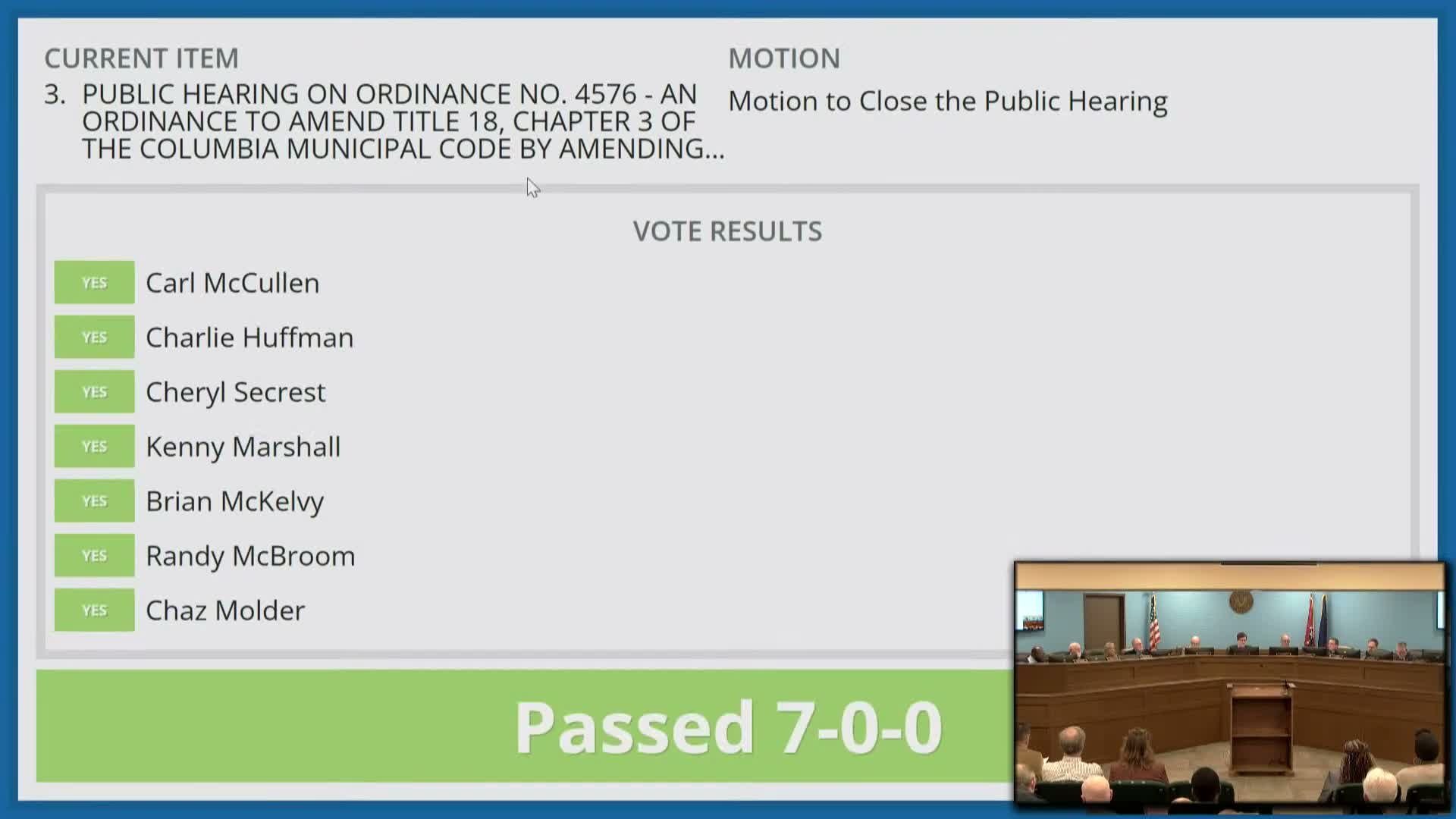
Summary
After multiple hours of testimony and sharp debate, Columbia City Council voted 5-2 to approve a $520 million Columbia Power & Water Systems plan that includes a downstream Duck River intake and staged rate increases; state regulators said the intake permit is fully issued and CPWS is at ~93% capacity.
Mayor Mulder and a majority of the City of Columbia City Council voted to approve an ordinance that will increase water rates over a five-year schedule to finance a roughly $520 million long-term water supply program proposed by Columbia Power & Water Systems (CPWS).
The vote, on second consideration of ordinance 4577, passed 5-2 after more than three hours of public hearings and dozens of speakers who both urged immediate action and demanded pauses to explore regional alternatives. Councilmember Marshall moved the ordinance; Councilmember McCollum seconded. The roll call was: McCollum Aye, Huffman No, Seacrest Aye, Marshall Aye, McKelvey Aye, Vice Mayor McBroom Aye, Mayor Mulder No.
CPWS officials told council the plan centers on a new downstream intake on the Duck River, construction of a treatment facility, pipeline work and related infrastructure. Jonathan Harden of CPWS said the utility is operating near capacity and has secured most necessary permits; TDEC representatives confirmed the intake permit was publicly noticed, reviewed and reissued following a settlement, and that CPWS pumpage records show operation near 93% of design capacity.
Supporters said the project is the most mature, vetted option available now and argued delay would raise costs. "This solution is ready to begin," said Board of Public Utilities appointee Shauna Pounders, who urged the council to act to avoid higher costs to ratepayers later. TDEC staff told the council the agency's alternatives analysis found the downstream intake to have the least adverse impact on the Duck River among the options CPWS submitted.
Opponents urged a pause to allow a regional feasibility study to proceed, raise environmental questions, and press for more public engagement. "Pause is warranted," said multiple county commissioners and residents, citing alternatives such as a pipeline from the Tennessee River, raising Normandy Reservoir, or additional regional partnerships. Speakers repeatedly warned that the projected multi-year increases (presented as a series of percentage increases) would be burdensome for seniors, those on fixed incomes, and small businesses.
Council members and CPWS officials acknowledged those concerns and said the utility will pursue mitigation measures. CPWS said some customer-assistance programs are in place or under consideration, including expanding a Good Samaritan-style fund to help low-income customers. CPWS and council staff also said informational mailings would be sent to customers to explain how the changes would affect individual bills.
TDEC officials answered council questions about other options and capacity elsewhere in the region. They said Harpeth Valley Utility District currently lacks the permits and treatment capacity to deliver 12 million gallons per day to Murray County now and that regional studies are ongoing but not a short-term substitute for the intake CPWS proposed.
Council members stressed the difficulty of the decision. Mayor Mulder said the project is the right one at the wrong time for some ratepayers, and Vice Mayor McBroom acknowledged the intense public debate and social media tension that accompanied the process. The ordinance passed on a 5-2 vote; the council and CPWS said they would continue outreach and work to secure state and federal funding to reduce the rate impact.
The ordinance is effective upon publication and the first scheduled rate adjustments would begin per the timetable in the adopted ordinance; CPWS said it will update customers directly and provide materials explaining projected household impacts.
The council also approved related ordinances (impact fees and PUD items discussed earlier in the meeting) during the same session.