
District outlines ESL strategic goals, highlights adult-learner pilot and family outreach
Get AI-powered insights, summaries, and transcripts
Sign Up Free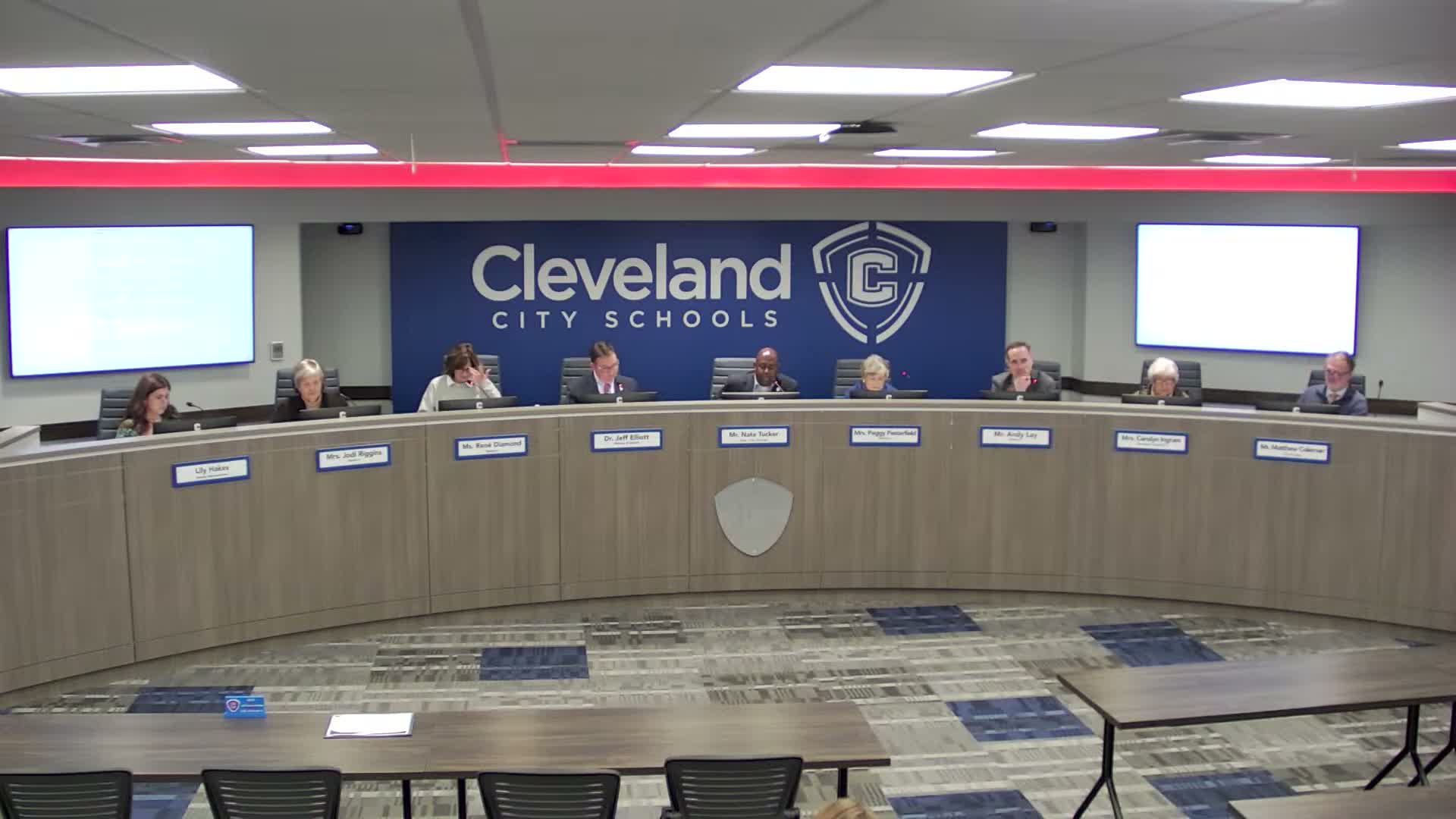
Summary
Cleveland City Schools presented ESL strategic-plan goals—shared instructional responsibility, high-quality instruction, supportive environments, and family engagement—and described a pilot adult-ESL class (initial cohort ~30, core ~12) run at the Family Resource Center supported by Title III funding and local partnerships.
Cleveland City Schools presented an ESL-focused strategic update at the board meeting, detailing student-language demographics, program outcomes and a newly launched adult-English pilot.
Chris Duncan, the district’s supervisor of ESL, told the board that "30.1% of our students have a multilingual background" and discussed growth trends from 2021–2025 that have recently leveled. Duncan said the district reported 301 former English learners who have exited the program and that last year 118 students were exited from ESL—"slightly ahead of the state average of 12%," he said.
Duncan outlined four strategic goals: shared instructional responsibility across administrators and teachers, high-quality instruction supported by coaching and Elevation Strategies, supportive interventions (including the Raiders Accelerate program for newcomer elementary students and targeted supports for long-term English learners), and stronger family engagement through events like family literacy nights and festival outreach supported by Title III funding.
As part of family-engagement work, the district piloted adult-English classes at the Family Resource Center this year. Sarah Smith (Blythe Bauer teacher) and two other instructors ran the Wednesday-night classes; Sarah said the classes drew about 30 initial participants and finished with a core group of roughly 12 learners. Adult learner Cynthia Montano described the classes as a "family activity" that helped parents communicate with teachers and build community.
"We have moms who wanted to find community and improve their English…and grandparents who just wanted to be able to communicate with their kids' teachers," Sarah Smith said.
Board members asked about recruitment and logistics; Duncan said communication used targeted flyers and district channels and that the district will continue the adult-learner offering in the spring with the intent to build on the pilot.
The presentation emphasized data-driven coaching, co-teaching partnerships and the use of Title III funds to support family nights and adult classes. Board members thanked staff for the work and encouraged continued outreach to families.