
Guam hearing on Bill 4-38: business groups oppose automatic CPI index for minimum wage; committee sets follow-up
Get AI-powered insights, summaries, and transcripts
Subscribe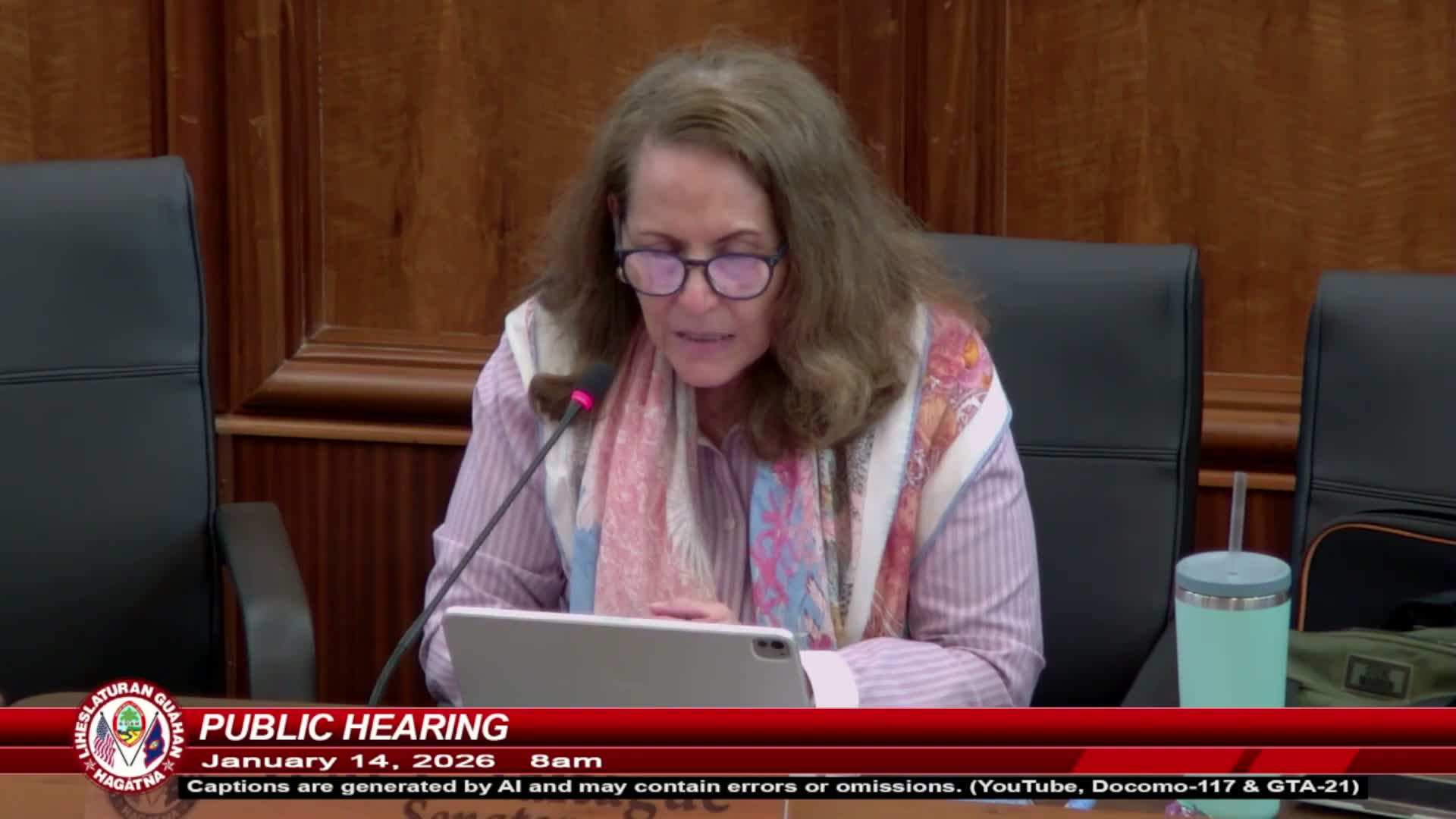
Summary
A public hearing on Bill 4-38 COR, which would tie Guam's minimum wage to the Guam CPI with annual adjustments, drew opposition from the Employers'Council, Guam Chamber of Commerce and Guam Hotel & Restaurant Association citing inflation, tourism weakness and business fragility; the committee recessed the hearing to Jan. 23 for more data and expert testimony.
A Guam legislative public hearing on Jan. 13, 2026 considered Bill 4-38 COR, a measure authored by Sen. Joe Saint Augustine that would add a new subsection to Title 22, Article 1 to require annual minimum-wage adjustments tied to the Guam consumer price index, with changes rounded to the nearest $0.25 and scheduled to take effect on the following March 1.
The bill's sponsor, Senator Joe Saint Augustine, said indexing would "ensure that the wages of Guam's workers keep pace with the cost of living" and cited U.S. jurisdictions that use CPI-based adjustments as models. He asked colleagues to consider design choices and invited amendments to address Guam's unique economy.
Business groups testified strongly against automatic CPI indexing. Catherine Gale, executive director of the Employers' Council, told the committee that linking wages to the CPI risks creating an inflationary feedback loop, citing an estimate that the proposal could raise the current $9.25 minimum wage to about $11.50 (roughly a 24% increase). Gale summarized academic and survey evidence she said show large, rapid wage-floor increases can reduce hiring or hours for entry-level workers, push employers to raise prices, and accelerate automation.
Catherine Castro of the Guam Chamber of Commerce presented a chamber survey she said found 72% of respondents expected a minimum-wage increase would negatively affect their business and 65% opposed tying wages automatically to the CPI. Castro and other business witnesses argued Guam's CPI reflects import, shipping and utility pressures beyond local policy and warned that automatic indexing could pass costs to consumers and erode intended benefits.
Mary Rhodes, president of the Guam Hotel & Restaurant Association, said tourism remains below pre-pandemic levels and that many service-sector wages already exceed the statutory minimum. Rhodes urged more time for members to submit written testimony and asked the Legislature to commission broader economic and wage studies before adopting an automatic index.
Government agencies provided technical comments. The Guam Department of Labor (written testimony read into the record) recommended clarifying the bill's timing language (replacing "preceding March 1" with "following March 1"), assigning the Bureau of Statistics and Plans (BSP) responsibility for CPI calculations, and retaining GDOL's enforcement role. BSP said it had no official position but stood ready to provide the calculations the bill would require. BBMR and BSP fiscal notes said the immediate fiscal impact on government payrolls would likely be negligible because locally funded employees already earn at or above the proposed level.
Several senators said they supported the goal of protecting purchasing power but sought more data and design safeguards. Senator Sean Gumatata and others recommended an independent economic study and monitoring requirements; Senator Chris Barnett cited testimony from University of Guam economist Dr. Roseanne Jones indicating CPI indexing can work if implemented with careful safeguards tailored to Guam. Sponsor Saint Augustine asked whether business groups would accept smaller, incremental increases; witnesses said incremental, phased increases would be more administrable but reiterated the need for up-to-date wage and employment data.
No formal vote occurred. Chairwoman Tello Tiedegui recessed the hearing and scheduled a second public hearing on Jan. 23, 2026, from 4 to 6 p.m., inviting more written testimony and data (including wage distributions, counts of minimum-wage workers, and relevant economic analyses).
The hearing record includes: the author's bill description and intent, written testimony from GDOL and BSP with technical recommendations, multiple trade and employer association surveys and memos opposing automatic indexing, and requests from senators for an independent study and implementation safeguards. The committee left the measure open for amendment and further evidentiary input at the Jan. 23 session.