
Planning commission approves rezoning near LaSine Power Station for Evergy substation
Get AI-powered insights, summaries, and transcripts
Subscribe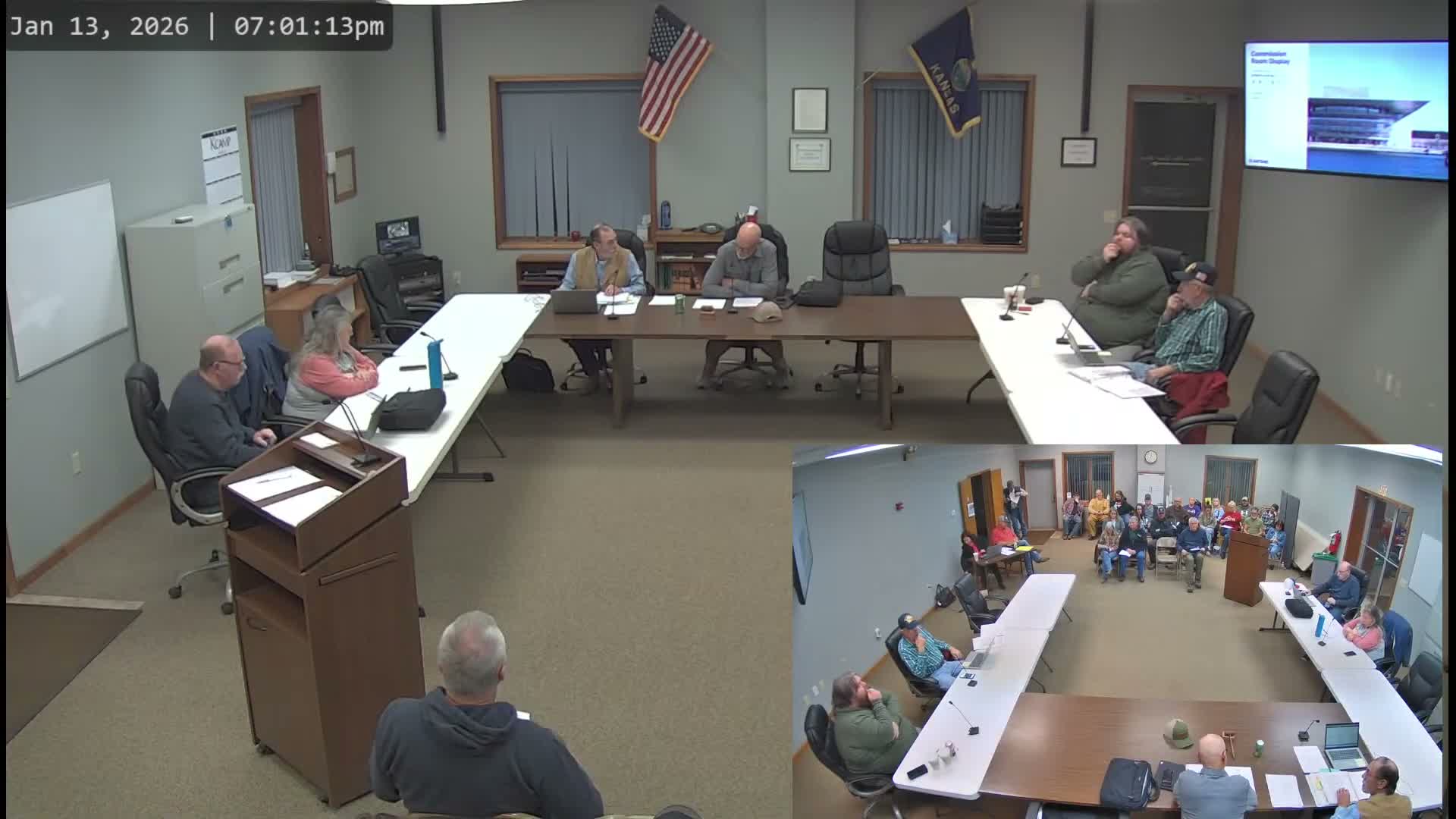
Summary
The Linn County Planning Commission voted unanimously to rezone a large Evergy-owned parcel near LaSine Lake to light-industrial (I-1) to allow a future electrical substation, which proponents say will add resiliency to the local grid. Neighbors asked about exact siting and tree clearing; the commission found the request consistent with zoning factors and the comprehensive plan.
The Linn County Planning Commission on Jan. 13 approved a rezoning request from Evergy’s property agent that will allow a future electrical substation near the LaSine Power Station.
Melissa Vancrum of Ralph Fretz White Gauss law firm, representing the applicant, told commissioners the company is requesting the parcel be rezoned to I-1 (light industrial) so Evergy can site electrical infrastructure adjacent to the existing power station. Vancrum said the parcel is roughly 600 acres and that the fenced work area for the substation would be about 7 acres; “the proposed substation would only cover a very small portion of the actual parcel, around 1.5% of the parcel,” she said. She argued the change is consistent with Linn County zoning factors and would support grid resiliency and future demand.
Commissioners asked for clarification about the footprint, possible tree clearing and connections to the existing transmission lines; Vancrum said the likely site is east of the creek near Yancey Road and that some construction activity might temporarily affect about 10 acres during construction, but that most wooded areas would be preserved. A nearby property owner, Mike Van Kuresbilk, spoke from the audience to request more precise location information before forming an opinion.
After discussion, a commissioner moved to approve the rezoning and the motion passed unanimously. The commission’s approval is a land‑use action to reclassify the parcel; any actual substation placement, site plan and associated permits will be reviewed in subsequent county permitting processes and state or federal consultations as required.
Why it matters: The commission and applicant framed the rezoning as a planning step to cluster utility uses next to existing electrical infrastructure and to support the county’s industrial development objectives. Neighbors will have additional opportunities to review specific site plans and permit applications when they are filed.
The planning commission closed the public hearing and approved the rezoning on a unanimous vote; follow-up applications (site plan, building permits and any required state or federal reviews) will determine the substation’s final footprint and mitigation measures.