
House Ways and Means subcommittee opening urges stronger IP enforcement, warns against digital-service taxes
Get AI-powered insights, summaries, and transcripts
Subscribe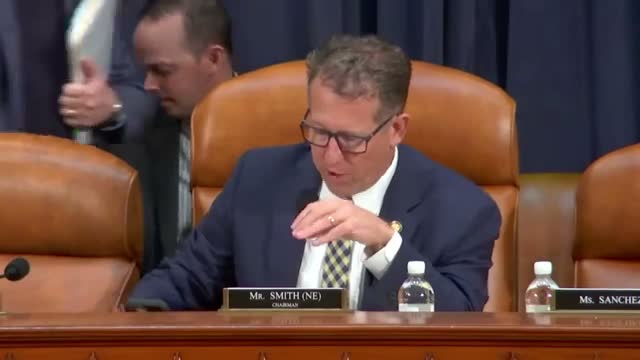
Summary
The presiding member opening a House Ways and Means subcommittee hearing on intellectual property and digital trade argued that U.S. innovation is a central economic strength, cited national-level employment and GDP figures for IP-intensive industries, criticized foreign discriminatory digital taxes and weak IP enforcement, and urged stronger enforcement paired with international commitments.
The presiding member (unnamed), chairing the House Ways and Means subcommittee, opened a hearing on intellectual property and digital trade by arguing that U.S. innovation is a central economic strength and calling for stronger enforcement of rights abroad.
"US innovation is one of our nation's greatest strengths," the presiding member said, framing intellectual property and digital trade as vital to both the economy and national security. He cited the scale of the sector, saying IP-intensive industries account for 41% of U.S. GDP and support 63,000,000 U.S. jobs, including about 8,900,000 in the U.S. technology sector.
The presiding member warned that some trading partners "lack similar innovation friendly rules and often impose measures aimed at undermining American companies in order to advantage their own firms." He singled out discriminatory digital measures, including digital services taxes (DSTs), saying, "We cannot accept foreign discrimination under the guise of regulation." The statement framed such measures as a burden on American digital-service companies and a risk to U.S. competitiveness.
He criticized the Biden administration's approach to certain international policies, asserting that administration actions "continually enabled this bad behavior" and specifically referenced a TRIPS waiver for COVID-19 vaccines as an example he said disincentivized investment in strategic pharmaceutical capabilities. He also praised the prior administration's diplomatic efforts, saying recent commitments secured from trading partners "pave the way for continued U.S. leadership in emerging industries," but added "there's more work to do."
Throughout the opening statement the presiding member emphasized that commitments to stronger protections must be paired with enforcement to ensure U.S. rights holders are treated fairly, concluding that unfair practices "will not be tolerated in The United States any longer." He then recognized Ranking Member Miss Sanchez for her opening remarks.
The hearing continued with the ranking member's statement following the opening remarks.