
Pearl River Watershed Council outlines upstream projects to cut nutrients feeding Utah Lake’s algal blooms
Get AI-powered insights, summaries, and transcripts
Subscribe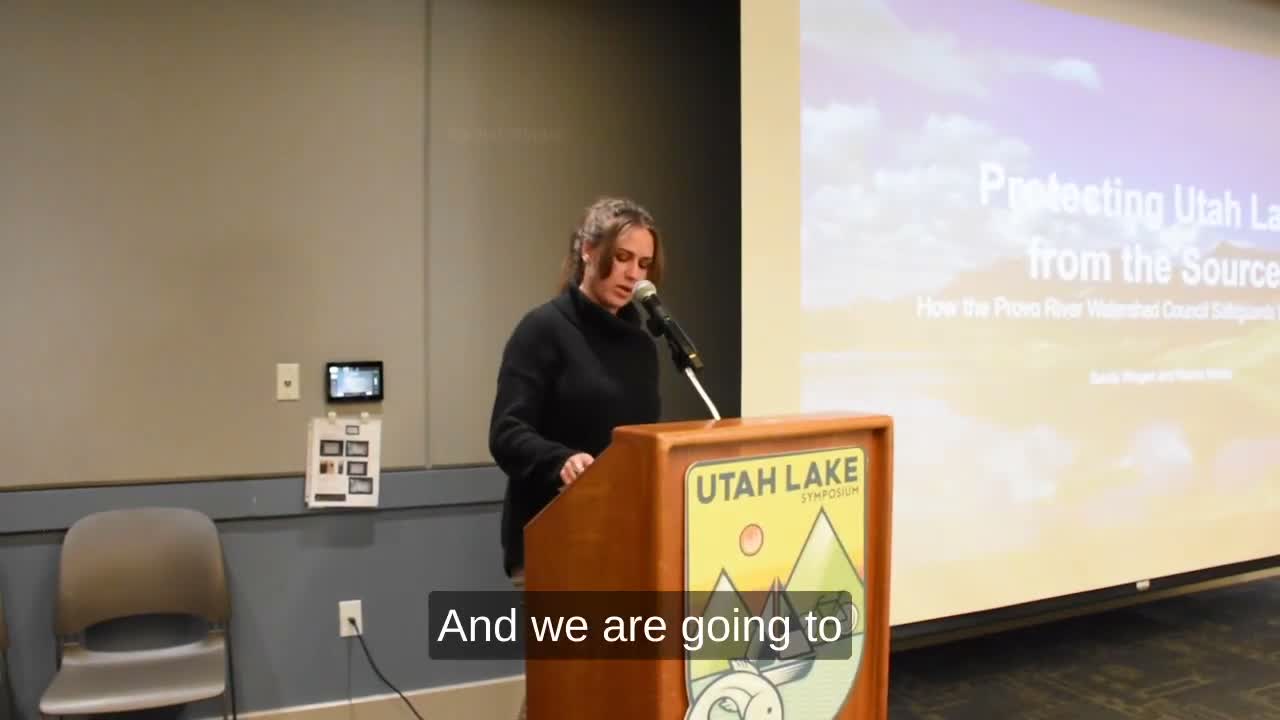
Summary
At a Utah Lake Authority meeting, Rachel Winder of the Pearl River Watershed Council described source‑water protection work on the Provo River—its monitoring map, an EPA‑approved Heber Valley plan, Pine Valley restoration and stormwater outreach aimed at reducing phosphorus and sediment that fuel harmful algal blooms.
Rachel Winder, presenting for the Pearl River Watershed Council, told attendees that the Provo River ‘‘flows directly into Utah Lake. It is the largest tributary and delivers approximately 40% of the lake's total inflow,’’ and outlined the council’s work to reduce upstream nutrient and sediment loads.
The council’s strategic plan guides short‑term (five‑year) and long‑term (20‑year) actions to identify and manage the watershed’s highest risks, Winder said. The plan includes a ranked risk assessment across subwatersheds and a funding packet the council has made available for download.
Winder highlighted recent and ongoing efforts: the Heber Valley Watershed Plan, approved by the U.S. Environmental Protection Agency in 2023 and now in implementation, coordinated stormwater management planning for Wasatch County, and river and floodplain restoration projects. ‘‘By restoring and protecting the water quality in the headwaters, we are directly cutting off the fuel supply for those algal blooms,’’ she said, framing upstream work as prevention rather than treatment.
As an example, Winder described the Pine Valley restoration project on about 2.5 miles of the Upper Provo River, which pairs bank restoration with floodplain work to produce best‑practice guidance for local managers. She said the council also helped create a three‑session stormwater webinar series last year with Utah State University Extension and the Utah Lake Authority, and plans another webinar this spring to advance local stormwater management practices.
The council maintains an interactive Provo River ‘‘Experience Builder’’ map that Winder said compiles phosphorus, hydrology, E. coli and metal‑contamination data and is updated annually to help planners and the public identify areas of concern and prioritize interventions.
Winder emphasized wildfire—ranked the watershed's top threat in the council’s risk analysis—alongside drought, development, stormwater, and abandoned mines as principal risks to source water. She closed by reiterating the council’s guiding principle: ‘‘What happens upstream flows downstream,’’ and urged continued coordination among municipalities, land managers and watershed partners.
The presentation did not include any formal votes or motions. The council’s materials and the strategic‑plan funding packet are available on its website; Winder said partners will continue planning and implementation work and will host further outreach this spring.