
Parents raise safety concerns and allege mistreatment of special-needs child at Dorchester School District 2 meeting
Get AI-powered insights, summaries, and transcripts
Sign Up Free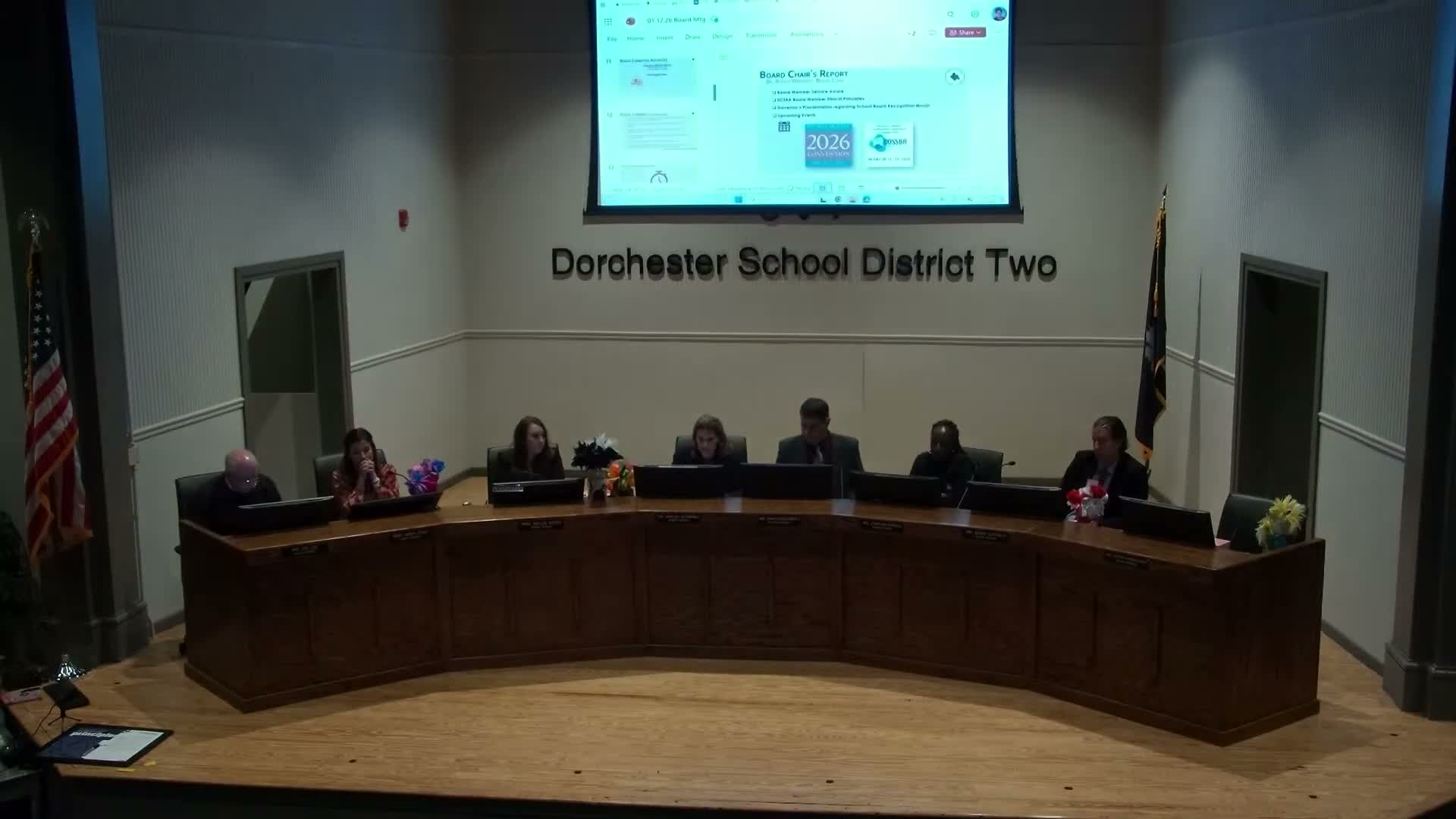
Summary
During public comment a parent alleged two incidents of mistreatment involving her nonverbal autistic child and urged the board to improve safeguards; another speaker disrupted comments and was cut off for violating the district's public-comment rules. The board reiterated procedures that bar identifying staff or students in public statements.
At the Jan. 12 Dorchester School District 2 board meeting several parents used the public-comment period to raise serious concerns about student safety and district interactions with families.
Diana Rush, who identified herself as a parent of an autistic child, described two incidents she said occurred on Sept. 11, 2025 and Nov. 20, 2025 involving her nonverbal 5-year-old. She told trustees she witnessed her child "being drugged and plugged down the stairwell" at Austin Bailey Elementary by personnel who were supposed to be trained and trusted, and said the child was later returned to school wearing soiled clothing. Rush said later she was told her child had fallen during physical education, but when she arrived she discovered what she described as "a giant bite mark" on his back and that she had not been notified by the school. "This is unacceptable," she told the board, and asked for better safeguards for vulnerable students.
Separately, Jason Brockert began public comments on an agenda award item by referencing a principal and a student loss; the chair repeatedly reminded Brockert that district policy prohibits naming employees or using identifying information in public comments and limited him to remark on the award itself. When Brockert continued and questioned enforcement of the rules, the chair asked him to return to his seat and, after continued disruption, asked him to leave.
Board policy and enforcement: The chair read the district’s public-comment procedures at the start of the meeting, reminding speakers that comments must be issue-oriented, must not include identifying information about employees or students, and that the board will not take immediate action on public comments at the meeting. Trustees and staff repeatedly enforced those rules during Brockert’s exchange.
Responses and next steps: The board did not respond to the substance of Rush’s allegations during the public session beyond listening; Rush said she had sought administrative responses prior to the meeting and asked the board for suggestions to ensure her child’s safety. The board later convened an executive session that included a student-discipline appeal (the board’s executive-session agenda item was noticed separately); no formal investigation results were announced in open session.