Get Full Government Meeting Transcripts, Videos, & Alerts Forever!
Get email alerts on the Historic Preservation Windows topic
No spam. Unsubscribe anytime.
Tuscaloosa HPC approves Fibrex window replacements at 412 17th Avenue with light‑pattern condition
Summary
The Tuscaloosa Historic Preservation Commission approved a certificate of appropriateness for three replacement windows at 412 17th Avenue (HPCO126) after the applicant agreed to keep the existing window light pattern; commissioners debated whether Fibrex should be treated as precedent or handled case‑by‑case.
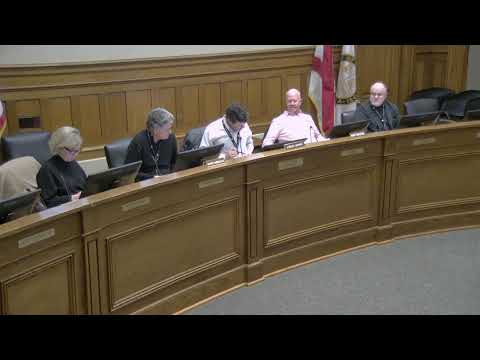
The Tuscaloosa Historic Preservation Commission on Jan. 14 approved a certificate of appropriateness for three replacement windows at 412 17th Avenue in the Pinehurst Historic District, provided the new units match the existing light pattern.
Vice Chair Jordan Morris opened the hearing and said the commission’s decisions are guided by Chapter 20, Article 2 of the Code of Tuscaloosa and that approvals require five affirmative votes. Staff introduced case HPCO126, describing proposed changes at the rear of the primary structure: three existing wood windows replaced with Fibrex units and a change in the light pattern from 8-over-8 to single‑pane.
The applicant, who identified himself as Sean Coller, described the product and prior approvals at the address. Coller told the commission, “It is 60% polyvinyl chloride. It is 40% wood. The material the windows are constructed just like a wood window,” and said the product is mortise-and-tenon joined rather than having welded corners. Coller also said Fibrex has been accepted by "hundreds of historical commissions across the country, including Birmingham," and that Renewal by Andersen and other manufacturers use similar products.
Commissioners focused on two issues: the proposed change in the light pattern and whether approving Fibrex on this property would create a binding precedent. Morris called the change in light pattern “a fairly major change,” and several commissioners noted that Fibrex had been approved on the house previously in 2024 and was therefore being treated by some as grandfathered. One commissioner said the 2024 installation was not included in the packet and asked that documentation be provided so staff and commissioners could verify the prior approval.
After the applicant agreed to modify the petition so the replacement windows would retain the existing light pattern, an unidentified commissioner moved to approve the petition “with the amendment that the light pattern will reflect that that is on the existing windows and based upon the understanding or the representation that Fibrex has been approved in the past for installation on this house.” An unidentified commissioner seconded the motion. The chair called the vote; the transcript records four audible “Yes” responses and the chair declared the motion granted.
The commission’s staff advised the applicant to consult with city staff on the process for listing or documenting accepted materials. Vice Chair Morris closed the meeting by recognizing Commissioner Matt McCool, who was at his last meeting, and adjourned the hearing.
What happens next: The certificate of appropriateness was approved with the condition that the replacement windows match the existing light pattern. The applicant and staff were instructed to follow up with documentation and to coordinate final inspection with city staff to ensure compliance with the approved work.