Oshkosh staff propose trackless train at Menominee Park zoo; council questions fares and routing
Loading...
Summary
City parks staff proposed buying a four-car trackless train to replace the park rea—ixed-track unit, citing accessibility and lower recurring track maintenance; council members and staff discussed funding, route safety, and whether fares should be $2 or $3 per ride.
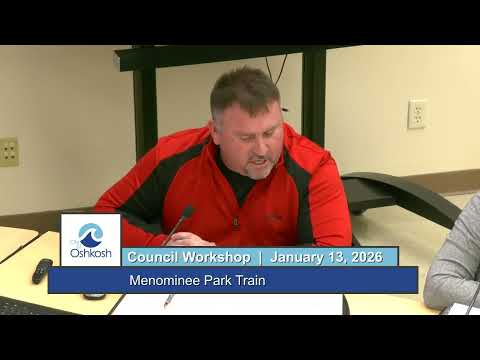
Chad Dahlman, parks events manager, told council members that staff is proposing a battery-powered, four-car trackless train to replace the existing tracked unit at Menominee Park and to operate as part of the zoo nd Lakefly Cafe hub. Dahlman said the trackless unit would run on existing park trails, be ADA-accessible, and reduce long-term track and tie rebuild costs that have become financially burdensome.
"This version may give us an opportunity to do that from a well and work towards the long term plan of improving different amenities we have at Menominee Park," Dahlman said, describing a unit the presentation referred to as a 'Maxi Express' and noting delivery could take roughly four to six weeks if ordered.
Why it matters: staff said recent ridership and cost trends forced the review. Dahlman reported the zoo had 80,544 visitors from May through December 2025 and the train carried 11,320 riders in 2025; the historic fare was $1.50, which staff said did not cover annual staffing and repair costs. Council earlier approved a $50,000 allocation in 2025 to keep the amusement area operating, including roughly $30,000 tied to tunnel/storage work.
Staff laid out cost and revenue scenarios tied to the 2026 budget. Dahlman said the purchase price for a four-car trackless unit is roughly $100,000 and that community fundraising and partners have already contributed to maintenance: a GoFundMe raised about $2,900 and staff reported a $12,000 grant from CN railroad in 2025. He also said some recurring contracted maintenance (engine work, new wheels, brake work) remains an annual expense for the fleet.
Council members pressed staff on routing, safety and operations. Staff said they prefer to keep the unit on trails, not city sidewalks or roadways, citing parking and summer traffic near Pratt Trails. The train would use signed crossings at existing controlled intersections and yield to pedestrians and bicyclists. Dahlman said the four-car unit s described in the presentation—its most park trails (the unit was described as roughly 33'5 feet long and about 40—2 inches wide, with a top speed of roughly 3.6—3.7 mph).
Pricing and equity were central questions. Some council members suggested starting fares at $2 to limit family costs; Dahlman and other staff and supporters said a $3 fare would provide more margin for future capital needs such as battery replacement. "I do think we could entertain looking at $2, but I don't think we're out of line at $3 right now," Dahlman said. He also provided a staff-run projection that operating at $2 per ride on a seven-day schedule would produce a positive margin but give less flexibility for longer-term capital replacements.
Accessibility and visitor experience drew support. Museum and community partners recommended recorded or live narration options and offering materials for hearing-impaired visitors, and they suggested discounted punch cards, family caps or sponsor-funded free days to preserve access if fares rise.
No formal motion or vote occurred at the meeting. Council members asked staff to continue planning, refine budget projections and work with partners on fundraising and pricing options before a future purchasing decision.
What—omes next: staff will follow up with partners and refine budget numbers; no procurement or fare decision was finalized in the meeting.