Get Full Government Meeting Transcripts, Videos, & Alerts Forever!
Get email alerts on the Bike Ped Funding topic
No spam. Unsubscribe anytime.
NVTA votes to transmit regional bicycle‑and‑pedestrian funding study to General Assembly chairs
Summary
MBTA/MDTA staff briefed the authority on a study of 45 funding strategies for implementing 4,000 miles of bicycle and pedestrian infrastructure; members voted unanimously to transmit the report to House and Senate transportation committee chairs after a motion and brief debate about further feasibility work.
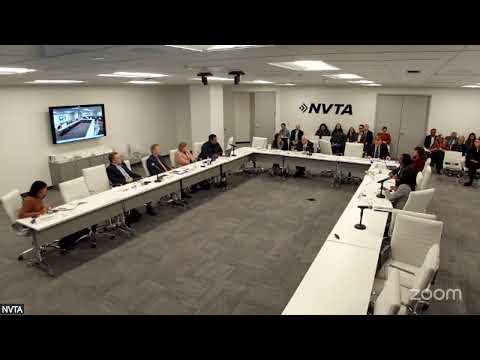
The authority voted unanimously on Nov. 13 to transmit a regional bicycle‑and‑pedestrian funding study to the chairs of the House and Senate transportation committees.
Starla Cuso and Kate Witness presented the report, which examined existing funding sources and identified 14 high‑quality revenue strategies meriting further study. "We are here to ask the authority to approve the transmittal of the report to the House and Senate Transportation Committee chairs," Cuso said on the record.
The report responded to a March 2025 request from committee leaders to review findings of VDOT's 2024 bike/ped network study and recommend funding approaches for the roughly 4,000 miles of infrastructure identified. Presenters emphasized that the current effort was qualitative—no financial modeling was performed—and that the next step, if requested, would include detailed modeling, legal analysis and implementation pathways.
During floor discussion, one member moved to extend the work into feasibility modeling and funding options; that amended motion was withdrawn after members raised procedural concerns about staff workload and the need for a formal request through the General Assembly. The original motion to transmit the report, with no additional staff study attached, passed unanimously.
What members asked for: several members asked staff to clarify how existing NVTA funding streams could support bike/ped projects and suggested further outreach to jurisdictions on low‑cost, quick‑turn actions such as restriping; staff responded that an inventory of funding sources exists but that some jurisdictions could benefit from additional coordination to craft eligible projects.
Next step: staff will forward the report to committee chairs as approved and provide members with the materials for use in delegation briefings and local discussions.