Get Full Government Meeting Transcripts, Videos, & Alerts Forever!
Get email alerts on the Dmv Moves topic
No spam. Unsubscribe anytime.
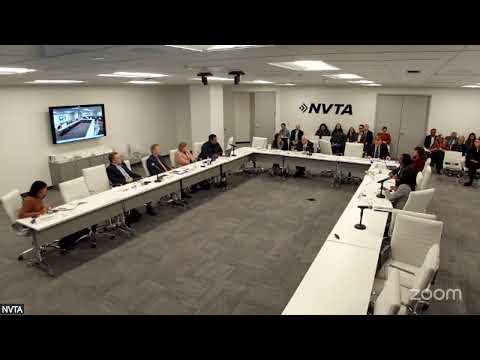
NVTA members hear DMV Moves task force recommendation for Metro capital funding, outline accountability and phasing
Summary
Task‐force leaders told the authority an 18‑month regional effort narrowed Metro’s capital ask and recommended a capital‑focused package that could yield federal matching for signal modernization; presenters singled out a Virginia share and set benchmarks and annual reporting to enforce progress.
Task‑force chairs and Metro leaders briefed the Northern Virginia Transportation Authority on Nov. 13 on recommendations from the DMV Moves process to address WMATA’s deferred capital needs.
The presentation, delivered after staff and task‑force members described an 18‑month review, focused on a capital package that task‑force participants say can be financed, bonded and matched with federal funds. "The $460,000,000 ask is about right," one task‑force speaker said during the presentation, describing the Virginia portion of a multi‑jurisdictional proposal intended to support state‑of‑good‑repair work and signaling modernization.
Why it matters: presenters and members emphasized that capital investments—rather than a large operating subsidy—can be bonded and paired with federal matching grants, potentially accelerating signal and communications modernization that Metro says would improve reliability and safety. Staff also said modernization could put Metro in position to pursue up to a 50% federal match for signaling work.
Key details and tradeoffs: presenters said the current funding formula produces different dollar shares across jurisdictions; under the formula cited during the meeting, Virginia's share was identified as $1.36 billion, Maryland $1.52 billion and the District $1.73 billion. Speakers noted many state funding streams cannot be bonded, which informed the decision to prioritize capital that can be financed.
Accountability and next steps: the task force recommended a package tied to metrics, annual reporting and assigned leads for each recommendation so progress can be tracked publicly. "When those things don't happen, there's gonna be a lot of groups that are gonna hear that they are not happening," one presenter said, describing planned reporting and feedback loops. Authority members pressed staff for examples of the accountability measures and for clarity on who would own recommended corridor‑level bus rapid transit and capital work.
What wasn’t decided: the task force restricted its work to capital solutions; revisiting the broad funding formula or deeper operating assistance would fall to other bodies and separate legislative or executive processes. The presentation did not create a binding regional revenue mechanism—members said any revenue proposal would require state action and coordinated legislative steps.
Next procedural step: staff and task‑force chairs said they will continue outreach to jurisdictions and state representatives; several members said they would use the materials in conversations with the General Assembly and local governing bodies.