
City attorney briefs Mobile GR Commission on Open Meetings Act obligations
Get AI-powered insights, summaries, and transcripts
Subscribe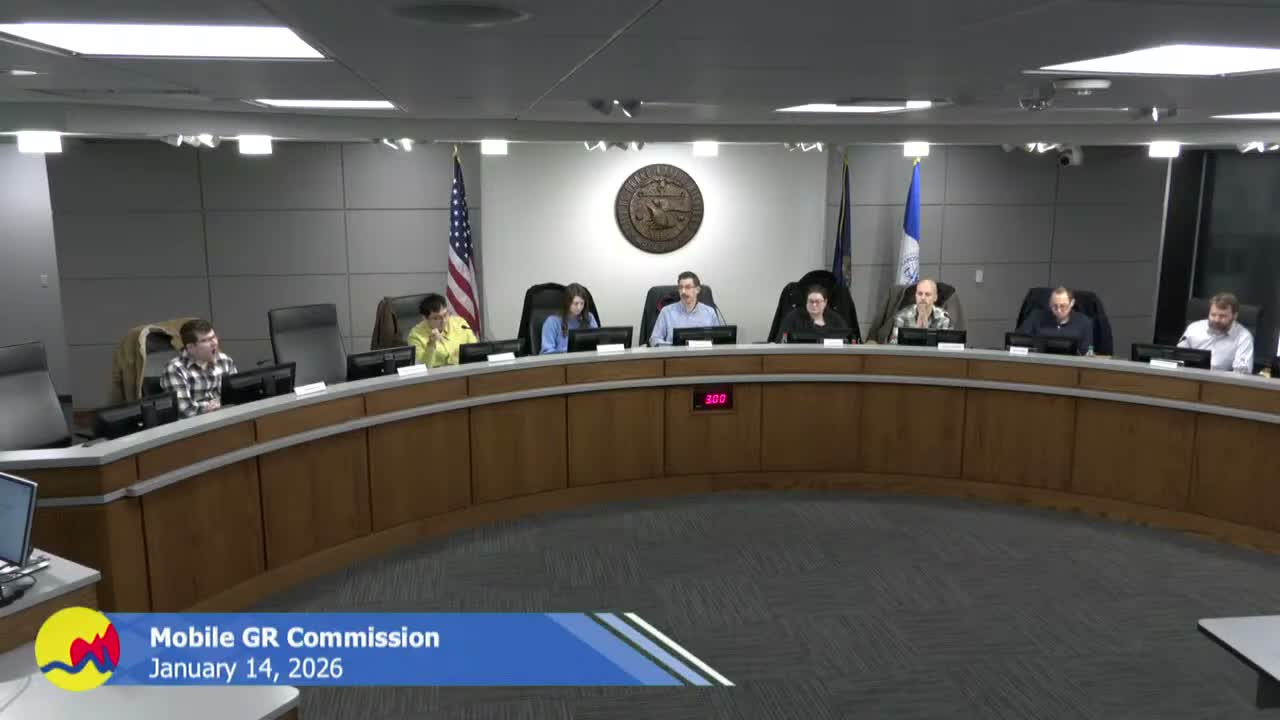
Summary
The city attorney reviewed the Open Meetings Act: public‑notice and access rules, limits on informal electronic deliberations (reply‑all), closed‑session purposes, and potential civil and criminal penalties for violations; commissioners asked follow‑up questions about polling and misdemeanor designation.
A representative from the city attorney’s office gave the commission a refresher on the Open Meetings Act (OMA). The presentation noted OMA’s purpose "to ensure that government decisions are made in an open transparent manner" and described covered bodies, public notice requirements, accessibility of meeting locations and the limits on informal gatherings and electronic communications.
The attorney warned that mass email chains or "reply all" conversations that discuss commission business can constitute a forbidden deliberation under OMA and briefly reviewed exceptions (military duty and ADA accommodations were cited). The attorney also summarized closed‑session uses — attorney–client privilege, pending litigation and personnel matters — and discussed minute‑keeping and retention rules for closed sessions.
Commissioners asked clarifying questions, including whether taking an informal poll differs from electronic communications discussing matters. The attorney answered the technical distinction: polling is an informal way to see where members stand; substantive back‑and‑forth that amounts to discussion raises OMA concerns. When asked who makes a violation a misdemeanor, the attorney said state law likely provides the misdemeanor designation but that staff would confirm the statutory source.
The attorney encouraged commissioners to contact the office with specific questions and offered assistance if the commission wanted additional training or clarification.