
Appropriations members warn of softer revenues, plan wider community testimony after reported $3.5M SAMHSA grant loss
Get AI-powered insights, summaries, and transcripts
Subscribe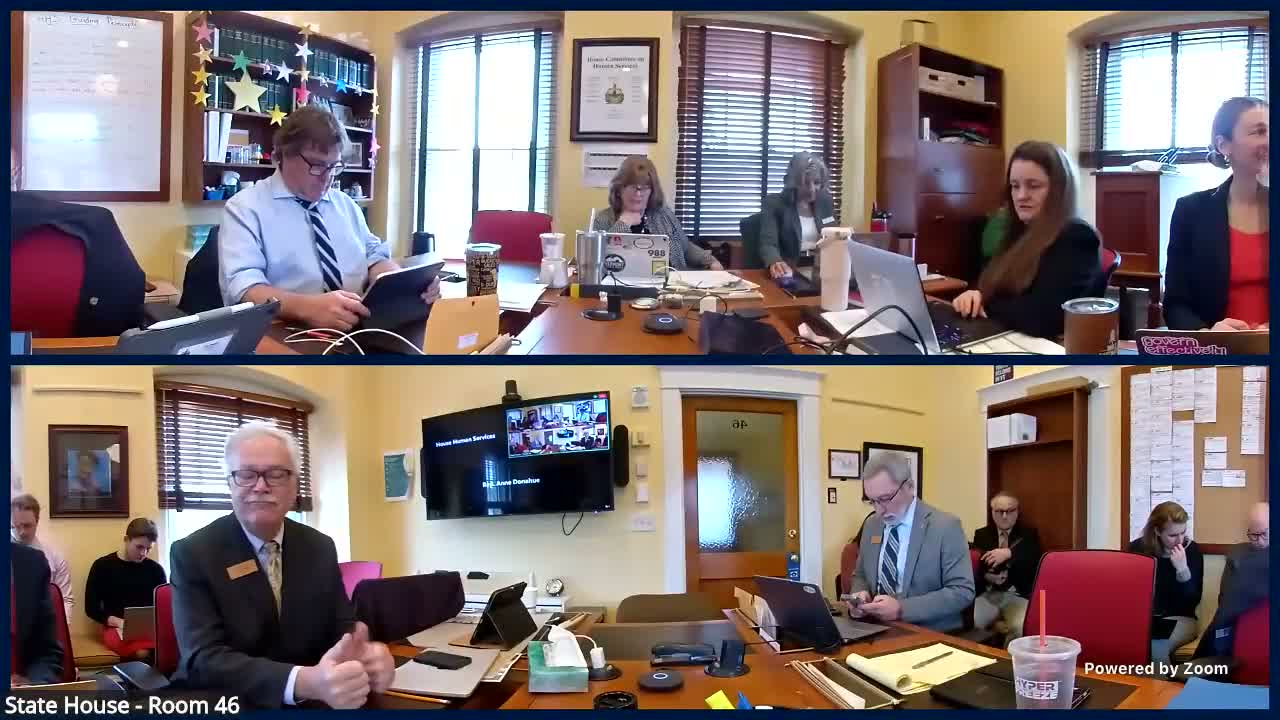
Summary
An appropriations committee meeting reviewed FY27 priorities as members warned Vermont revenues are softening, flagged a reported $3.5 million SAMHSA grant cut for substance-use prevention, and outlined plans for more community partner testimony and targeted statutory fixes; no formal votes were taken.
Unidentified Speaker 1, an Appropriations Committee member, opened the session and said the committee must prioritize for fiscal year 2027 as COVID-era one-time federal dollars have largely disappeared and state revenue projections are softening. "We are anticipating a downgrade in the Vermont revenues," Speaker 1 said, noting the e-board would meet on the projection.
The session focused on where limited state funds should be focused and how the committee will gather information before making recommendations. Speaker 1 said the BAA (budget adjustment act) memo is still being completed and asked staff to adjust the agenda because they will testify to the House Appropriations committee; the memo review was scheduled for 9 a.m. before that testimony. "We will tell witnesses that they have 15 minutes," Speaker 1 said when describing the planned timeframe for community presentations.
Committee members flagged several areas for early attention. Speaker 1 clarified that a reported "9 plus million at Dale" is a FY25 carryforward for spending authority, not a new nursing-facility request. On supervised visitation — court-ordered supervised visits — Speaker 1 said the committee received a report showing coverage gaps in several counties but that DCF did not provide a cost estimate; the committee will seek how much implementation would cost. "They didn’t answer the question, which was how much would it cost?" Speaker 1 said.
Members also discussed statutory fixes that would enable future access to federal funding. Anne, a committee member, urged considering statutory language (rather than appropriations language) to preserve eligibility for certain children so funding can be accessed quickly when it becomes available. Speaker 1 said the committee plans a miscellaneous DCF bill for several short statutory changes and will hold a joint hearing with the House Energy and Technology Committee on CCWIS technology updates to improve federal reporting.
On federal grants and program risk, Speaker 1 reported the state had been notified of an approximate $3.5 million reduction in SAMHSA funding to the Department of Health for federal fiscal year 2026, a cut that could affect substance-use prevention work. "We were just notified that it's gonna lose 3 and a half million dollars in SAMHSA grants," Speaker 1 said, adding details were not yet available amid a broader federal budget uncertainty and a possible continuing resolution or shutdown.
Speakers raised practical options to protect critical services. Doug, a committee member, urged identifying funding requests with multiplier effects — for example, funding housing authority activities now to avoid losing voucher opportunities next year. Another member asked whether mechanisms exist to provide short-term lending or relief to community organizations during federal shutdowns; Speaker 1 noted last year's $10 million relief fund for community organizations and said most of that fund has been used.
The committee discussed the trade-offs of using FY25 surplus to buy down property taxes, which Speaker 1 said could eliminate one-time funds available to respond to federal changes. Speaker 1 also cautioned against precipitous department actions, citing an earlier SNAP removal that led to state spending that later proved unnecessary.
The meeting closed with Speaker 1 asking members to identify programs or line items that offer savings or multiplier benefits as the committee crafts FY27 recommendations; no motions or formal votes were recorded. Laurie was asked to take the group offline at the end of the session.
The committee plans further hearings and will solicit 15-minute presentations from community partners recommended by the committee teams; it will also request cost estimates from DCF for items such as supervised visitation and track developments in federal funding that could affect state responses.