Get Full Government Meeting Transcripts, Videos, & Alerts Forever!
Get email alerts on the Child Support topic
No spam. Unsubscribe anytime.
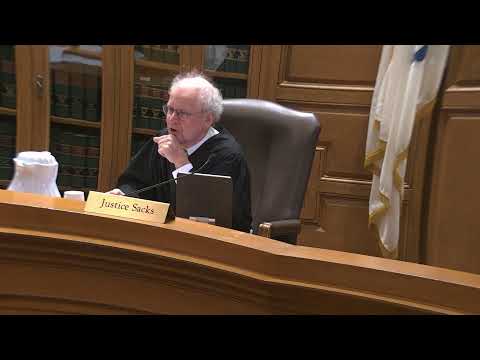
Appeals Court hears challenge to child-support modification and retroactive award in Filacci case
Summary
At oral arguments in Filacci v. Heffelfinger, appellant counsel argued the trial judge abused discretion in modifying child support and miscalculated a $133,400 retroactive award; appellee's counsel defended the judge's detailed findings and conceded a limited arithmetic error. The panel took the case under advisement.
An appellate panel heard arguments in Filacci v. Heffelfinger on a challenge to a trial judge's modification of child support and a disputed retroactive payment. Peter Cooperstein, attorney for appellant David Filacci, urged the court to reverse, saying the judge misapplied the child-support guidelines and erred in the retroactive calculation.
Cooperstein told the panel that although both parents' incomes rose since the divorce, the judge improperly used all of the father's income while discounting the mother's rise from about $80,000 to $152,000. He said the trial court's decision to require the father to pay 10% of gross income above $800,000 with no cap contradicted prior parts of the parties' agreement and was not rationally tied to the children's needs.
"I agree that there's a material change in circumstances," Cooperstein said, while arguing the judge nonetheless abused her discretion in the calculation and in failing to give appropriate weight to the mother's increased income. He also challenged a retroactive award the trial court entered for 2023, questioning how the court arrived at $133,400 and offering alternate computations based on different income figures presented in the record.
Richard Nowich, counsel for appellee Regina Heffelfinger, told the panel that aside from a conceded arithmetic error in the retroactive figure, the trial judge's rulings were supported by a thorough factual record. "I concede that I believe that the trial court judge's calculation was wrong," Nowich said about the retroactive computation, but he argued the judge's detailed findings across thousands of pages and eight days of trial showed no legal error or abuse of discretion.
Nowich reviewed the record's income evidence, including distributions, guaranteed salary, company payments and other items the trial judge relied on. He noted testimony that a $900,000 payment was tied to 2023 work and argued the total record supports the judge's view that the father's income exceeded the figure the appellant now emphasizes.
Panel members questioned both sides about credibility findings and the practical effect of a severance agreement on the father's ability to seek venture-capital employment. One panel member asked whether a clause limiting solicitation of institutional investors would meaningfully impede the father's job prospects; appellee counsel said the agreement required notification of prospective employers but did not bar applying for positions, and that the trial judge found the father's testimony on the subject not credible.
The panel asked no further questions after both sides rested on their briefs. The court took the case under advisement; no decision was announced at the hearing.