Get Full Government Meeting Transcripts, Videos, & Alerts Forever!
Get email alerts on the Criminal Search And Seizure topic
No spam. Unsubscribe anytime.
Appeals Court hears dispute over pat‑frisk after Lynn traffic stop in Commonwealth v. Ruiz
Summary
In Commonwealth v. Ruiz, the prosecutor urged reversal of a suppression ruling, citing gang‑related saturation patrols, a rapid passenger exit and a cross‑body satchel as supporting reasonable suspicion for a frisk; the defense countered that officers lacked information tying the passenger to the suspected driver.
The Massachusetts Appeals Court heard oral argument in Commonwealth v. Ruiz, Docket No. 2025‑0646, over whether a trial judge properly allowed a motion to suppress evidence after police ordered a passenger back to a stopped vehicle and conducted a pat‑frisk.
Prosecutor Katherine Jansen told the panel the court should reverse, saying the judge below erred by isolating factors rather than applying a totality‑of‑circumstances analysis. Jansen emphasized local “saturation patrols” after recent shootings, the officer’s training and experience, the vehicle’s unusual stop position, the passenger’s rapid exit and a cross‑body satchel as facts that together justified a concern the person might be armed. “Those two factors together suggest that he is armed and dangerous,” Jansen said, urging the court to consider the officer’s vantage at the time.
Defense counsel James O’Shea urged the opposite view, arguing the officer had no specific information about the passenger and that compliance by the passenger undercuts any claim of dangerousness. O’Shea noted the vehicle was registered to another plate and that no occupant was asked questions before the frisk, saying that factual posture differentiates this case from precedents the Commonwealth cited. “At the time of the motor vehicle stop…there’s no conversation here with anyone in the vehicle,” O’Shea told the panel.
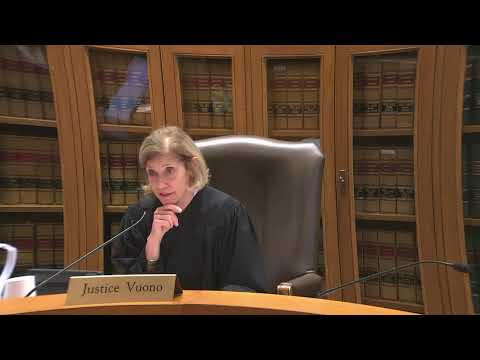
Justices probed both sides on the weight to give a common accessory like a satchel; several justices expressed concern that treating a handbag as inherently suspicious would risk overbreadth without additional corroborating facts. The panel also questioned whether an officer’s training‑based observations about past recoveries from similar bags could convert a commonplace item into a reason to suspect a weapon. Counsel for the Commonwealth acknowledged the case was close.
After extended questioning, the panel took the case under advisement. The court did not rule from the bench; no vote or decision was announced. The panel indicated it would consider the arguments and the record and circulate an opinion in due course.