Appeals court weighs duty of retirement board to provide prescribed forms in survivorship dispute
Loading...
Summary
Appellants argued the retirement board had an administrative duty under chapter 32 to provide prescribed forms when a surrogate requested survivorship benefits; the board said statute requires a written prescribed form filed before death and that informal advice does not alter statutory requirements.
The Appeals Court heard an appeal over whether the Contributory Retirement Appeal Board and the Board of Retirement had an enforceable duty to provide a member—or a surrogate on the member's behalf—the "option d" prescribed form that secures survivorship benefits if filed before death. Counsel for the appellant estate said a cover letter and surrogate calls put the retirement system on notice and that the board's failure to provide the correct form deprived the member's daughter of sizable benefits.
"It is because he was so sick that we have this evidence," counsel said, recounting surrogates' requests to a state retirement staffer and arguing the board should have provided the option d form when asked about survivorship. The board's lawyer, representing CRAB, responded that chapter 32 requires a written request on a prescribed form and that the board staffer who answered the call had no enforceable duty to waive the statutory filing requirement. "If someone calls the retirement board and asks for a specific form, they're going to send the form," the board's counsel said, but stressed that the law requires the member to file the prescribed form before death.
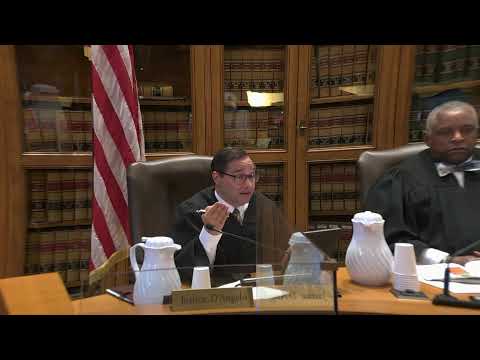
Justices pressed both sides on whether notice conveyed by a surrogate or an internal record could excuse the statutory requirement and on whether equitable estoppel principles should bind the board to pay. Counsel acknowledged the result is harsh in some circumstances but said the statute's text and the retirement system's need for administrable, consistent rules guided the board's response. The panel submitted the matter for decision.