Get Full Government Meeting Transcripts, Videos, & Alerts Forever!
Get email alerts on the Search And Seizure topic
No spam. Unsubscribe anytime.
Appellate panel questions whether Snapchat image justified searches and removal of occupants in juvenile stop
Summary
Defense argued officers lacked reasonable suspicion to expand a traffic stop and search a vehicle after a live Snapchat photo showed a firearm; the Commonwealth said the close timing of live posts, identification of occupants and rapid sequence of events supported officers' actions.
In a juvenile-case appeal, the panel considered whether officers lawfully expanded a traffic stop and ordered occupants out after viewing a live Snapchat story that, according to officers, briefly showed what appeared to be a loaded firearm.
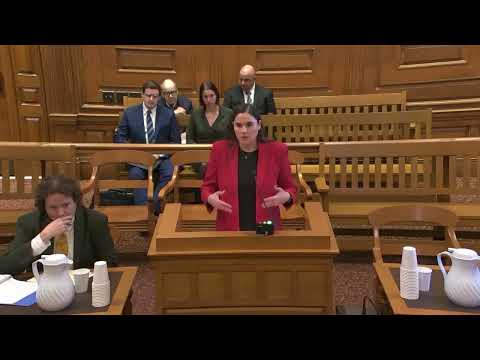
Defense counsel Jason Tautjas argued the Snapchat picture alone did not provide particularized suspicion that a firearm was improperly stored in the vehicle or that a specific occupant possessed it. "We don't know whether it is a firearm under the law at this point," Tautjas said, noting there was nothing in the record confirming the image showed a loaded weapon or that the account owner was present.
The Commonwealth responded that the sequence of live photos—one showing a known individual ("DC"), minutes later a live photo of what a trained officer believed to be a loaded, improperly stored firearm, followed shortly by a live photo of the juvenile—created a temporal nexus supporting reasonable suspicion. Prosecutors emphasized rapid developments: officers saw nine people leave the gym and enter the Cadillac near where the posting occurred and then briefly observed what they believed to be a firearm handle in plain view as an occupant exited.
The panel pressed on practical limits: how long the Snapchat post was live, whether it showed a loaded firearm, whether the officers had individualized suspicion to order nine occupants out and conduct bag frisks, and whether body-worn camera footage supported the judge's factual findings about the search's timing. The defense argued that patting and searching bags without a particularized basis constituted an impermissible search of the vehicle.
The court took the argument under advisement.