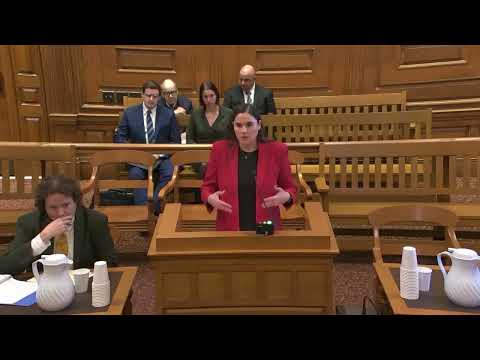
Appeals court hears challenge over undisclosed recordings and text-message authentication in Commonwealth v. Ganguly
Loading...
Summary
Defense attorney Tara Ganguly told an appellate panel the motion judge used the wrong standard in denying a new trial after the Commonwealth failed to turn over recorded interviews and hundreds of text messages; the prosecutor conceded disclosure lapses but called the undisclosed material marginal and harmless.
An appellate panel heard argument in Commonwealth v. Ganguly on issues the defense says require a new trial: alleged nondisclosure of recorded witness interviews and the admission of unauthenticated text-message exhibits.
"I've raised 2 issues for the court this morning, starting with the denial of the motion for new trial," defense lawyer Tara Ganguly told Justices Mead, Massing and Brand. Ganguly argued the motion judge applied a "substantial risk" test rather than the lesser "might have affected the outcome" standard she says Massachusetts precedent requires for prejudice in Brady-type nondisclosure claims.
Ganguly told the court the most significant undisclosed material was the recorded interviews of a cooperating witness, Jesse Peralta, which—the defense says—contained detailed statements not reflected in the police report and not disclosed to the defense. She also said hundreds of text messages recovered from multiple phones were admitted at trial without a judge making the required preliminary finding of authentication.
"The video recording of Peralta... literally asks him, 'do you know some guy named v?'" Ganguly said. "That's not in the police report." She argued the recordings and the unvouched-for texts were impeachment evidence of central importance and that the correct standard would give the defendant the benefit of a reasonable possibility that the evidence could have made a difference.
Commonwealth attorney Stephen Nido acknowledged the prosecution erred in failing to provide recorded interviews and said that concession was made below. "First and most seriously was the failure to provide the recorded interviews," Nido told the court. He characterized the error as neglect rather than bad faith and argued the undisclosed materials were largely marginal impeachment evidence and that the totality of physical evidence—car parked outside the scene, ID and phone linked to the vehicle—made any error harmless beyond a reasonable doubt.
The panel pressed both sides on specific consequences: whether the proper remedy is a remand for the trial judge to reassess prejudice under the correct standard or an outright order for a new trial. Justice Mead asked whether the court should simply apply the correct standard itself; at least one justice suggested remand would allow the trial judge to make fact-specific determinations.
Both sides referenced controlling appellate decisions and related case law. Ganguly cited multiple unpublished decisions and decisions construing the prejudice prong in Brady contexts; Nido cited Commonwealth v. Gilday and argued that courts can and sometimes should conclude nondisclosures are excusable neglect when records show the materials were referenced in police reports and where defense counsel had access to some form of the information.
The panel took the arguments and indicated it would take the matter under advisement.