
Skowhegan moves to survey downtown sewer and storm systems before DOT paving
Get AI-powered insights, summaries, and transcripts
Subscribe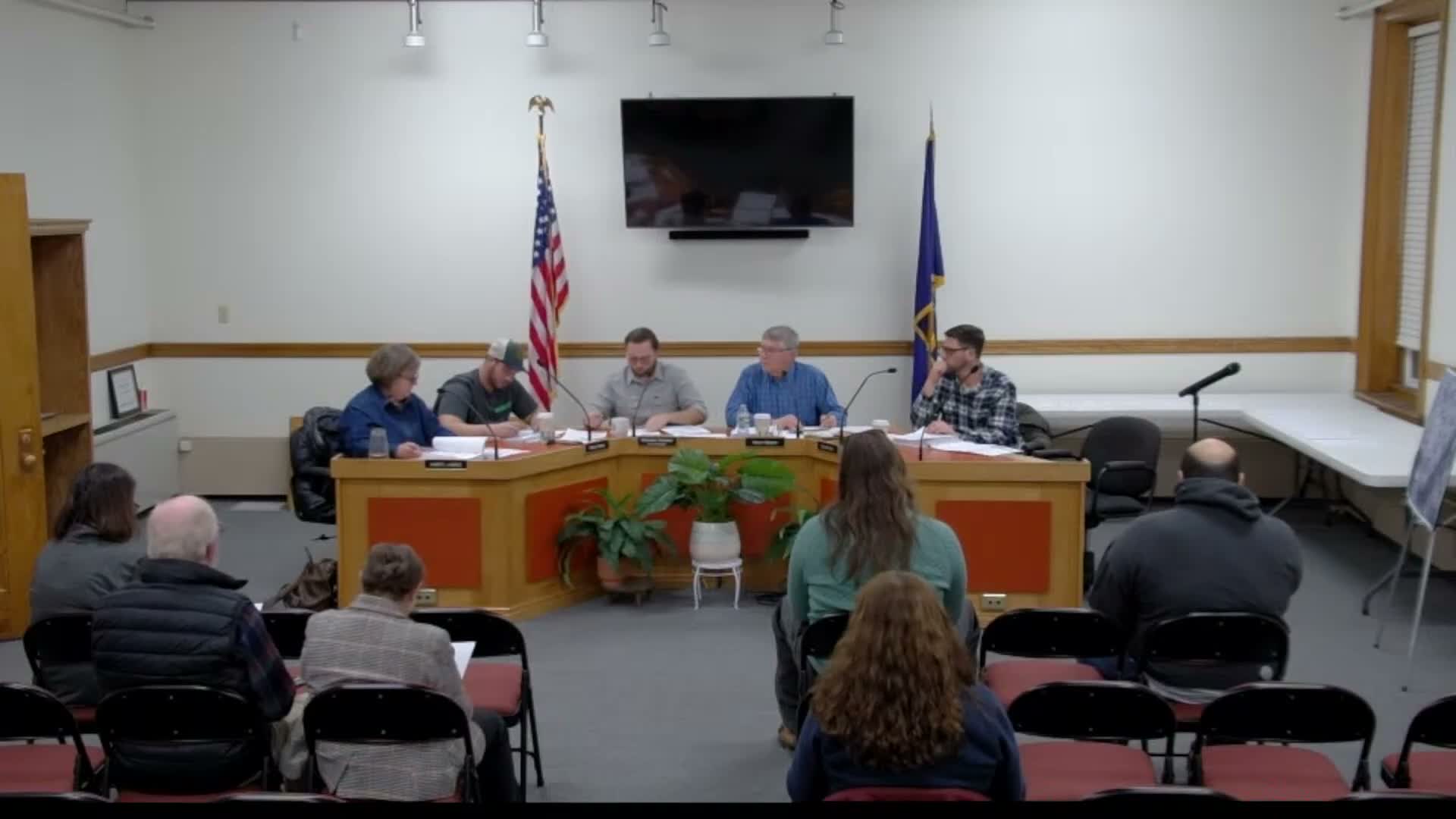
Summary
The Select Board approved funding and authorized survey work to map and separate combined sewer/storm structures on Madison Avenue and nearby downtown blocks, aiming to prevent costly digging after DOT repaving and to reduce combined-sewer-overflow (CSO) risks.
Donnie Zalewski, a representative from Skowhegan's water pollution control, told the Select Board on Monday that engineering and in-house work are needed now to avoid a more expensive fix after state repaving.
"DOT is coming in," Zalewski said, urging the board to complete a survey and, where possible, separate storm drains from sanitary lines before the state repaves Madison Avenue. He described an "old field stone storm structure" under the bridge that has fallen into the gorge and said the downtown system currently routes stormwater into sanitary lines in places, leading to sewer gases entering business areas.
Zalewski asked the board to waive the formal quote process and retain Olver and Associates—already under contract on other town projects—to perform a survey and preliminary design of the downtown business district storm and sewer system. He said that camera inspection and lining where possible, plus a correctly sized outfall pipe to the river, could reduce the probability of future CSO events and lower long-term costs.
"If we can do that and...Jason can do it, and we can do an in-house separation of this structure," Zalewski said, "we're going to save us some money." He emphasized timing as critical because "once they're done paving...you have a five-year moratorium" that makes later work more expensive and complex.
Board members pressed for details. One member asked whether the work would relieve flooding in nearby neighborhoods; Zalewski replied that redirecting stormwater and increasing outfall capacity would "relieve flooding" and increase capacity. Public works staff noted that the town has rotated in new equipment and that some older pipes might be too small to line and would require full excavation.
The board moved to allow Zalewski to spend up to $30,000 from the water pollution control reserve to retain engineering services and to expend $2,010.51 from the Sappy TIF account for survey work. The Select Board also approved a motion allowing Jason Finley to go out to bid for the Madison Avenue–Elm Street combined sewer relocation project and approved up to $15,000 for Oliver/Olver Associates to handle engineering services for catch-basin relocation at Madison and Elm.
The work package aims to camera and inspect suspect lines, evaluate whether in-house separation is feasible, rebuild an aging storm structure under the bridge and size new pipes and outfalls to send stormwater to the river rather than into private building drains. Zalewski told the board that the town has seen a reduction in CSO volumes overall but that a recent event occurred downtown; he said the downtown configuration is a "runoff nightmare" that needs phased correction.
Next steps: the board approved the limited waivers and the survey work and authorized staff to seek bids for the combined sewer relocation. Engineering design and coordinated staging with DOT paving were flagged as necessary follow-ups.